E-bok, Engelska, 2003
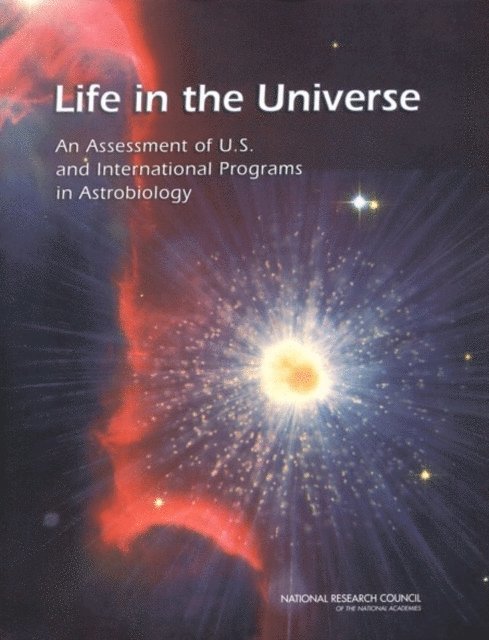
Life in the Universe
Av Committee on the Origins and Evolution of Life, Space Studies Board, Board on Life Sciences, National Research Council
458 kr
Skickas måndag 12/10
Beskrivning
The past decade has seen a remarkable revolution in genomic research, the discoveries of extreme environments in which organisms can live and even flourish on Earth, the identification of past and possibly present liquid-water environments in our solar system, and the detection of planets around other stars. Together these accomplishments bring us much closer to understanding the origin of life, its evolution and diversification on Earth, and its occurrence and distribution in the cosmos. A new multidisciplinary program called Astrobiology was initiated in 1997 by the National Aeronautics and Space Administration (NASA) to foster such research and to make available additional resources for individual and consortium-based efforts. Other agencies have also begun new programs to address the origin, evolution, and cosmic distribution of life. Five years into the Astrobiology program, it is appropriate to assess the scientific and programmatic impacts of these initiatives. Edward J. Weiler, NASA''s associate administrator for the Office of Space Science, tasked the Committee on the Origins and Evolution of Life (COEL) with assessing the state of NASA''s Astrobiology program.
Produktinformation
- Utgivningsdatum: 2003-04-14
- Format: E-bok
- Språk: Engelska
- Antal sidor: 62
- Förlag: National Academies Press
- ISBN: 9780309512602
Utforska kategorier
Betyg & recensioner
0 recensioner
Inga recensioner tillgängliga.