• Fri frakt över 249 kr
  • •
  • Snabba leveranser
  • •
  • Billiga böcker
Kundservice

Du är på sajten för privatpersoner.

Företag, bibliotek eller offentlig verksamhet?

Du handlar på classic.bokus.com, där alla dina funktioner finns intakta.
Till classic.bokus.com
Bokus logotyp. Gå till startsidan.
  • Erbjudanden
  • Nyheter
  • Student
  • Topplistor
  • Barn & ungdom
  • Bokus Play
  • E-böcker
  • Pocketböcker
  • Spel & pussel

10% rabatt på allt med kod: NYSTART10 →

Sidfot

Mina sidor

    Hjälp

    • Kundservice
    • Vanliga frågor och svar
    • Frakt och leverans
    • Retur vid ångerrätt
    • Reklamera vara
    • Betalning
    • Köpvillkor
    • Allmänna villkor
    • Information om webbplatsens tillgänglighet

    Om Bokus

    • Om oss
    • Pressrum
    • För studenter
    • För företag
    • För bibliotek och offentlig verksamhet
    • För leverantörer
    • Hållbarhet

    Populärt

    • Aktuella erbjudanden
    • Presentkort
    • Studentlitteratur
    • Nya böcker
    • Topplistor
    • Signerade böcker
    • Engelska böcker

    Inspiration

    • Boktips
    • BookTok
    • Populära bokserier
    • Barnbokskaraktärer
    • Populära författare
    Logotyp för Bokus
    Följ oss på Facebook (extern länk)Följ oss på Instagram (extern länk)Följ oss på YouTube (extern länk)Följ oss på TikTok (extern länk)
    bokus @ CookiesAnpassa cookiesIntegritetspolicyKöpvillkor
    Till Citymail hemsida (extern länk)Till Budbee hemsida (extern länk)Till Postnord hemsida (extern länk)Till Schenker hemsida (extern länk)Till Early Bird hemsida (extern länk)Till Walleys hemsida (extern länk)
    1. Medicin
    2. Medicin: icke kliniska discipliner
    3. Fysiologi

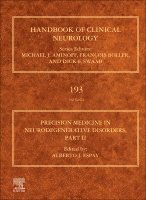
    Precision Medicine in Neurodegenerative Disorders

    Part II

    Inbunden, Engelska, 2023

    Del 193 i serien Handbook of Clinical Neurology

    2 758 kr

    Beställningsvara. Skickas inom 5-8 vardagar. Fri frakt över 249 kr.

    Beskrivning

    Precision Medicine in Neurodegenerative Disorders, Part Two, Volume 193� in the Handbook of Clinical Neurology deals with the "How" in the reconfiguration of our approach to slow accelerated brain aging. The book rethinks� animal models on which therapies are tested, outlines the progress and expected changes in biological subtyping efforts using lysosomal, endosomal, mitochondrial, immune dysregulation, and inflammatory mechanisms of disease pathophysiology, and the growing role of microbiome in shaping disease. The volume separates the potentially disease-modifying neurorescue and neurorestoration, (e.g., gene therapy and cell replacement therapy) from true precision "medicine"-matching biology with the mechanism of intervention of interest.

    Specific chapters are dedicated to the promise and challenges of extracellular vesicles for both diagnosis and treatment, the growing application of digital measures and other evaluations of clinical response, the nuts and bolts of novel adaptive clinical trial designs, and the regulatory changes needed to facilitate drug development for disease-modification purposes.


    • Summarizes theory and research on precision medicine in neurodegenerative disorders
    • Covers basic biology, clinical trials and therapeutics
    • Includes disease mechanisms, genetic subtypes, and more

    Produktinformation

    • Utgivningsdatum:2023-07-05
    • Mått:195 x 260 x undefined mm
    • Format:Inbunden
    • Språk:Engelska
    • Serie:Handbook of Clinical Neurology
    • Antal sidor:392
    • Förlag:Elsevier Science
    • Medarbetare:AlbertoJ. Espay
    • ISBN:9780323855556

    Utforska kategorier

    • Fysiologi inom Medicin
    • Medicinsk utrustning och medicinska tekniker inom Medicin
    • Endokrinologi inom Medicin

    Mer om författaren

    Dr. Alberto Espay is Professor and Endowed Chair of the James J. and Joan A. Gardner Center for Parkinson’s disease at the University of Cincinnati. He has published over 300 peer-reviewed research articles and 8 books, including Common Movement Disorders Pitfalls, which received the Highly Commended BMA Medical Book Award in 2013 and Brain Fables, the Hidden History of Neurodegenerative Diseases and a Blueprint to Conquer them, coauthored with Parkinson patient and advocate Benjamin Stecher, selected by the Association of American Publishers for the PROSE Award honoring the best scholarly work in Neuroscience published in 2020. He has served as Chair of the Movement Disorders Section of the American Academy of Neurology, Associate Editor of the Movement Disorders journal, and on the Executive Committee of the Parkinson Study Group. Among other honors, he has received the Cincinnati Business Courier’s Health Care Hero award, the Spanish Society of Neurology’s Cotzias award, and honorary membership in the Mexican Academy of Neurology. He currently serves as President-Elect of the Pan-American Section of the International Parkinson and Movement Disorders Society. With colleagues at the University of Cincinnati, he launched the first biomarker study of aging (CCBPstudy.com), designed to match people with neurodegenerative disorders to available therapies from which they are most biologically suitable to benefit, regardless of their clinical diagnoses.

    Innehållsförteckning

    • Part 3 Basic Science Development1. Role of rodent models in advancing precision medicine for Parkinson disease2. The allure and pitfalls of the prion-like aggregation in neurodegeneration3. The shift to a proteinopenia paradigm in neurodegeneration4. Disease mechanisms as subtypes: Lysosomal dysfunction in the endolysosomal Parkinson disease subtype5. Disease mechanisms as subtypes: Mitochondrial and bioenergetic dysfunction 6. Disease mechanisms as subtypes: Immune dysfunction in Parkinson disease7. Disease mechanisms as subtypes: Inflammation in Parkinson disease and related disorders8. Disease mechanisms as subtypes: Microbiome 9. LRRK2: Genetic mechanisms vs genetic subtypes 10. Genetic mechanism vs genetic subtypes: The example of GBA 11. Subtyping monogenic disorders: Huntington disease Part 4 Clinical Trials and Therapeutic Approaches12. Disease-modifying vs symptomatic treatments: splitting over lumping13. Restorative cell and gene therapies for Parkinson disease14. The promise and challenges of extracellular vesicles in the diagnosis of neurodegenerative diseases15. Therapeutic potential of extracellular vesicles in neurodegenerative disorders16. Lessons from antiamyloid-β immunotherapies in Alzheimer disease 17. Lessons from immunotherapies in multiple sclerosis 18. Adaptive clinical trials and master protocols19. Role of novel endpoints and evaluations of response in Parkinson Disease20. Leveraging the regulatory framework to facilitate drug development in Parkinson disease