• Fri frakt över 249 kr
  • •
  • Snabba leveranser
  • •
  • Billiga böcker
Kundservice

Du är på sajten för privatpersoner.

Företag, bibliotek eller offentlig verksamhet?

Du handlar på classic.bokus.com, där alla dina funktioner finns intakta.
Till classic.bokus.com
Bokus logotyp. Gå till startsidan.
  • Erbjudanden
  • Nyheter
  • Student
  • Topplistor
  • Barn & ungdom
  • Bokus Play
  • E-böcker
  • Pocketböcker
  • Spel & pussel

10% rabatt på allt med kod NYSTART10 →

Sidfot

Mina sidor

    Hjälp

    • Kundservice
    • Vanliga frågor och svar
    • Frakt och leverans
    • Retur vid ångerrätt
    • Reklamera vara
    • Betalning
    • Köpvillkor
    • Allmänna villkor
    • Information om webbplatsens tillgänglighet

    Om Bokus

    • Om oss
    • Pressrum
    • För studenter
    • För företag
    • För bibliotek och offentlig verksamhet
    • För leverantörer
    • Hållbarhet

    Populärt

    • Aktuella erbjudanden
    • Presentkort
    • Studentlitteratur
    • Nya böcker
    • Topplistor
    • Signerade böcker
    • Engelska böcker

    Inspiration

    • Boktips
    • BookTok
    • Populära bokserier
    • Barnbokskaraktärer
    • Populära författare
    Logotyp för Bokus
    Följ oss på Facebook (extern länk)Följ oss på Instagram (extern länk)Följ oss på YouTube (extern länk)Följ oss på TikTok (extern länk)
    bokus @ CookiesAnpassa cookiesIntegritetspolicyKöpvillkor
    Till Citymail hemsida (extern länk)Till Budbee hemsida (extern länk)Till Postnord hemsida (extern länk)Till Schenker hemsida (extern länk)Till Early Bird hemsida (extern länk)Till Walleys hemsida (extern länk)
    1. Psykologi och pedagogik
    2. Psykologi
    3. Biologisk psykologi och neuropsykologi

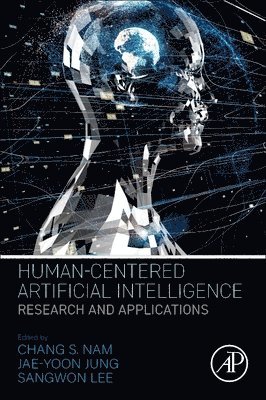
    Human-Centered Artificial Intelligence

    Research and Applications

    AvChang S. Nam,Jae-Yoon Jung

    Häftad, Engelska, 2022

    1 396 kr

    Beställningsvara. Skickas inom 10-15 vardagar. Fri frakt över 249 kr.

    Beskrivning

    Human-Centered Artificial Intelligence: Research and Applications presents current theories, fundamentals, techniques and diverse applications of human-centered AI. Sections address the question, "are AI models explainable, interpretable and understandable?, introduce readers to the design and development process, including mind perception and human interfaces, explore various applications of human-centered AI, including human-robot interaction, healthcare and decision-making, and more. As human-centered AI aims to push the boundaries of previously limited AI solutions to bridge the gap between machine and human, this book is an ideal update on the latest advances.

    • Presents extensive research on human-centered AI technology
    • Provides different methods and techniques used to investigate human-AI interaction
    • Discusses open questions and challenges in trust within human-centered AI
    • Explores how human-centered AI changes and operates in human-machine interactions

    Produktinformation

    • Utgivningsdatum:2022-05-18
    • Mått:152 x 229 x 22 mm
    • Vikt:520 g
    • Format:Häftad
    • Språk:Engelska
    • Antal sidor:312
    • Förlag:Elsevier Science
    • ISBN:9780323856485

    Utforska kategorier

    • Biologisk psykologi och neuropsykologi inom Psykologi och pedagogik
    • Referensverk och tvärvetenskap inom Samhälle och politik
    • Arbetspsykologi inom Psykologi och pedagogik

    Mer om författaren

    Chang S. Nam is currently a Professor of Industrial and Systems Engineering at North Carolina State University (NCSU), USA. He is also an associated faculty in the UNC/NCSU Joint Department of Biomedical Engineering, Department of Psychology, and Brain Research Imaging Center (BRIC) at UNC. He received a PhD at Virginia Tech. His research interests center around brain-computer interfaces, computational neuroscience, neuroergonomics, and human-AI/Robot/Automation interaction. He is the editor of “Brain-Computer Interfaces Handbook: Technological and Theoretical Advances” (with Drs. Nijholt and Lotte, CRC Press), “Neuroergonomics: Principles and Practices (Springer), “Mobile Brain-Body Imaging and the Neuroscience of Art, Innovation and Creativity (with Contreras-Vidal et al., Springer), “Trust in Human-Robot Interaction: Research and Applications” (with Lyons, Elsevier), and “Human-centered AI: Research and Applications” (with Jung & Lee, Elsevier). Currently, Nam serves as the Editor-in-Chief of the journal Brain-Computer Interfaces. Jae-Yoon Jung is a professor in the department of industrial and management systems engineering (IE) at Kyung Hee University (KHU), Korea, and also an adjunct professor of the department of the department of software convergence (SWCon), KHU. He is currently the director of Graduate Program, IE and Smart Factory Program at KHU. He is leading Industrial AI Lab at KHU. He received the Ph.D., M.S., and B.S. degrees in Industrial Engineering at Seoul National University (SNU), in 2005, 2001, and 1999, respectively. In SNU, he was supervised by prof. Suk-Ho Kang and Yeongho Kim in Intelligent Manufacturing Systems Lab.After that, he visited the Process Mining Group at Eindhoven University of Technology (TU/e) in the Netherland, supervised by prof. Wil van der Aalst. Before joining in KHU, he worked for u-Computing Innovation Center (uCIC), directed by Prof. Jinwoo Park, and he also studied in the Information Management Lab. at SNU, supervised by prof. Jonghun Park. Sangwon Lee is an Associate Professor in Department of Interaction Science and Department of Applied Artificial Intelligence at Sugnkyunkwan University. He is also the director of ID square lab (Interaction Design and Development Laboratory). He received his BS degree from Korea University, and his MS degree and PhD degree from the Pennsylvania State University. His research interests lie in human-AI interaction, user experience, affective computing, user modelling, and explainable artificial intelligence.

    Innehållsförteckning

    • PART I: Explainable AI1. Are AI models Explainable, Interpretable, and Understandable?2. Explanation Using Interpretable Models3. Explanation Using Model-Agnostic Methods4. Explanation Using Examples5. Explanation of Ensemble Models6. Explanation of Deep Learning ModelsPART II: User-Centered AI Design and Development Process7. User-centered explanation interfaces for effective communication between users and AI-based systems8. Mind perception of human-centered AI: Effects of unfavorable social conditions on user experience of AI9. Designing user interfaces for AI-based decision support systemsPART III: Applications in Human-AI Interaction11. Review on recent AI/ML studies about manufacturing systems12. AI in BCI13. AI in Human-Robot Interaction14. AI in Healthcare15. AI in Decision Making16. TBDPART IV: Ethics, Privacy and Policy in Human-AI Interaction17. Ethics of AI in academic and public discourse18. Designing explainable artificial intelligence from policy perspectives19. AI governance20. TBD