• Fri frakt över 249 kr
  • •
  • Snabba leveranser
  • •
  • Billiga böcker
Kundservice

Du är på sajten för privatpersoner.

Företag, bibliotek eller offentlig verksamhet?

Du handlar på classic.bokus.com, där alla dina funktioner finns intakta.
Till classic.bokus.com
Bokus logotyp. Gå till startsidan.
  • Erbjudanden
  • Nyheter
  • Student
  • Topplistor
  • Barn & ungdom
  • Bokus Play
  • E-böcker
  • Pocketböcker
  • Spel & pussel

10% rabatt på allt med kod: NYSTART10 →

Sidfot

Mina sidor

    Hjälp

    • Kundservice
    • Vanliga frågor och svar
    • Frakt och leverans
    • Retur vid ångerrätt
    • Reklamera vara
    • Betalning
    • Köpvillkor
    • Allmänna villkor
    • Information om webbplatsens tillgänglighet

    Om Bokus

    • Om oss
    • Pressrum
    • För studenter
    • För företag
    • För bibliotek och offentlig verksamhet
    • För leverantörer
    • Hållbarhet

    Populärt

    • Aktuella erbjudanden
    • Presentkort
    • Studentlitteratur
    • Nya böcker
    • Topplistor
    • Signerade böcker
    • Engelska böcker

    Inspiration

    • Boktips
    • BookTok
    • Populära bokserier
    • Barnbokskaraktärer
    • Populära författare
    Logotyp för Bokus
    Följ oss på Facebook (extern länk)Följ oss på Instagram (extern länk)Följ oss på YouTube (extern länk)Följ oss på TikTok (extern länk)
    bokus @ CookiesAnpassa cookiesIntegritetspolicyKöpvillkor
    Till Citymail hemsida (extern länk)Till Budbee hemsida (extern länk)Till Postnord hemsida (extern länk)Till Schenker hemsida (extern länk)Till Early Bird hemsida (extern länk)Till Walleys hemsida (extern länk)
    1. Djur och Natur
    2. Naturböcker
    3. Växtböcker

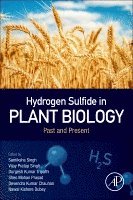
    Hydrogen Sulfide in Plant Biology

    Past and Present

    AvSamiksha Singh,Vijay Pratap Singh

    Häftad, Engelska, 2021

    1 858 kr

    Beställningsvara. Skickas inom 10-15 vardagar. Fri frakt över 249 kr.

    Beskrivning

    Hydrogen Sulfide in Plant Biology: Past and Present includes 17 chapters, with topics from cross-talk and lateral root development under stress, to post-translational modifications and disease resistance. With emerging research on the different roles and applications of H2S, this title compiles the latest advances of this key signaling molecule. The development of a plant requires complex signaling of various molecules like H2S in order to achieve regulated and proper development, hence hydrogen sulfide (H2S) has emerged as an important signaling molecule that regulates nearly each and every stage of a plant's lifecycle.

    Edited by leading experts in the field, this is a must-read for scientists and researchers interested in plant physiology, biochemistry and ecology.


    • Discusses the emerging roles of H2S in plant biology
    • Presents the latest research from leading laboratories across the globe
    • Edited by a team of experts in plant signaling

    Produktinformation

    • Utgivningsdatum:2021-06-18
    • Mått:152 x 229 x undefined mm
    • Vikt:590 g
    • Format:Häftad
    • Språk:Engelska
    • Antal sidor:392
    • Förlag:Elsevier Science
    • ISBN:9780323858625

    Utforska kategorier

    • Växtböcker inom Djur och Natur
    • Biokemi inom Naturvetenskap och teknik
    • Botanik inom Naturvetenskap och teknik

    Mer om författaren

    Samiksha Singh is working as a D.Phil. research scholar in Department of Botany, University of Allahabad, Allahabad, India. She has obtained her M.Sc. degree in Environmental Science from Lucknow University. Her area of research interest is management of abiotic stress in plants using biochemical and molecular approach.Samiksha Singh is a Junior Research Fellow in the Plant Physiology and Biochemistry Laboratory, Department of Botany, University of Allahabad, India. Her area of research interest is management of metal stress in plants using biochemical and molecular approach with emphasis on nitric oxide and hydrogen sulfide signaling. She has authored 33 publications in reputed international journals. She has edited books with Wiley, Nova Science Publisher, Studium Press and others. Dr. Singh obtained his PhD from the University of Allahabad on topic “Oxidative stress and antioxidant system in some cyanobacteria simultaneously exposed to UV-B and heavy metal.” He has authored 102 publications, as well as editorials in reputed journals. His area of research interest is the role of nitric oxide and hydrogen sulphide signalling in the regulation of abiotic stress in plants. Dr. Singh is also working as an editor and reviewer of several reputed international journals.Vijay Pratap Singh is an Assistant Professor, Department of Botany C.M.P. Post Graduate College, University of Allahabad, India. Dr. Singh has obtained his D.Phil. degree from University of Allahabad. He has authored 95 publications including book chapters and editorials in reputed journals. He has edited several books with Elsevier, Wiley, CRC Press, Nova Publisher, Studium Press, etc. His area of research interest is regulation of abiotic stress in plants with special emphasis on nitric oxide, hydrogen sulfide, reactive oxygen species and phytohormonal signaling. Dr. Singh is also working as an editor and reviewer of reputed international journals. Professor Prasad obtained his academic degrees from Banaras Hindu University in Varanasi, India. He has authored 150 scientific publications. His main areas of research are the physiology and biochemistry of plants, and cyanobacteria under abiotic stresses (e.g., UV-B, heavy metals, pesticides, temperature, salinity, high light), with special reference to abiotic stress management. Professor Prasad is also working as an editor and reviewer of several reputed international journals.Sheo Mohan Prasad is as a Professor in the Department of Botany, University of Allahabad, having obtained his academic degrees from Banaras Hindu University, Varanasi, India. Professor Prasad has authored 160 scientific publications. His main area of research is physiology and biochemistry of plants as well as cyanobacteria under abiotic stresses i.e. UV-B, heavy metals, pesticides, temperature, salinity, high light, etc with special reference to abiotic stress management. Professor Prasad is also working as editor and reviewer of several reputed international journals. He has edited several volumes of books with CRC Press, Wiley, Nova Publisher, Studiem Press, etc. Dr. Durgesh Kumar Tripathi is currently an Associate Professor at Amity Institute of Organic Agriculture, Amity University Uttar Pradesh, Noida, India. He is the recipient of ‘Dr DS Kothari Post-Doctoral Fellowship’ of the UGC, New Delhi. Dr. Tripathi has received his D.Phil. in Science from University of Allahabad, India. During this period, Dr. Tripathi worked extensively on phytolith analysis, crop stress physiology, agro-nanotechnology and molecular biology. He has expertise on laser spectroscopy. His research interests encompass stress tolerance mechanisms in plants. Presently, he is working with nano-materials and their interactions with plants to find out their detoxification mechanisms, he is also working on Silicon, Nitric oxide and hormonal crosstalk against abiotic stress in plants.Dr Dubey has won awards for both his teaching and his research, and is currently a fellow of the National Academy of Sciences. His work spans across botany and food microbiology. He has published over 160 papers and has contributed to 7 books, in addition to holding a number of patents. Devendra Kumar Chauhan is a Professor and Head of Department of Botany at the University of Allahabad, India. He has 35 years’ worth of teaching experience, has edited 5 books and contributed 15 book chapters. He has 76 publications in total and is on the editorial board for 5 different journals, including the American Journal of Current Biology and Ethnobotany: International Journal of the Society of Ethnobotanists. His research interests include palaeobotany, evolutionary biology, phytoremediation, plant stress physiology and agro-nanotechnology.

    Innehållsförteckning

    • 1. Hydrogen Sulfide Regulates Temperature Stress in Plants2. Crosstalk of hydrogen sulfide with melatonin and nitric oxide in ripening of fruits3. Role of hydrogen sulfide in alleviating oxidative stress in plants through induction of antioxidative defense mechanism, and modulations of physiological and biochemical components4. Regulation of metal stress toxicity in plants by the hydrogen sulfide5. Hydrogen sulfide and lateral root development in plants under stress6. Role of H2S in abiotic stress tolerance in plants7. Role of H2S in plants: A current update8. Hydrogen sulfide and nitric oxide crosstalk in plants under stress9. Gene regulation by H2S in plants10. Hydrogen sulfide and ROS cross talk and acquisition of abiotic stress tolerance11. Regulation of salinity stress by H2S in plants12. Regulation of drought stress by H2S in plants13. Hydrogen sulfide and phytohormones crosstalk in plant defense against pathogen attack14. Regulation of radiation stress in plants by H2S15. Hydrogen sulfide and phytohormones crosstalk in plant defense against abiotic stress16. Role of Hydrogen sulfide and Ca signaling in abiotic stress tolerance in plants17. Hydrogen sulfide homeostasis in plants: An overview