• Fri frakt över 249 kr
  • •
  • Snabba leveranser
  • •
  • Billiga böcker
Kundservice

Du är på sajten för privatpersoner.

Företag, bibliotek eller offentlig verksamhet?

Du handlar på classic.bokus.com, där alla dina funktioner finns intakta.
Till classic.bokus.com
Bokus logotyp. Gå till startsidan.
  • Erbjudanden
  • Nyheter
  • Student
  • Topplistor
  • Barn & ungdom
  • Bokus Play
  • E-böcker
  • Pocketböcker
  • Spel & pussel

10% rabatt på allt med kod: NYSTART10 →

Sidfot

Mina sidor

    Hjälp

    • Kundservice
    • Vanliga frågor och svar
    • Frakt och leverans
    • Retur vid ångerrätt
    • Reklamera vara
    • Betalning
    • Köpvillkor
    • Allmänna villkor
    • Information om webbplatsens tillgänglighet

    Om Bokus

    • Om oss
    • Pressrum
    • För studenter
    • För företag
    • För bibliotek och offentlig verksamhet
    • För leverantörer
    • Hållbarhet

    Populärt

    • Aktuella erbjudanden
    • Presentkort
    • Studentlitteratur
    • Nya böcker
    • Topplistor
    • Signerade böcker
    • Engelska böcker

    Inspiration

    • Boktips
    • BookTok
    • Populära bokserier
    • Barnbokskaraktärer
    • Populära författare
    Logotyp för Bokus
    Följ oss på Facebook (extern länk)Följ oss på Instagram (extern länk)Följ oss på YouTube (extern länk)Följ oss på TikTok (extern länk)
    bokus @ CookiesAnpassa cookiesIntegritetspolicyKöpvillkor
    Till Citymail hemsida (extern länk)Till Budbee hemsida (extern länk)Till Postnord hemsida (extern länk)Till Schenker hemsida (extern länk)Till Early Bird hemsida (extern länk)Till Walleys hemsida (extern länk)
    1. Naturvetenskap och teknik
    2. Teknik och industri
    3. Maskinteknik och material

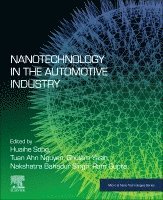
    Nanotechnology in the Automotive Industry

    AvHuaihe Song,Ghulam Yasin

    Häftad, Engelska, 2022

    Del i serien Micro and Nano Technologies

    2 997 kr

    Beställningsvara. Skickas inom 10-15 vardagar. Fri frakt över 249 kr.

    Beskrivning

    Nanotechnology in the Automotive Industry explores how nanotechnology and nanomaterials are used to enhance the performance of materials and devices for automotive application by fabricating nano-alloys, nanocomposites, nano coatings, nanodevices, nanocatalysts and nanosensors. Consisting of 36 chapters in 6 parts, this new volume in the Micro and Nano Technologies series is for materials scientists, nanotechnologists and automotive engineers working with nanotechnology and nanomaterials for automotive applications.

    Nanotechnology is seen as one of the core technologies for the future automotive industry to sustain competitiveness. The benefits that nanotechnology brings to the automotive sector include stronger and lighter materials for increased safety and reduced fuel consumption, improved engine performance and fuel consumption for gasoline powered vehicles due to nanocatalysts, fuel additives and lubricants, and more.


    • Discusses various approaches and techniques such as nanoalloys, nanocomposites, nanocoatings, nanodevices, nanocatalysts and nanosensors used in modern vehicles
    • Presents the challenges and future of automotive materials
    • Explores how nanotechnology and nanomaterials are used to enhance the performance of materials and devices for automotive applications

    Produktinformation

    • Utgivningsdatum:2022-04-13
    • Mått:191 x 235 x 42 mm
    • Vikt:1 650 g
    • Format:Häftad
    • Språk:Engelska
    • Serie:Micro and Nano Technologies
    • Antal sidor:860
    • Förlag:Elsevier Science
    • ISBN:9780323905244

    Utforska kategorier

    • Maskinteknik och material inom Naturvetenskap och teknik

    Mer om författaren

    Huaihe Song is a Professor at the State Key Laboratory of Chemical Resource Engineering, College of Materials and Engineering, Beijing University of Chemical Technology, China. He has 28 years of experience in the field of carbon materials research. His research area is in the preparation of advanced carbon materials and their applications, including pitch-based carbon materials (mesophase pitch and mesocarbon microbeads), carbon nanomaterials (carbon nanotubes, graphene, carbon-encapsulated metal nanomaterials, and onion-like carbons), carbon-based materials for energy storage (lithium-ion batteries and supercapacitors), and mesoporous carbons (ordered mesoporous carbons and carbon aerogels). Ghulam Yasin is a researcher in the School of Environment and Civil Engineering at Dongguan University of Technology, Guangdong, China. His expertise covers the design and development of hybrid devices and technologies of carbon nanostructures and advanced nanomaterials for for real-world impact in energy-related and other functional applications. Prof. Nakshatra Bahadur Singh is presently Professor Emeritus, Department of Chemistry and Biochemistry, SBSR & Research and Technology Development Centre, Sharda University, Greater Noida, Uttar Pradesh, India. During his 50+ years of academic experience, Prof. Singh has also been the Head of the Chemistry Department and the Dean of the Faculty of Science at DDU Gorakhpur University (India), as well as an Alexander von Humboldt fellow in Germany, where he conducted work for RWTH Aachen University, Clausthal University of Technology, University of Kassel, and Technical University of Dortmund. He received a NETZSCH – ITAS Award in 2002 for his contributions in the area of thermal analysis and an ISCAS Gold Medal and Lifetime Achievement Award from the Indian Association for Solid State Chemists and Allied Scientists at VIT in 2009 for his contributions in the area of solid-state chemistry. He is the former President of the Indian Association for Solid State Chemists and Allied Scientists. His research currently focuses on eutectic alloys, nanomaterials for construction, glasses and cementitious materials, green chemistry, and water purification. Tuan Anh Nguyen is a Senior Principal Research Scientist at the Institute for Tropical Technology, Vietnam Academy of Science and Technology, Hanoi, Vietnam. He received a BS in physics from Hanoi University in 1992, a BS in economics from Hanoi National Economics University in 1997, and a PhD in chemistry from the Paris Diderot University, France, in 2003. He was a Visiting Scientist at Seoul National University, South Korea, in 2004, and the University of Wollongong, Australia, in 2005. He then worked as a Postdoctoral Research Associate and Research Scientist at Montana State University, United States in 2006-09. In 2012 he was appointed as the Head of the Microanalysis Department at the Institute for Tropical Technology. His research areas of interest include smart sensors, smart networks, smart hospitals, smart cities, complexiverse, and digital twins. He has edited more than 74 books for Elsevier, 12 books for CRC Press, 1 book for Springer, 1 book for RSC, and 2 books for IGI Global. He is the Editor-in-Chief of Kenkyu Journal of Nanotechnology & Nanoscience. Ram Gupta is a Professor in the Department of Chemistry at Pittsburg State University, Kansas, United States. His research focus is in green energy production and storage using nanomaterials, optoelectronics and photovoltaics devices, organic-inorganic heterojunctions for sensors, nanomagnetism, conducting polymers and composites as well as bio-based polymers, bio-compatible nanofibers for tissue regeneration, scaffold and antibacterial applications, and bio-degradable metallic implants.

    Innehållsförteckning

    • PART 1: BASIC PRINCIPLES 1. Nanotechnology in the automotive industry: An introduction2. Methods for testing materials for automotive application3. Methods for testing devices for automotive application4. Mathematical modeling for the degradation of materials when used in supercars5. Toxicity/risk assessment of nanomaterials when used in the automotive industry6. Nanoscale interface techniques for standardized integration of nanodevicesPART 2: NANO-ALLOYS FOR AUTOMOTIVE APPLICATION7. Nano-alloys: An introduction8. Titanium nano-alloys9. Aluminum nano-alloys10. Copper nano-alloys11. Braze nano-alloysPART 3: NANOCOMPOSITES FOR AUTOMOTIVE APPLICATION 12. Nanocomposites: An introduction13. Carbon-carbon nanocomposites14. Fiber-reinforced nanocomposites15. Polymeric nanocomposites16. Metallic nanocomposites17. Ceramic nanocomposites18. Rubber nanocomposites (nano-reinforced tires)PART 4: NANO COATINGS FOR AUTOMOTIVE APPLICATION 18. Nano coatings: An introduction19. Thermal protection nano coatings20. Self-healing nano coatings21. Self-cleaning nano coatingsPART 5: NANOELECTRONICS FOR AUTOMOTIVE APPLICATION21. Nanoelectronics: An introduction22. Smart nanosensors network (Smart nanosensors for remote sensing satellites)23. Smart nanobatteries 24. Nanomaterial-based solar cells25. Nano-robots (bio-nano robots)26. Smart electronic textilesPART 6: NANOCATALYSTS FOR AUTOMOTIVE APPLICATION27. Nanocatalysts: An introduction28. Nanocatalysts for exhaust emissions reduction29. Nanocatalysts for fuel cells (nano fuel cells)30. Nano-lubricant additives (for enhancing the thermophysical and tribological properties of engine oils)