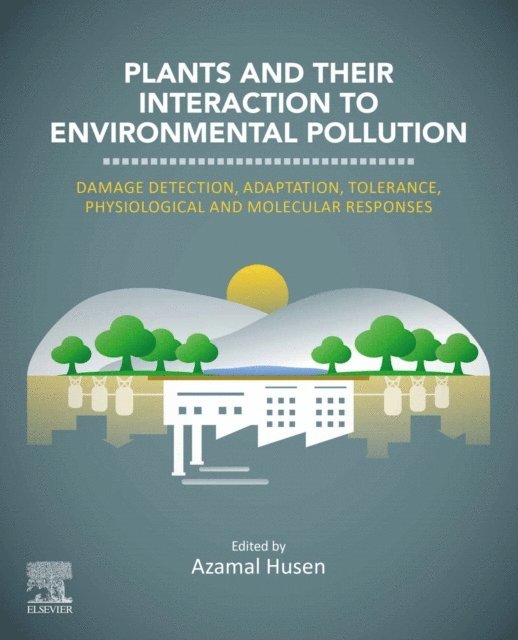
E-bok, Engelska, 2022
Plants and their Interaction to Environmental Pollution
Av Azamal Husen
2402 kr
Skickas måndag 12/10
Beskrivning
Environmental pollution as a consequence of diverse human activities has become a global concern. Urbanization, mining, industrial revolution, burning of fossil fuels/firewood and poor agricultural practices, in addition to improper dumping of waste products, are largely responsible for the undesirable change in the environment composition. Environmental pollution is mainly classified as air pollution, water pollution, land pollution, noise pollution, thermal pollution, light pollution, and plastic pollution. Nowadays, it has been realized that with the increasing environmental pollution, impurities may accumulate in plants, which are required for basic human uses such as for food, clothing, medicine, and so on. Environmental pollution has tremendous impacts on phenological events, structural patterns, physiological phenomena, biochemical status, and the cellular and molecular features of plants. Exposure to environmental pollution induces acute or chronic injury depending on the pollutant concentration, exposure duration, season and plant species. Moreover, the global rise of greenhouse gases such as carbon monoxide, carbon dioxide, nitrous oxides, methane, chlorofluorocarbons and ozone in the atmosphere is among the major threats to the biodiversity. They have also shown visible impacts on life cycles and distribution of various plant species. Anthropogenic activities, including the fossil-fuel combustion in particular, are responsible for steady increases in the atmospheric greenhouse gases concentrations. This phenomenon accelerates the global heating. Studies have suggested that the changes in carbon dioxide concentrations, rainfall and temperature have greatly influenced the plant physiological and metabolic activities including the formation of biologically active ingredients. Taken together, plants interact with pollutants, and cause adverse ecological and economic outcomes. Therefore, plant response to pollutants requires more investigation in terms of damage detection, adaptation, tolerance, and the physiological and molecular responses.The complex interplay among other emerging pollutants, namely, radioisotopes, cell-phone radiation, nanoparticles, nanocomposites, heavy metals etc. and their impact on plant adaptation strategies, and possibility to recover, mitigation, phytoremediation, etc., also needs to be explored. Further, it is necessary to elucidate better the process of the pollutant''s uptake by plant and accumulation in the food chain, and the plant resistance capability against the various kinds of environmental pollutants. In this context, the identification of tolerance mechanisms in plants against pollutants can help in developing eco-friendly technologies, which requires molecular approaches to increase plant tolerance to pollutants, such as plant transformation and genetic modifications. Pollutant-induced overproduction of reactive oxygen species that cause DNA damage and apoptosis-related alterations, has also been examined. They also trigger changes at the levels of transcriptome, proteome, and metabolome, which has been discussed in this book.
Produktinformation
- Utgivningsdatum: 2022-11-04
- Format: E-bok
- Språk: Engelska
- Förlag: Elsevier Science
- ISBN: 9780323983099
Utforska kategorier
Betyg & recensioner
0 recensioner
Inga recensioner tillgängliga.