• Fri frakt över 249 kr
  • •
  • Snabba leveranser
  • •
  • Billiga böcker
Kundservice

Du är på sajten för privatpersoner.

Företag, bibliotek eller offentlig verksamhet?

Du handlar på classic.bokus.com, där alla dina funktioner finns intakta.
Till classic.bokus.com
Bokus logotyp. Gå till startsidan.
  • Erbjudanden
  • Nyheter
  • Student
  • Topplistor
  • Barn & ungdom
  • Bokus Play
  • E-böcker
  • Pocketböcker
  • Spel & pussel

Må bättre, för mindre! Upp till 50% rabatt på hälsoböcker

Sidfot

Mina sidor

    Hjälp

    • Kundservice
    • Vanliga frågor och svar
    • Frakt och leverans
    • Retur vid ångerrätt
    • Reklamera vara
    • Betalning
    • Köpvillkor
    • Allmänna villkor
    • Information om webbplatsens tillgänglighet

    Om Bokus

    • Om oss
    • Pressrum
    • För studenter
    • För företag
    • För bibliotek och offentlig verksamhet
    • För leverantörer
    • Hållbarhet

    Populärt

    • Aktuella erbjudanden
    • Presentkort
    • Studentlitteratur
    • Nya böcker
    • Topplistor
    • Signerade böcker
    • Engelska böcker

    Inspiration

    • Boktips
    • BookTok
    • Populära bokserier
    • Barnbokskaraktärer
    • Populära författare
    Logotyp för Bokus
    Följ oss på Facebook (extern länk)Följ oss på Instagram (extern länk)Följ oss på YouTube (extern länk)Följ oss på TikTok (extern länk)
    bokus @ CookiesAnpassa cookiesIntegritetspolicyKöpvillkor
    Till Citymail hemsida (extern länk)Till Budbee hemsida (extern länk)Till Postnord hemsida (extern länk)Till Schenker hemsida (extern länk)Till Early Bird hemsida (extern länk)Till Walleys hemsida (extern länk)
    1. Naturvetenskap och teknik
    2. Teknik och industri
    3. Tillverkningsteknik

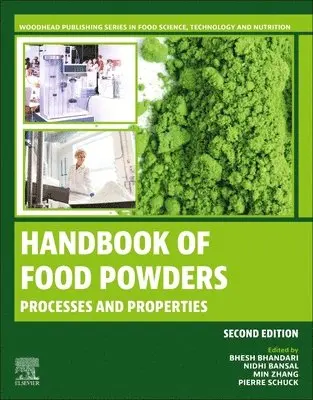
    Handbook of Food Powders

    Processes and Properties

    AvBhesh Bhandari,Nidhi Bansal

    Häftad, Engelska, 2023

    Del i serien Woodhead Publishing Series in Food Science, Technology and Nutrition

    2 678 kr

    Beställningsvara. Skickas inom 10-15 vardagar. Fri frakt över 249 kr.

    Beskrivning

    Handbook of Food Powders: Chemistry and Technology, Second Edition covers current developments in food powder technology, such as Microbial decontamination of food powders, Gas and oil encapsulated powders, and Plant-based protein powders among other important topics. Sections introduce processing and handling technologies for food powders, focus on powder properties, including surface composition, rehydration and techniques to analyze the particle size of food powders, and highlight specialty food powders such as dairy powders, fruit and vegetable powders and coating foods with powders.

    Edited by a team of international experts in the field, this book continues to be the only quality reference on food powder technology available for the audiences of professionals in the food powder production and handling industries. It is also ideal for development and quality control professionals in the food industry who use powders in foods, and for researchers, scientists and academics interested in the field.


    • Introduces six new chapters that incorporate the current developments in food powder technology
    • Examines powder properties, including surface composition, shelf life and techniques used to examine particle size
    • Focuses on specialty powders such as dairy, infant formulas, powdered egg, fruit and vegetable, and culinary and specialty products

    Produktinformation

    • Utgivningsdatum:2023-11-14
    • Mått:216 x 276 x 32 mm
    • Vikt:1 000 g
    • Format:Häftad
    • Språk:Engelska
    • Serie:Woodhead Publishing Series in Food Science, Technology and Nutrition
    • Antal sidor:596
    • Upplaga:2
    • Förlag:Elsevier Science
    • ISBN:9780323988209

    Utforska kategorier

    • Tillverkningsteknik inom Naturvetenskap och teknik

    Mer om författaren

    Professor Bhesh Bhandari has been associated with the University of Queensland for the last 30 years. His research and teaching areas include food materials science, processing, physical and engineering properties of foods. Prof Bhandari has published three co-edited books and more than 500 book chapters and research papers. His publications have been cited more than 36000 times (Google scholar) and is recognised as one of the leading researchers globally in glass transition and encapsulation technologies in food science discipline. He has patented two significant technologies, a continuous microgel particle formation device for encapsulation of food and pharmaceuticals and a technology to produce ethylene powder by applying materials science approach. He has currently several projects on 3D food printing. Nidhi Bansal has been working at the University of Queensland for the last 8 years in the field of Dairy Science and Technology. Currently, she is advising 13 PhD students. Nine of her students completed their PhDs from 2013-15. In addition to her research publications in the field, Dr. Bansal has also co-edited the book Handbook of Food Powders: Processes and Properties (Woodhead Publishing, Elsevier) and contributed a book chapter on “Functional Milk Proteins: Production and Utilization. Whey-Based Ingredients” in Advanced Dairy Chemistry-1B, Proteins: Applied Aspects. Professor Min Zhang has been working at the School of Food Science and Technology, Jiangnan University, China, for the last 20 years. Professor Zhang is one of the highly cited researchers in China in food science discipline. He has published two co-edited books in food science and several other books in Chinese. Professor Zhang has several projects on food 3D printing technologies. Professor Zhang is a reputed professor in food science and engineering research in China. Dr Pierre Schuck is a researcher at INRA, France.

    Innehållsförteckning

    • 1. Introduction to food powdersPart I: Processing and handling of technologies2. Spray drying for food powder production3. Freeze drying for food powder production4. Roller and drum drying for food powder production5. Modelling crystallization in spray drying for food powder production6. Grinding for food powder production7. Agglomeration/granulation in food powder production8. Fluidization in food powder production9. Powder mixing in the production of food powders10. Handling of food powders: flow patterns and storage design11. Ensuring process safety in food powder production: the risk of dust explosion12. Gassing of food powders13. Microbial decontamination of food powdersPart II: Powder properties 14. Powder properties in food production systems 15. Techniques to analyse particle size of food powders 16. Surface composition of food powders 17. Food powder rehydration 18. Shelf-life of food powders 19. Abrasion and breakage of powders Part III: Speciality food powders20. Dairy powders21. Infant formula powders22. Powdered egg23. Tea and coffee powders24. Fruit and vegetable powders25. Rice flour and related products26. Culinary powders and speciality products27. Powders containing microorganisms and enzymes28. Coating foods with powders29. Gas encapsulated powders30. Oil encapsulated powders31. Plant-based protein powders32. Meat and fish powders33. Powder premixes of dairy sweetmeats34. Plant fiber powders35. Algae based powder