• Fri frakt över 249 kr
  • •
  • Snabba leveranser
  • •
  • Billiga böcker
Kundservice

Du är på sajten för privatpersoner.

Företag, bibliotek eller offentlig verksamhet?

Du handlar på classic.bokus.com, där alla dina funktioner finns intakta.
Till classic.bokus.com
Bokus logotyp. Gå till startsidan.
  • Erbjudanden
  • Nyheter
  • Student
  • Topplistor
  • Barn & ungdom
  • Bokus Play
  • E-böcker
  • Pocketböcker
  • Spel & pussel

10% rabatt på allt med kod NYSTART10 →

Sidfot

Mina sidor

    Hjälp

    • Kundservice
    • Vanliga frågor och svar
    • Frakt och leverans
    • Retur vid ångerrätt
    • Reklamera vara
    • Betalning
    • Köpvillkor
    • Allmänna villkor
    • Information om webbplatsens tillgänglighet

    Om Bokus

    • Om oss
    • Pressrum
    • För studenter
    • För företag
    • För bibliotek och offentlig verksamhet
    • För leverantörer
    • Hållbarhet

    Populärt

    • Aktuella erbjudanden
    • Presentkort
    • Studentlitteratur
    • Nya böcker
    • Topplistor
    • Signerade böcker
    • Engelska böcker

    Inspiration

    • Boktips
    • BookTok
    • Populära bokserier
    • Barnbokskaraktärer
    • Populära författare
    Logotyp för Bokus
    Följ oss på Facebook (extern länk)Följ oss på Instagram (extern länk)Följ oss på YouTube (extern länk)Följ oss på TikTok (extern länk)
    bokus @ CookiesAnpassa cookiesIntegritetspolicyKöpvillkor
    Till Citymail hemsida (extern länk)Till Budbee hemsida (extern länk)Till Postnord hemsida (extern länk)Till Schenker hemsida (extern länk)Till Early Bird hemsida (extern länk)Till Walleys hemsida (extern länk)
    1. Naturvetenskap och teknik
    2. Teknik och industri
    3. Tillverkningsteknik

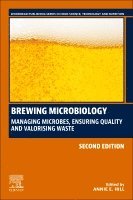
    Brewing Microbiology

    Managing Microbes, Ensuring Quality and Valorising Waste

    AvAnnie Hill

    Inbunden, Engelska, 2025

    Del i serien Woodhead Publishing Series in Food Science, Technology and Nutrition

    2 604 kr

    Beställningsvara. Skickas inom 10-15 vardagar. Fri frakt över 249 kr.

    Beskrivning

    Brewing Microbiology: Managing Microbes, Ensuring Quality and Valorising Waste, Second Edition covers micro-organisms of significance to the brewing industry, including the most recent threats to beer quality and stability that have emerged. Reflecting the significant surge in production of no- and low-alcohol (NOLO) beers and Hard Seltzers since the publication of the 1st edition, and the lack of information available on the increased microbiological risk associated with these beverages - and how to control them, a new chapter "Maintaining microbiological quality control in Hard Seltzers and NOLO beverages" provides best practices in ensuring safe and effective management in production and stability. Sustainability and the environment have been at the forefront of brewers strategic thinking for many years. The first edition of Brewing Microbiology included coverage of anaerobic treatments of brewery waste and waste-water treatment. This section has been expanded to cover recent innovations in the valorization of brewery waste streams, such as biotransformation of brewers spent grains.


    • Provides a fully revised and updated resource, including the latest developments in brewing microbiology and its role in quality and safety assurance
    • Discusses the microbes that are essential for successful beer production and processing
    • Covers spoilage bacteria, yeasts, sensory quality and microbiological waste management
    • Focuses on developments in industry and academia, bringing together leading experts in the field

    Produktinformation

    • Utgivningsdatum:2025-01-27
    • Mått:216 x 276 x 28 mm
    • Vikt:1 000 g
    • Format:Inbunden
    • Språk:Engelska
    • Serie:Woodhead Publishing Series in Food Science, Technology and Nutrition
    • Antal sidor:434
    • Upplaga:2
    • Förlag:Elsevier Science
    • ISBN:9780323996068

    Utforska kategorier

    • Tillverkningsteknik inom Naturvetenskap och teknik

    Mer om författaren

    Dr Annie E. Hill is Associate Professor and Programme Director for the MSc/Postgraduate Diploma in Brewing & Distilling by Distance Learning at the International Centre for Brewing & Distilling at Heriot-Watt University, Edinburgh. Research interests currently involve distilled spirits production with a focus on microbiological aspects including fermentation and distillery microflora. Within teaching, Annie is Course Director for a range of Undergraduate and Postgraduate programmes covering microbiology, biochemistry and industrial practice, and has supervised over 170 MSc projects. Annie regularly reviews articles within brewing/distilling microbiology for the Institute of Brewing and Distilling, the American Society of Brewing Chemists, Foods, Fermentation, Food Control, and Critical Reviews in Biotechnology, and is an Editorial Board Member for the American Society of Brewing Chemists and Journal of Distilling Science. She is the editor of Brewing Microbiology and co-editor of Distilled Spirits.

    Innehållsförteckning

    • Part IYeast: Properties and management1. Brewing yeasts: An overview2. Yeast quality assessment, management and culture maintenance3. Modelling yeast growth and metabolism for optimum performance4. Advances in metabolic engineering of yeasts5. Yeast identification and characterizationPart IISpoilage bacteria and other contaminants6. Toxigenic fungi and mycotoxins in the barley-to-beer chain7. Gram-positive spoilage bacteria in brewing8. Gram-negative spoilage bacteria in brewing9. Strictly anaerobic beer-spoilage bacteriaPart IIIReducing microbial spoilage: Design and technology10. Hygienic design and cleaning-in-place (CIP) systems in breweries11. Reducing microbial spoilage of beer using filtration12. Reducing microbial spoilage of beer using pasteurisation13. Maintaining microbiological quality control in Hard Seltzers and NOLO beverages To include biopreservation14. Traditional methods of detection and identification of brewery spoilage organisms15. Rapid detection and identification of spoilage bacteria in beer16. Beer packaging: Microbiological-hazards and considerations17. Draught beer: Hygiene, microbiology and qualityPart IVImpact of microbiology on sensory quality18. Biotransformation of wort components for appearance, flavour and health19. Exploration of beer flavour and sensory analysis as a tool for microbial quality control in the breweryPart VThe recycling and valorisation of brewing residues20. Anaerobic treatment of brewery wastes21. Water treatment and reuse in breweries