• Fri frakt över 249 kr
  • •
  • Snabba leveranser
  • •
  • Billiga böcker
Kundservice

Du är på sajten för privatpersoner.

Företag, bibliotek eller offentlig verksamhet?

Du handlar på classic.bokus.com, där alla dina funktioner finns intakta.
Till classic.bokus.com
Bokus logotyp. Gå till startsidan.
  • Erbjudanden
  • Nyheter
  • Student
  • Topplistor
  • Barn & ungdom
  • Bokus Play
  • E-böcker
  • Pocketböcker
  • Spel & pussel

10% studentrabatt med kod TERM26

Sidfot

Mina sidor

    Hjälp

    • Kundservice
    • Vanliga frågor och svar
    • Frakt och leverans
    • Retur vid ångerrätt
    • Reklamera vara
    • Betalning
    • Köpvillkor
    • Allmänna villkor
    • Information om webbplatsens tillgänglighet

    Om Bokus

    • Om oss
    • Pressrum
    • För studenter
    • För företag
    • För bibliotek och offentlig verksamhet
    • För leverantörer
    • Hållbarhet

    Populärt

    • Aktuella erbjudanden
    • Presentkort
    • Studentlitteratur
    • Nya böcker
    • Topplistor
    • Signerade böcker
    • Engelska böcker

    Inspiration

    • Boktips
    • BookTok
    • Populära bokserier
    • Barnbokskaraktärer
    • Populära författare
    Logotyp för Bokus
    Följ oss på Facebook (extern länk)Följ oss på Instagram (extern länk)Följ oss på YouTube (extern länk)Följ oss på TikTok (extern länk)
    bokus @ CookiesAnpassa cookiesIntegritetspolicyKöpvillkor
    Till Citymail hemsida (extern länk)Till Budbee hemsida (extern länk)Till Postnord hemsida (extern länk)Till Schenker hemsida (extern länk)Till Early Bird hemsida (extern länk)Till Walleys hemsida (extern länk)
    1. Samhälle och politik
    2. Samhälle och kultur
    3. Kultur och medier
    4. Referensverk och tvärvetenskap

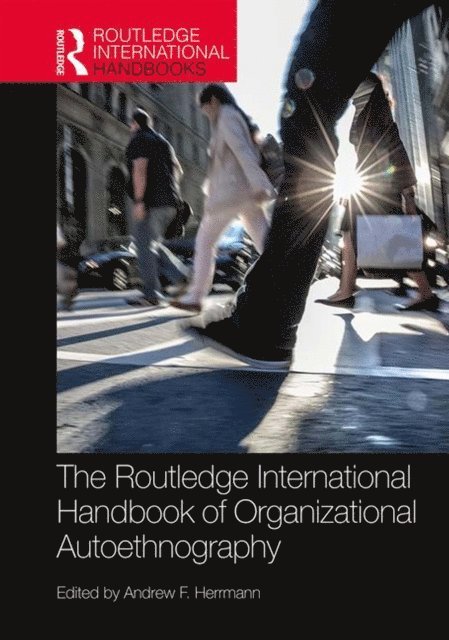
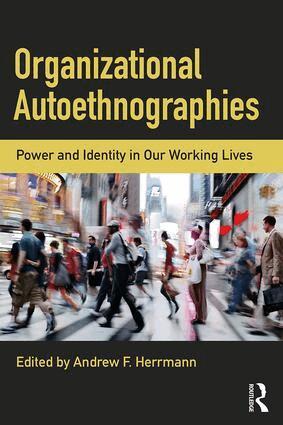
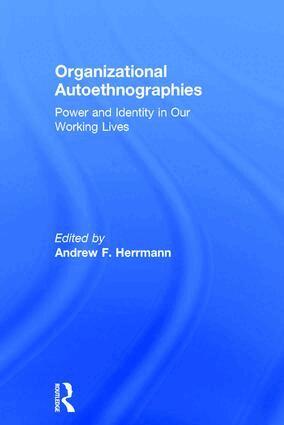
    Routledge International Handbook of Organizational Autoethnography

    AvAndrew Herrmann

    Inbunden, Engelska, 2020

    Del i serien Routledge International Handbooks

    3 676 kr

    Beställningsvara. Skickas inom 10-15 vardagar. Fri frakt över 249 kr.

    Beskrivning

    For nearly 40 years researchers have been using narratives and stories to understand larger cultural issues through the lenses of their personal experiences. There is an increasing recognition that autoethnographic approaches to work and organizations add to our knowledge of both personal identity and organizational scholarship. By using personal narrative and autoethnographic approaches, this research focuses on the working lives of individual people within the organizations for which they work. This international handbook includes chapters that provide multiple overarching perspectives to organizational autoethnography including views from fields such as critical, postcolonial and queer studies. It also tackles specific organizational processes, including organizational exits, grief, fandom, and workplace bullying, as well as highlighting the ethical implications of writing organizational research from a personal narrative approach. Contributors also provide autoethnographies about the military, health care and academia, in addition to approaches from various subdisciplines such as marketing, economics, and documentary film work.Contributions from the US, the UK, Europe, and the Global South span disciplines such as organizational studies and ethnography, communication studies, business studies, and theatre and performance to provide a comprehensive map of this wide-reaching area of qualitative research. This handbook will therefore be of interest to both graduate and postgraduate students as well as practicing researchers.Winner of the 2021 National Communication Association Ethnography Division Best Book AwardWinner of the 2021 Distinguished Book on Business Communication Award, Association for Business Communication

    Produktinformation

    • Utgivningsdatum:2020-07-17
    • Mått:174 x 246 x 38 mm
    • Vikt:1 100 g
    • Format:Inbunden
    • Språk:Engelska
    • Serie:Routledge International Handbooks
    • Antal sidor:516
    • Förlag:Taylor & Francis Ltd
    • ISBN:9780367174729

    Utforska kategorier

    • Referensverk och tvärvetenskap inom Samhälle och politik
    • Organisationsteori inom Ekonomi och Ledarskap
    • Sociologi inom Samhälle och politik

    Mer om författaren

    Andrew F. Herrmann is an Associate Professor of Communication Studies at East Tennessee State University, where he teaches organizational and professional communication, communication technology, and personal narrative courses. His critical research focuses on identity, narrative, and power at the intersections of organizational, occupational, and popular culture contexts.

    Innehållsförteckning

    • List of FiguresList of TablesAcknowledgementsPreface: Organizing a Handbook and What’s InsideAndrew F. HerrmannSection I: Situating Organizational Autoethnography 1. The Historical and Hysterical Narratives of Organization and AutoethnographyAndrew F. Herrmann2. Life between Interlocking Oppressions: An Intersectional Approach to Organizational AutoethnographyHelena Liu3. Autoethnography through the Prism of Foucault’s Care of the Self Leah Tomkins4. Queering Organizational Research Through AutoethnographyJamie McDonald and Nick Rumens5. Postcolonial Organizational Autoethnography: Journey into Reflexivity, Erasures, and MarginsMahuya Pal, Beatriz Nieto Fernandez, and Nivethitha Ketheeswaran6. Aggression, Bullying and Mobbing in the Workplace: An Autoethnographic ExplorationMpho M. Pheko, Thabo L. Seleke, Joy Tauetsile, and Motsomi N. MarobelaSection II: Autoethnography Across Organizational Disciplines7. On Not Seeing Myself in the Research on VeteransJeni R. Hunniecutt8. Navigating the Narrow Spaces: A Critical Autoethnography of Life in the (Postmodern) Neoliberal UniversityChristopher N. Poulos9. Autoethnography and Information TechnologyNiamh Riordan10. Organizational Autoethnographies of Economy, Finance, Business and Management: Reflections and PossibilitiesJeff Hearn, Karl-Erik Sveiby, and Anika Thym11. The Discomfort of Autoethnography in Academic Marketing ResearchChris HackleySection III: Organizations and Organizing12. Billable (H)ours: Autoethnography, Ambivalence, and Academic Labor in a Healthcare OrganizationNicole Defenbaugh, Jay Baglia, and Elissa Foster13. Birthing Autoethnographic Philanthropy, Healing, and Organizational Change: That Baby’s NameAbby Lackey14. Organizing Desire: The Queer BarTony E. Adams15. Polypreneur: An Autoethnography of Owning Multiple Businesses, SimultaneouslyStephanie K. Webb16. Organizational Resistance and AutoethnographySanne Frandsen and R. Duncan M. PellySection IV: Organizing Organizational Identities17. Grieving Kathy: An Interactional Autoethnography of Cultivating Sustainable OrganizationsDanielle M. Stern and Linda D. Manning18. Finding the "I" in Fan: Organizing Around Performed Identities within Fan SpacesAdam Tyma19. Pieced Together. Writing Invisible (Dis)abilities in AcademiaKatrine Meldgaard Kjær and Noortje van Amsterdam20. "Switch Off the Headwork!": Everyday Organizational Crossings in Identity Transformations from Academic to Distance RunnerJacquelyn Allen-Collinson and John Hockey21. An Autoethnographic Account of (Pre)Retirement Socialization: Examining Anticipatory Messages About Workforce ExitLindsey B. Anderson22. Walking Home: An Autoethnography of Hiking, Cultural Identity, and (De)colonizationPhiona StanleySection V: Writing and Evaluating Organizational Autoethnography23. Learning through the Process: Failure, Frustration and Forward Movement in AutoethnographyKatherine Denker, Kayla Rausch, and Savaughn Williams 24. The IRB’s Stone Wall: Rollercoaster of DoomThomas W. Townsend, Angela Duggins, Brandon Bragg, Tess McCoy, Juliette Guerrault, Jessica Newell, and Hannah Tiberi25. Anchoring the Big Tent: How Organizational Autoethnography Exemplifies and Stretches Notions of Qualitative QualityCary J. S. López and Sarah J. Tracy26. Towards a Model of Collaborative Organizational Autoethnography: The More the Merrier?Sally Sambrook and Clair Doloriert27. Autoethnographic Data as Abductive Experiences Wafa Said MoslehSection VI: Organizing the Future of Organizational Autoethnography 28. Framing Stories from the Academic Margins: Documentary as Qualitative Inquiry and Critical Community EngagementBrian Johnston29. Time and the Writing of Personal Narratives in Organizational EthnographyMette Gislev Kjærsgaard and Henry Larson30. Organizing Autoethnography on the Internet: Models and ChallengesMaha Bali31. A CCO Perspective on Autoethnography: Researching, Organizing and ConstitutingFrédérik Matte and Geneviève Boivin32. Conclusion: Organizing the Future of Organizational AutoethnographyAndrew F. Herrmann