• Fri frakt över 249 kr
  • •
  • Snabba leveranser
  • •
  • Billiga böcker
Kundservice

Du är på sajten för privatpersoner.

Företag, bibliotek eller offentlig verksamhet?

Du handlar på classic.bokus.com, där alla dina funktioner finns intakta.
Till classic.bokus.com
Bokus logotyp. Gå till startsidan.
  • Erbjudanden
  • Nyheter
  • Student
  • Topplistor
  • Barn & ungdom
  • Bokus Play
  • E-böcker
  • Pocketböcker
  • Spel & pussel

10% rabatt på allt med kod NYSTART10 →

Sidfot

Mina sidor

    Hjälp

    • Kundservice
    • Vanliga frågor och svar
    • Frakt och leverans
    • Retur vid ångerrätt
    • Reklamera vara
    • Betalning
    • Köpvillkor
    • Allmänna villkor
    • Information om webbplatsens tillgänglighet

    Om Bokus

    • Om oss
    • Pressrum
    • För studenter
    • För företag
    • För bibliotek och offentlig verksamhet
    • För leverantörer
    • Hållbarhet

    Populärt

    • Aktuella erbjudanden
    • Presentkort
    • Studentlitteratur
    • Nya böcker
    • Topplistor
    • Signerade böcker
    • Engelska böcker

    Inspiration

    • Boktips
    • BookTok
    • Populära bokserier
    • Barnbokskaraktärer
    • Populära författare
    Logotyp för Bokus
    Följ oss på Facebook (extern länk)Följ oss på Instagram (extern länk)Följ oss på YouTube (extern länk)Följ oss på TikTok (extern länk)
    bokus @ CookiesAnpassa cookiesIntegritetspolicyKöpvillkor
    Till Citymail hemsida (extern länk)Till Budbee hemsida (extern länk)Till Postnord hemsida (extern länk)Till Schenker hemsida (extern länk)Till Early Bird hemsida (extern länk)Till Walleys hemsida (extern länk)
    1. Medicin
    2. Andra medicinska specialiteter
    3. Klinisk psykologi

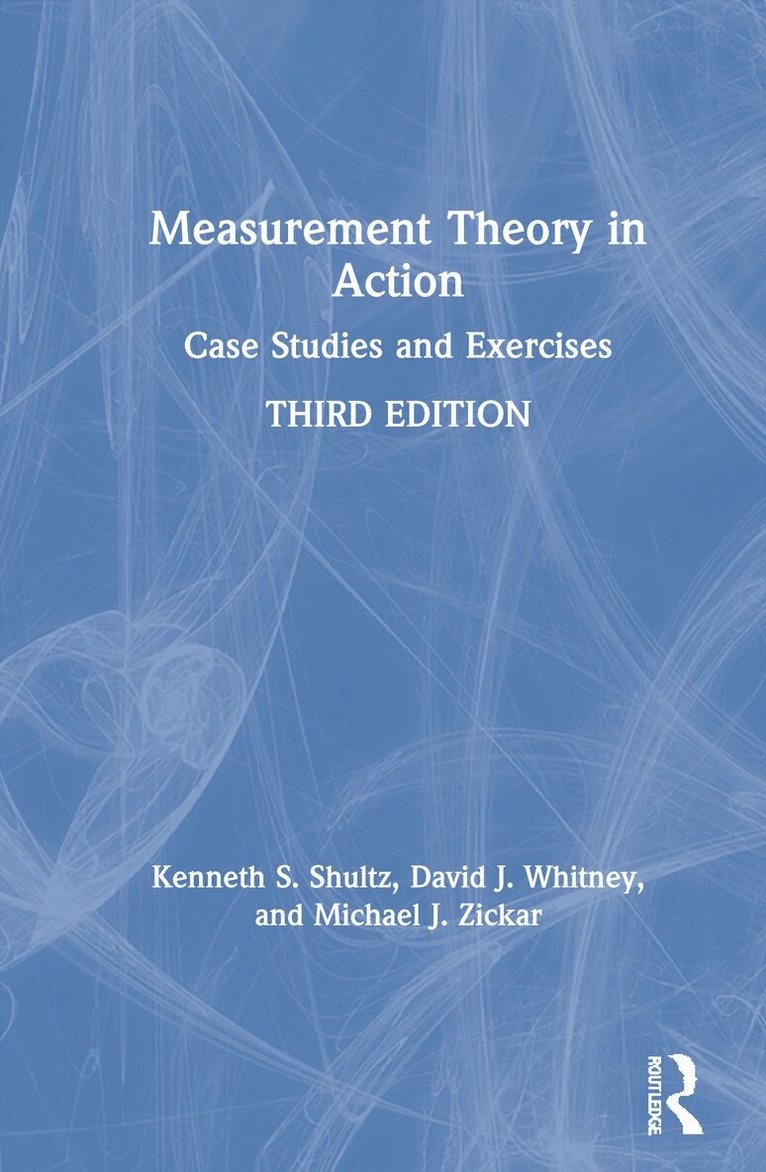
    Measurement Theory in Action

    Case Studies and Exercises

    AvKenneth S Shultz,David Whitney

    Inbunden, Engelska, 2020

    2 249 kr

    Beställningsvara. Skickas inom 10-15 vardagar. Fri frakt över 249 kr.

    Fler format och utgåvor

    Häftad

    817 kr

    Beskrivning

    Measurement Theory in Action, Third Edition, helps readers apply testing and measurement theories and features 22 self-contained modules which instructors can match to their courses. Each module features an overview of a measurement issue and a step-by-step application of that theory. Best Practices provide recommendations for ensuring the appropriate application of the theory. Practical Questions help students assess their understanding of the topic. Students can apply the material using real data in the Exercises, some of which require no computer access, while others involve the use of statistical software to solve the problem. Case Studies in each module depict typical dilemmas faced when applying measurement theory followed by Questions to Ponder to encourage critical examination of the issues noted in the cases. The book’s website houses the data sets, additional exercises, PowerPoints, and more. Other features include suggested readings to further one’s understanding of the topics, a glossary, and a comprehensive exercise in Appendix A that incorporates many of the steps in the development of a measure of typical performance.Updated throughout to reflect recent changes in the field, the new edition also features: Recent changes in understanding measurement, with over 50 new and updated references Explanations of why each chapter, article, or book in each module’s Further Readings section is recommended Instructors will find suggested answers to the book’s questions and exercises; detailed solutions to the exercises; test bank with 10 multiple choice and 5 short answer questions for each module; and PowerPoint slides. Students and instructors can access SPSS data sets; additional exercises; the glossary; and additional information helpful in understanding psychometric concepts.It is ideal as a text for any psychometrics or testing and measurement course taught in psychology, education, marketing, and management. It is also an invaluable reference for professional researchers in need of a quick refresher on applying measurement theory.

    Produktinformation

    • Utgivningsdatum:2020-12-30
    • Mått:152 x 229 x 28 mm
    • Vikt:716 g
    • Format:Inbunden
    • Språk:Engelska
    • Antal sidor:416
    • Upplaga:3
    • Förlag:Taylor & Francis Ltd
    • ISBN:9780367192174

    Utforska kategorier

    • Klinisk psykologi inom Medicin
    • Examination och betygsättning inom Psykologi och pedagogik
    • Psykologisk metod inom Psykologi och pedagogik

    Mer om författaren

    Kenneth S. Shultz is Professor of Psychology at California State University, San Bernardino, USA. He teaches classes in I-O psychology, research methods, psychological testing, and statistics. He has more than 55 peer-reviewed articles, four books, and 15 book chapters. He was the recipient of the 2014-2015 John M. Pfau Outstanding Professor Award at CSUSB.David J. Whitney is Professor of Psychology at California State University, Long Beach, USA. He teaches classes in I-O psychology, psychological testing, introductory statistics, and Autism Spectrum Disorder. With 25 peer-reviewed publications, he is among the most cited researchers from his university. Michael J. Zickar is Sandman Professor of Industrial-Organizational Psychology at Bowling Green State University, Ohio, USA. He teaches classes in I-O psychology, psychometrics, and the history of psychology. He has published more than 60 peer-reviewed articles. He is also a Fellow of the Society for Industrial-Organizational Psychology.

    Recensioner i media

    "Students… appreciate the short modules and the applied examples. Students use the exercises and examples to make the concepts come to life." – Jennifer Kisamore, PhDPraise for Previous Edition: "As someone who has frequently taught measurement courses, I am a firm believer that student learning of the material is critically tied to being able to apply the core techniques. This book provides tremendous opportunities for application of fundamental measurement concepts and techniques in all key aspects of the test development and validation process." – Ronald S. Landis, Illinois Institute of Technology, USA"This is an excellent introduction to psychometrics with a strong hands-on emphasis. The writing is clear and easy to follow. This is an invaluable resource for students new to psychological and educational measurement as well as for instructors looking for solid examples to use in their courses." – Adam Meade, North Carolina State University, USA"This book offers a view of measurement and measurement practice that goes beyond most books on measurement, which are so analytical that they might well be called "Measurement theory inaction." Highly recommended for anyone interested in views on measurement theory." – Michael James Zyphur, University of Melbourne, Australia"I love the practical questions, case studies, and exercises. …The authors are wonderful writers. ... It is accessible to undergraduates and … graduate students … I will use it, and I will most definitely recommend it to everyone. ... Practitioners wanting a refresher in measurement would find this valuable." – Lisa Finkelstein, Northern Illinois University, USA"The target market for this book can be expanded beyond just psychology/education students to include business management students. As someone who teaches research methods to these students, I believe there is a dire need for such measurement texts. ...I am more than happy to adopt it and recommend to my colleagues." – Debi P. Mishra, State University of New York – Binghamton, USA"It is a very easy book to pick up and read. … Half of the instructor’s battle ... is simply getting the students to read the assigned material. Shultz and Whitney [and Zickar] make it easy to win that battle. ...The students really seem to like it. ...Some of [case studies] are "dead-on" relevant to situations that my students find themselves in. ...It’s a great text." – Dennis Devine, Indiana University- Purdue University Indianapolis, USA

    Innehållsförteckning

    • About the AuthorsPrefaceIntroductionModule 1. Introduction and OverviewModule 2. Statistics Review for Psychological MeasurementModule 3. Psychological ScalingModule 4. Test Preparation and SpecificationReliability, Validity, and Test biasModule 5. Reliability Overview: Classical Test TheoryModule 6. Estimating ReliabilityModule 7. Content ValidationModule 8. Criterion-Related Validation Module 9. Construct ValidationModule 10. Validity Generalization and Psychometric Meta-AnalysisModule 11. Test Bias, Unfairness, and EquivalencePractical Issues in Test ConstructionModule 12. Developing Tests of Maximal PerformanceModule 13. Classical Test Theory Item AnalysisModule 14. Scoring TestsModule 15. Developing Measures of Typical PerformanceModule 16. Response BiasesAdvanced TopicsModule 17. Combining Predictors Using Multiple Regression Module 18. Exploratory Factor AnalysisModule 19. Confirmatory Factor AnalysisModule 20. Item Response TheoryModule 21. Applications of Item Response Theory: Computer Adaptive Testing and Differential Item FunctioningModule 22. Generalizability TheoryAppendix A. Course-Long Exercise on Psychological Scale DevelopmentAppendix B. Data Set DescriptionsGlossary of Key TermsReferencesAuthor IndexSubject Index