• Fri frakt över 249 kr
  • •
  • Snabba leveranser
  • •
  • Billiga böcker
Kundservice

Du är på sajten för privatpersoner.

Företag, bibliotek eller offentlig verksamhet?

Du handlar på classic.bokus.com, där alla dina funktioner finns intakta.
Till classic.bokus.com
Bokus logotyp. Gå till startsidan.
  • Erbjudanden
  • Nyheter
  • Student
  • Topplistor
  • Barn & ungdom
  • Bokus Play
  • E-böcker
  • Pocketböcker
  • Spel & pussel

Må bättre, för mindre! Upp till 50% rabatt på hälsoböcker

Sidfot

Mina sidor

    Hjälp

    • Kundservice
    • Vanliga frågor och svar
    • Frakt och leverans
    • Retur vid ångerrätt
    • Reklamera vara
    • Betalning
    • Köpvillkor
    • Allmänna villkor
    • Information om webbplatsens tillgänglighet

    Om Bokus

    • Om oss
    • Pressrum
    • För studenter
    • För företag
    • För bibliotek och offentlig verksamhet
    • För leverantörer
    • Hållbarhet

    Populärt

    • Aktuella erbjudanden
    • Presentkort
    • Studentlitteratur
    • Nya böcker
    • Topplistor
    • Signerade böcker
    • Engelska böcker

    Inspiration

    • Boktips
    • BookTok
    • Populära bokserier
    • Barnbokskaraktärer
    • Populära författare
    Logotyp för Bokus
    Följ oss på Facebook (extern länk)Följ oss på Instagram (extern länk)Följ oss på YouTube (extern länk)Följ oss på TikTok (extern länk)
    bokus @ CookiesAnpassa cookiesIntegritetspolicyKöpvillkor
    Till Citymail hemsida (extern länk)Till Budbee hemsida (extern länk)Till Postnord hemsida (extern länk)Till Schenker hemsida (extern länk)Till Early Bird hemsida (extern länk)Till Walleys hemsida (extern länk)
    1. Kultur
    2. Arkitektur

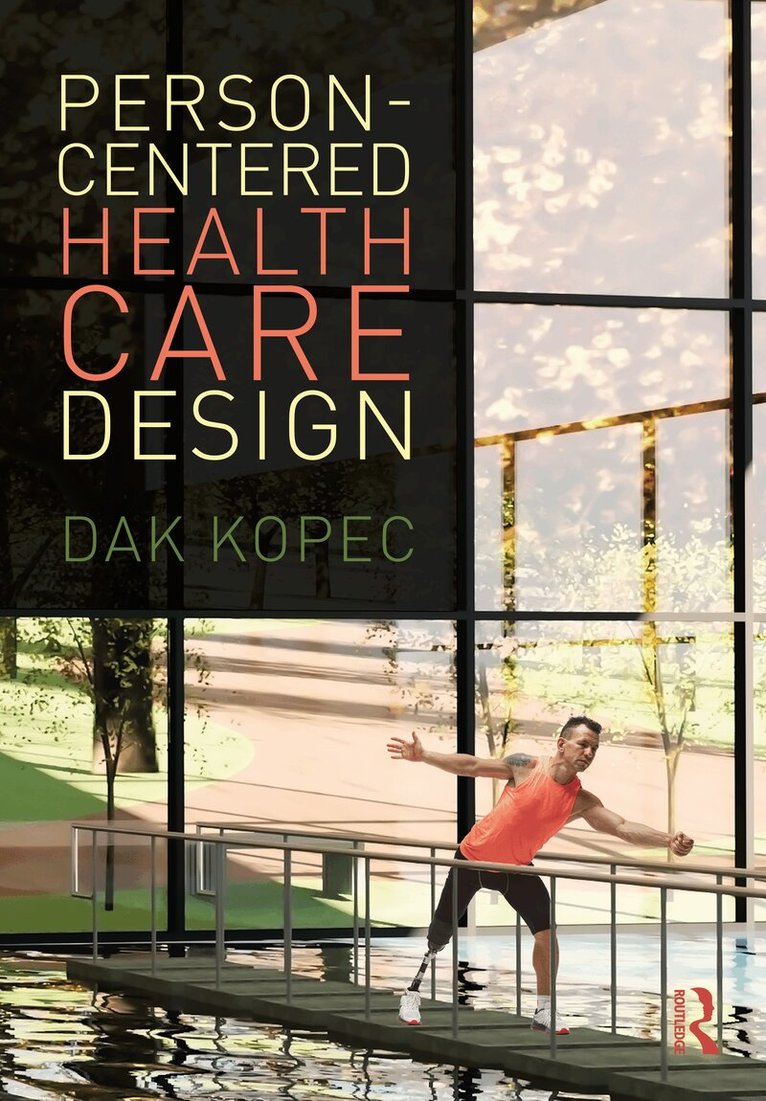
    Person-Centered Health Care Design

    AvDak Kopec

    Inbunden, Engelska, 2021

    2 506 kr

    Beställningsvara. Skickas inom 10-15 vardagar. Fri frakt över 249 kr.

    Fler format och utgåvor

    Häftad

    646 kr

    E-bok

    760 kr

    E-bok

    760 kr

    Beskrivning

    Disease, injury, or congenital disorders result in an inability to perform activities of daily living as effectively as others. Most of these activities take place within and are dependent upon the designed environment. This book presents the specialized area of person-centered health care design, which focuses on a person's design needs because of one or more health conditions and requires foundational knowledge pertaining to infection control, bio-physiology, neuroscience, and basic biomechanics.Whether the designer has engaged in person- or condition-centered design, this book examines the causes that bring about health conditions, such as autoimmune disorders, chronic lung disease, muscular dystrophy, and neurological disorders, and the effects these have on a person's quality of life. Over forty various health conditions are discussed in relation to assorted building typologies—schools, group homes, rehabilitation and habilitation centers, and more—to identify design solutions for modifying each environment to best accommodate and support a person’s needs.Dak Kopec encourages readers to think critically and deductively about numerous health conditions and how to best design for them. This book provides students and practitioners a foundational framework that supports the promotion of health, safety, and welfare as they pertain to a person's physiological, psychological, and sociological well-being.

    Produktinformation

    • Utgivningsdatum:2021-05-06
    • Mått:178 x 254 x undefined mm
    • Vikt:1 260 g
    • Format:Inbunden
    • Språk:Engelska
    • Antal sidor:338
    • Förlag:Taylor & Francis Ltd
    • ISBN:9780367194857

    Utforska kategorier

    • Arkitektur inom Kultur
    • Arbetsmarknaden inom Ekonomi och Ledarskap
    • Folkhälsa och hälsopedagogik inom Medicin

    Mer om författaren

    Dak Kopec is an associate professor in the School of Architecture at the University of Nevada, Las Vegas. Dak has authored several books used by interior design educators, including three editions of Environmental Psychology for Design. He is a two-time Polsky Prize winner, is credited with researching, developing, and administering the first low-residency graduate program focused on designs for human health at the Boston Architectural College, and has been awarded honorary Fellowship to ASID (Hon.FASID). Dak served as a visiting professor at the University of Hawaii with a joint position in architecture and medicine, was listed as a Fulbright Specialist, and subsequently served two terms as a Fulbright Reviewer. In 2017, Dak won IDEC’s Community Service Award for the design of a group home for people with developmental disabilities and early-onset dementia. Today, Dak is calling upon his diverse educational background in health sciences, psychology, and architecture to promote interdisciplinary and person-centered design.

    Recensioner i media

    "Environmental design approaches promoting human-centric solutions engender spaces to improve quality of life. Bridging medical and environmental design, Person-Centered Health Care Design introduces a specialty where designers develop knowledge of anatomy, physiology, and disease pathology vis-a-vis designed environments. The book’s coverage of design’s intersections with health offers a significant foundation across various scales. The book presents crosscutting knowledge to designers focused on preventing health conditions, aiding in rehabilitation, or assisting those with altered capacities due to health conditions, and suggests processes for those expanding their professional skills." Dr. Lynne M. Dearborn, AIA, Professor of Architecture, University of Illinois at Urbana-Champaign"Person-Centered Health Care Design attends to the necessary point that people vary and healthcare conditions are diverse and that wellness involves physical, psychological, emotional health. It follows that healthcare environment solutions must acknowledge and strategically nurture patients where they are in their healing or health management process. Now more than ever, thoughtful, attendant environments are a prescription for people just as drug and therapy regimens are. Person-Centered Health Care Design importantly links medical conditions with built environment interventions that can lend important support to people in a time of great need." Jill Pable, Ph.D., FIDEC, NCIDQ, WELL AP

    Innehållsförteckning

    • 1. Introducing the Health Care Designer; 2. Evolving Beliefs, Lifestyles, and Diseases; 3. Body Insults; 4. Muscular Disorders, Joint Deterioration, and Skeletal Dysplasias; 5. Autoimmune Diseases; 6. Allergens and Sensitivity Disorders; 7. Chronic Lung Diseases; 8. Acquired Brain Injuries; 9. Sensory Deficits; 10. Cognitive Disabilities; 11. Neurological Disorders; 12. Dementias; 13. Post-Traumatic Stress and Mood Disorders; 14. Psychosis and Neurosis