• Fri frakt över 249 kr
  • •
  • Snabba leveranser
  • •
  • Billiga böcker
Kundservice

Du är på sajten för privatpersoner.

Företag, bibliotek eller offentlig verksamhet?

Du handlar på classic.bokus.com, där alla dina funktioner finns intakta.
Till classic.bokus.com
Bokus logotyp. Gå till startsidan.
  • Erbjudanden
  • Nyheter
  • Student
  • Topplistor
  • Barn & ungdom
  • Bokus Play
  • E-böcker
  • Pocketböcker
  • Spel & pussel

10% rabatt på allt med kod: NYSTART10 →

Sidfot

Mina sidor

    Hjälp

    • Kundservice
    • Vanliga frågor och svar
    • Frakt och leverans
    • Retur vid ångerrätt
    • Reklamera vara
    • Betalning
    • Köpvillkor
    • Allmänna villkor
    • Information om webbplatsens tillgänglighet

    Om Bokus

    • Om oss
    • Pressrum
    • För studenter
    • För företag
    • För bibliotek och offentlig verksamhet
    • För leverantörer
    • Hållbarhet

    Populärt

    • Aktuella erbjudanden
    • Presentkort
    • Studentlitteratur
    • Nya böcker
    • Topplistor
    • Signerade böcker
    • Engelska böcker

    Inspiration

    • Boktips
    • BookTok
    • Populära bokserier
    • Barnbokskaraktärer
    • Populära författare
    Logotyp för Bokus
    Följ oss på Facebook (extern länk)Följ oss på Instagram (extern länk)Följ oss på YouTube (extern länk)Följ oss på TikTok (extern länk)
    bokus @ CookiesAnpassa cookiesIntegritetspolicyKöpvillkor
    Till Citymail hemsida (extern länk)Till Budbee hemsida (extern länk)Till Postnord hemsida (extern länk)Till Schenker hemsida (extern länk)Till Early Bird hemsida (extern länk)Till Walleys hemsida (extern länk)
    1. Juridik
    2. Särskilda rättsområden
    3. Författningsrätt och förvaltningsrätt
    4. Mänskliga och medborgerliga rättigheter

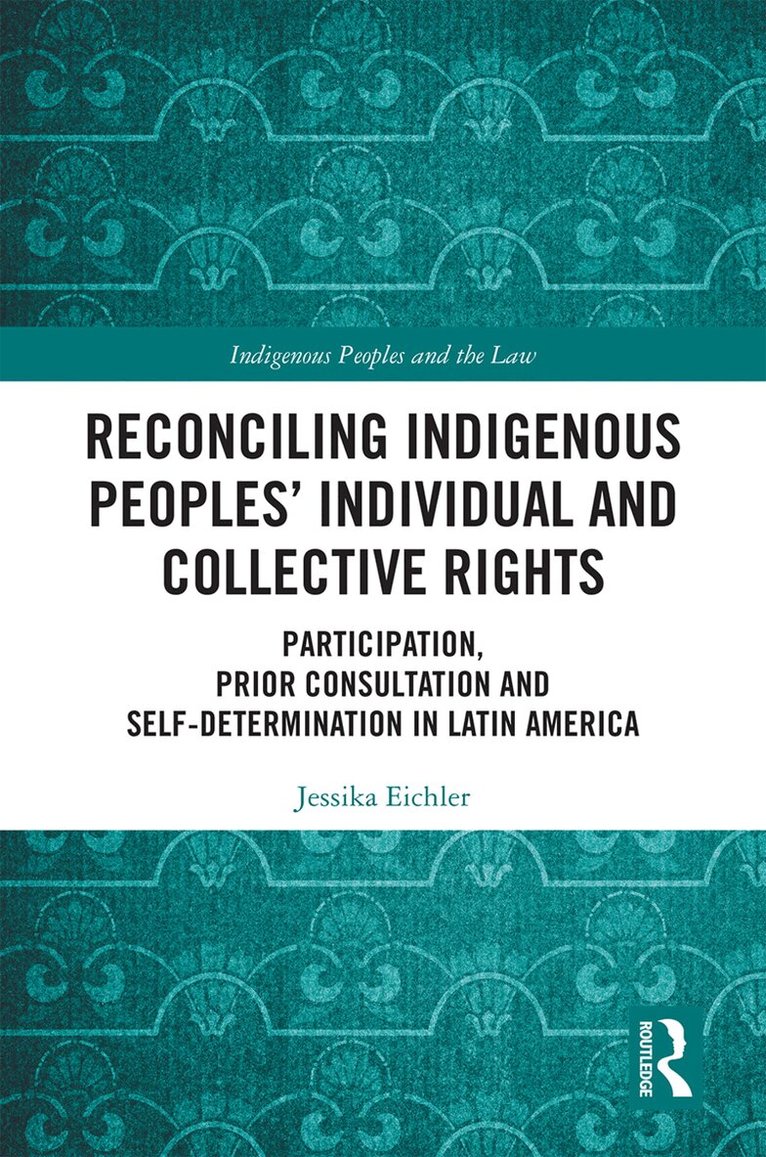
    Reconciling Indigenous Peoples’ Individual and Collective Rights

    Participation, Prior Consultation and Self-Determination in Latin America

    AvJessika Eichler

    Inbunden, Engelska, 2019

    Del i serien Indigenous Peoples and the Law

    2 227 kr

    Beställningsvara. Skickas inom 10-15 vardagar. Fri frakt över 249 kr.

    Fler format och utgåvor

    Häftad

    639 kr

    E-bok

    756 kr

    E-bok

    756 kr

    Beskrivning

    This book critically assesses categorical divisions between indigenous individual and collective rights regimes embedded in the foundations of international human rights law. Both conceptual ambiguities and practice-related difficulties arising in vernacularisation processes point to the need of deeper reflection. Internal power struggles, vulnerabilities and intra-group inequalities go unnoticed in that context, leaving persisting forms of neo-colonialism, neo-liberalism and patriarchalism largely untouched. This is to the detriment of groups within indigenous communities such as women, the elderly or young people, alongside intergenerational rights representing considerable intersectional claims and agendas. Integrating legal theoretical, political, socio-legal and anthropological perspectives, this book disentangles indigenous rights frameworks in the particular case of peremptory norms whenever these reflect both individual and collective rights dimensions. Further-reaching conclusions are drawn for groups ‘in between’, different formations of minority groups demanding rights on their own terms. Particular absolute norms provide insights into such interplay transcending individual and collective frameworks. As one of the founding constitutive elements of indigenous collective frameworks, indigenous peoples’ right to prior consultation exemplifies what we could describe as exerting a cumulative, spill-over and transcending effect. Related debates concerning participation and self-determination thereby gain salience in a complex web of players and interests at stake. Self-determination thereby assumes yet another dimension, namely as an umbrella tool of resistance enabling indigenous cosmovisions to materialise in the light of persisting patterns of epistemological oppression.Using a theoretical approach to close the supposed gap between indigenous rights frameworks informed by empirical insights from Bolivia, the Andes and Latin America, the book sheds light on developments in the African and European human rights systems.

    Produktinformation

    • Utgivningsdatum:2019-05-10
    • Mått:156 x 234 x 19 mm
    • Vikt:540 g
    • Format:Inbunden
    • Språk:Engelska
    • Serie:Indigenous Peoples and the Law
    • Antal sidor:196
    • Förlag:Taylor & Francis Ltd
    • ISBN:9780367203306

    Utforska kategorier

    • Mänskliga och medborgerliga rättigheter inom Juridik
    • Etnicitet inom Samhälle och politik

    Mer om författaren

    Jessika Eichler is Research Fellow in the Law & Anthropology Department at the Max Planck Institute for Social Anthropology and trAndeS programme, Institute for Latin American Studies, FU Berlin.

    Innehållsförteckning

    • Table of Figures Acknowledgements Chapter I: Introduction Chapter II: Setting up a Reconciliatory Framework: Reflections on Individual, Group-Based and Indigenous Collective Rights Encounters 2.1 Third Wayers and Terminologies: Bridging the Individual versus Collective Rights Divide or Third Categories as Distractions? 2.2 Dichotomies, Incommensurability or Constructed Demarcations? 2.3 Pre-conditionalism and its Impacts on Reconciling the Frameworks 2.4 Dual Standing and other Technicalities 2.5 Towards a Third Perspective within the Framework(s) 2.5.1 Absolute Individual Rights Claims in the Indigenous Collective Framework 2.5.2 Individual Entitlements in Absolute Indigenous Collective Regimes 2.5.3 Non-Derogation Claims in Non-Derogation Frameworks: Absoluteness in Individual and Collective Indigenous Claims 2.6 Conclusions: Third Perspective, Absoluteness and ‘Shared Spheres’ Chapter III: Indigenous Peoples’ Individual and Collective Rights to Participation in International Human Rights Law 3.1 Participatory Rights and their Codification in Indigenous Rights Regimes 3.1.1 The Participation Model of the Expert Mechanism on the Rights of Indigenous Peoples 3.1.2 Indigenous Peoples’ Participatory Rights Regime as Shaped by the Special Rapporteur 3.1.3 The Permanent Forum on Indigenous Issues and its Influence on Indigenous Rights Jurisprudence 3.2 Indigenous Participation in the Inter-American Human Rights System 3.2.1 The IACtHR and its Evolutionary Interpretation of Indigenous Participatory Rights 3.2.2 The IACHR and its View on Participation 3.3 Conflicting Intersectionalities? Individual Members’ Participatory Rights in Decision-Making 3.3.1 Third Perspective A