• Fri frakt över 249 kr
  • •
  • Snabba leveranser
  • •
  • Billiga böcker
Kundservice

Du är på sajten för privatpersoner.

Företag, bibliotek eller offentlig verksamhet?

Du handlar på classic.bokus.com, där alla dina funktioner finns intakta.
Till classic.bokus.com
Bokus logotyp. Gå till startsidan.
  • Erbjudanden
  • Nyheter
  • Student
  • Topplistor
  • Barn & ungdom
  • Bokus Play
  • E-böcker
  • Pocketböcker
  • Spel & pussel

10% rabatt på allt med kod: NYSTART10 →

Sidfot

Mina sidor

    Hjälp

    • Kundservice
    • Vanliga frågor och svar
    • Frakt och leverans
    • Retur vid ångerrätt
    • Reklamera vara
    • Betalning
    • Köpvillkor
    • Allmänna villkor
    • Information om webbplatsens tillgänglighet

    Om Bokus

    • Om oss
    • Pressrum
    • För studenter
    • För företag
    • För bibliotek och offentlig verksamhet
    • För leverantörer
    • Hållbarhet

    Populärt

    • Aktuella erbjudanden
    • Presentkort
    • Studentlitteratur
    • Nya böcker
    • Topplistor
    • Signerade böcker
    • Engelska böcker

    Inspiration

    • Boktips
    • BookTok
    • Populära bokserier
    • Barnbokskaraktärer
    • Populära författare
    Logotyp för Bokus
    Följ oss på Facebook (extern länk)Följ oss på Instagram (extern länk)Följ oss på YouTube (extern länk)Följ oss på TikTok (extern länk)
    bokus @ CookiesAnpassa cookiesIntegritetspolicyKöpvillkor
    Till Citymail hemsida (extern länk)Till Budbee hemsida (extern länk)Till Postnord hemsida (extern länk)Till Schenker hemsida (extern länk)Till Early Bird hemsida (extern länk)Till Walleys hemsida (extern länk)
    1. Juridik
    2. Särskilda rättsområden
    3. Miljö-, transport- och planeringsrätt
    4. Miljörätt

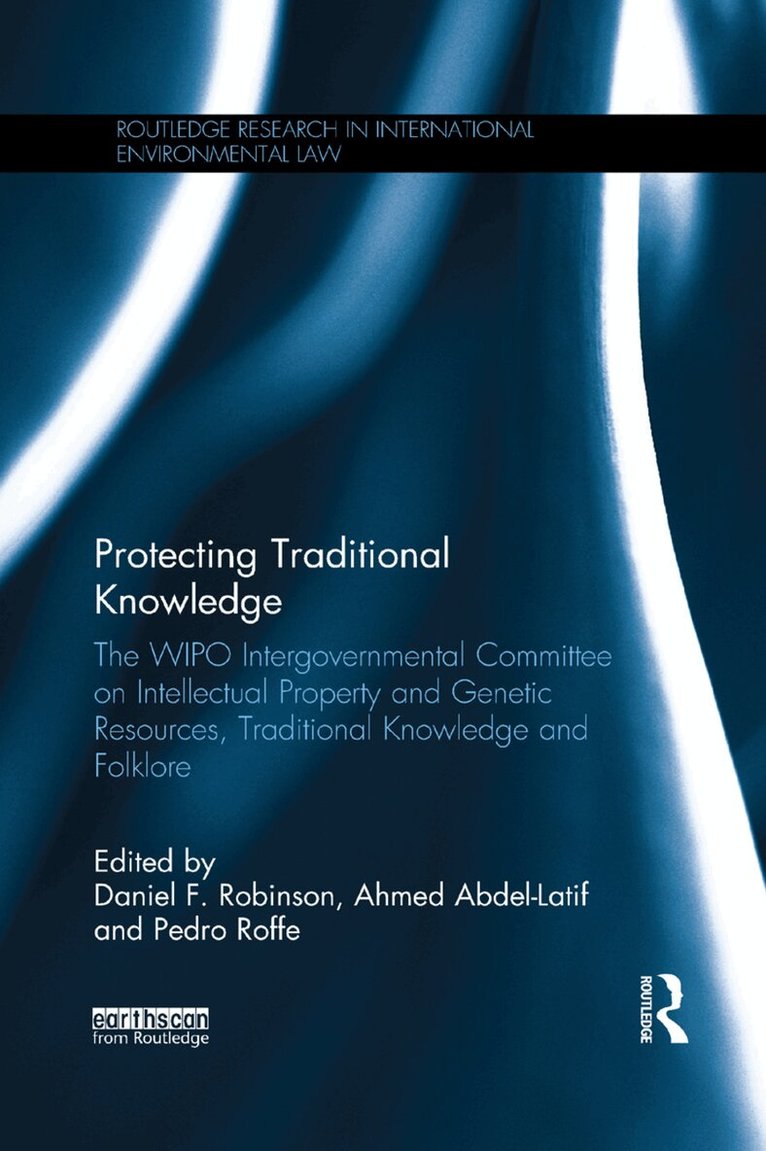
    Protecting Traditional Knowledge

    The WIPO Intergovernmental Committee on Intellectual Property and Genetic Resources, Traditional Knowledge and Folklore

    AvDaniel F. Robinson,Ahmed Abdel-Latif

    Häftad, Engelska, 2019

    Del i serien Routledge Research in International Environmental Law

    639 kr

    Beställningsvara. Skickas inom 10-15 vardagar. Fri frakt över 249 kr.

    Beskrivning

    This is the first comprehensive review of the Intergovernmental Committee (IGC) of the World Intellectual Property Organization (WIPO) established in 2000. It provides an in-depth consideration of the key thematic areas within WIPO discussions – genetic resources (GRs), traditional knowledge (TK) and traditional cultural expressions (TCEs) through the perspectives of a broad range of experts and stakeholders, including indigenous peoples and local communities. It also looks at how these areas have been treated in a number of forums and settings (including national systems and experiences, and also in trade agreements) and the interface with WIPO discussions. Furthermore, the book analyses the process and the negotiation dynamics since the IGC received a mandate from WIPO members, in 2009, to undertake formal text-based negotiations towards legal instruments for the protection of GR, TK and TCEs. While there has been some progress in these negotiations, important disagreements persist. If these are to be resolved, the adoption of these legal instruments would be a significant development towards resolving key gaps in the modern intellectual property system. In this regard, the book considers the future of the IGC and suggests options which could contribute towards achieving a consensual outcome.

    Produktinformation

    • Utgivningsdatum:2019-04-15
    • Mått:156 x 234 x 22 mm
    • Vikt:580 g
    • Format:Häftad
    • Språk:Engelska
    • Serie:Routledge Research in International Environmental Law
    • Antal sidor:366
    • Förlag:Taylor & Francis Ltd
    • ISBN:9780367335236

    Utforska kategorier

    • Miljörätt inom Juridik
    • Immaterialrätt inom Juridik
    • Miljöteknik inom Naturvetenskap och teknik

    Mer om författaren

    Daniel F. Robinson is Research Fellow at the International Centre for Trade and Sustainable Development (ICTSD) Geneva, Switzerland and Associate Professor in Environmental Studies at The University of New South Wales, Australia.Ahmed Abdel-Latif is Special Assistant for Policy and Programme in the Office of the Director General at the International Renewable Energy Agency (IRENA), Abu Dhabi, United Arab Emirates.Pedro Roffe is Senior Associate in Innovation, Technology and Intellectual Property at ICTSD, Geneva, Switzerland.

    Recensioner i media

    "A new book with contributions from key thinkers on the subject details the long history and intensive negotiations of the World Intellectual Property Organization committee on genetic resources, traditional knowledge and folklore, making a case for conclusion of binding international agreements in these areas as a way to close important gaps in intellectual property policy." - William New, Intellectual Property Watch (August 2017) "The WIPO Intergovernmental Committee on Intellectual Property and Genetic Resources, Traditional Knowledge and Folklore is a highly recommended contribution for students, academics and policy-makers. The book effectively systematizes the background and evolution of nearly two decades of IGC’s work and provides a vision into the future. One of the main merits of the book is that it explains in simple terms complex legal, economic, institutional, diplomatic and ethical implications of the relationship between intellectual property, genetic resources and traditional knowledge." - Miguel Ángel Elizalde Carranza, Universitat Pompeu Fabra, Barcelona, Spain

    Innehållsförteckning

    • Foreword Ricardo Meléndez-Ortiz Part 1: Introduction 1. Introduction: Mapping the Evolution, State-of-play and Future of the WIPO IGC Daniel F. Robinson, Pedro Roffe, Ahmed Abdel-Latif 2. Revisiting the Creation of the IGC: The Limits of Constructive Ambiguity? Ahmed Abdel-Latif 3. The Evolution of the IGC from 2001 to 2016: An Insider’s Perspective Wend Wendland 4. Relationships between the Work of the IGC and Other Forums Charles Lawson Part 2: Substantive Issues 5. Of Disclosure "Straws" and IP System "Camels": Patents, Innovation, and the Disclosure of Origin Requirement Margo A. Bagley 6. The Role of Databases, Contracts and Codes of Conduct Daniel F. Robinson and Claudio Chiarolla 7. The Legal Protection of Widely Shared and Dispersed Traditional Knowledge Manuel Ruiz Muller 8. Negotiating the Public Domain in an International Framework for Genetic Resources, Traditional Knowledge and Traditional Cultural Expressions Ruth L. Okediji 9. Traditional Cultural Expressions Marc Perlman 10. Now You See It Now You Don’t: The Rise and Fall of Customary Law in the IGC Brendan Tobin Part 3: Stakeholder Perspectives 11. An Indigenous Perspective on the WIPO IGC Maui Solomon 12. Genetic Resources, Traditional Knowledge and Disclosure Obligations: Some Observations from the Life Science Industry Dominic Muyldermans 13. Indigenous Culture and Indigenous Publishing: Balancing Protection, Preservation and Promotion Jens Bammel and José Borghino 14. Disclosure Requirements: Switzerland’s Perspective Georges Bauer, Cyrill Michael Berger and Martin Girsberger 15. India’s Position in the Intergovernmental Committee for the Protection of Traditional Knowledge Biswajit Dhar 16. The WIPO IGC: A US Perspective Dominic Keating 17. Access and Benefit Sharing, Intellectual Property Rights and the Protection of Traditional Knowledge in Costa Rica: Participation in and Possible Impacts of the IGC’s Work Jorge Cabrera Medaglia 18. New Zealand, Mātauranga Māori and the IGC Jessica C. Lai Part 4: The Future of the IGC 19. Preferential Trade Agreements and the Protection of Genetic Resources and Associated Traditional Knowledge Pedro Roffe 20. WIPO and the Traditional Knowledge Conundrum Ahmed Abdel-Latif 21. The Challenge of Cross-Border Protection of Traditional Knowledge Susy Frankel 22. Should We Protect Turmeric Lattes? Graham Dutfield 23. Ramifications of WIPO IGC for IP and Development Chidi Oguamanam