• Fri frakt över 249 kr
  • •
  • Snabba leveranser
  • •
  • Billiga böcker
Kundservice

Du är på sajten för privatpersoner.

Företag, bibliotek eller offentlig verksamhet?

Du handlar på classic.bokus.com, där alla dina funktioner finns intakta.
Till classic.bokus.com
Bokus logotyp. Gå till startsidan.
  • Erbjudanden
  • Nyheter
  • Student
  • Topplistor
  • Barn & ungdom
  • Bokus Play
  • E-böcker
  • Pocketböcker
  • Spel & pussel

10% studentrabatt med kod TERM26

Sidfot

Mina sidor

    Hjälp

    • Kundservice
    • Vanliga frågor och svar
    • Frakt och leverans
    • Retur vid ångerrätt
    • Reklamera vara
    • Betalning
    • Köpvillkor
    • Allmänna villkor
    • Information om webbplatsens tillgänglighet

    Om Bokus

    • Om oss
    • Pressrum
    • För studenter
    • För företag
    • För bibliotek och offentlig verksamhet
    • För leverantörer
    • Hållbarhet

    Populärt

    • Aktuella erbjudanden
    • Presentkort
    • Studentlitteratur
    • Nya böcker
    • Topplistor
    • Signerade böcker
    • Engelska böcker

    Inspiration

    • Boktips
    • BookTok
    • Populära bokserier
    • Barnbokskaraktärer
    • Populära författare
    Logotyp för Bokus
    Följ oss på Facebook (extern länk)Följ oss på Instagram (extern länk)Följ oss på YouTube (extern länk)Följ oss på TikTok (extern länk)
    bokus @ CookiesAnpassa cookiesIntegritetspolicyKöpvillkor
    Till Citymail hemsida (extern länk)Till Budbee hemsida (extern länk)Till Postnord hemsida (extern länk)Till Schenker hemsida (extern länk)Till Early Bird hemsida (extern länk)Till Walleys hemsida (extern länk)
    1. Ekonomi och Ledarskap
    2. Nationalekonomi

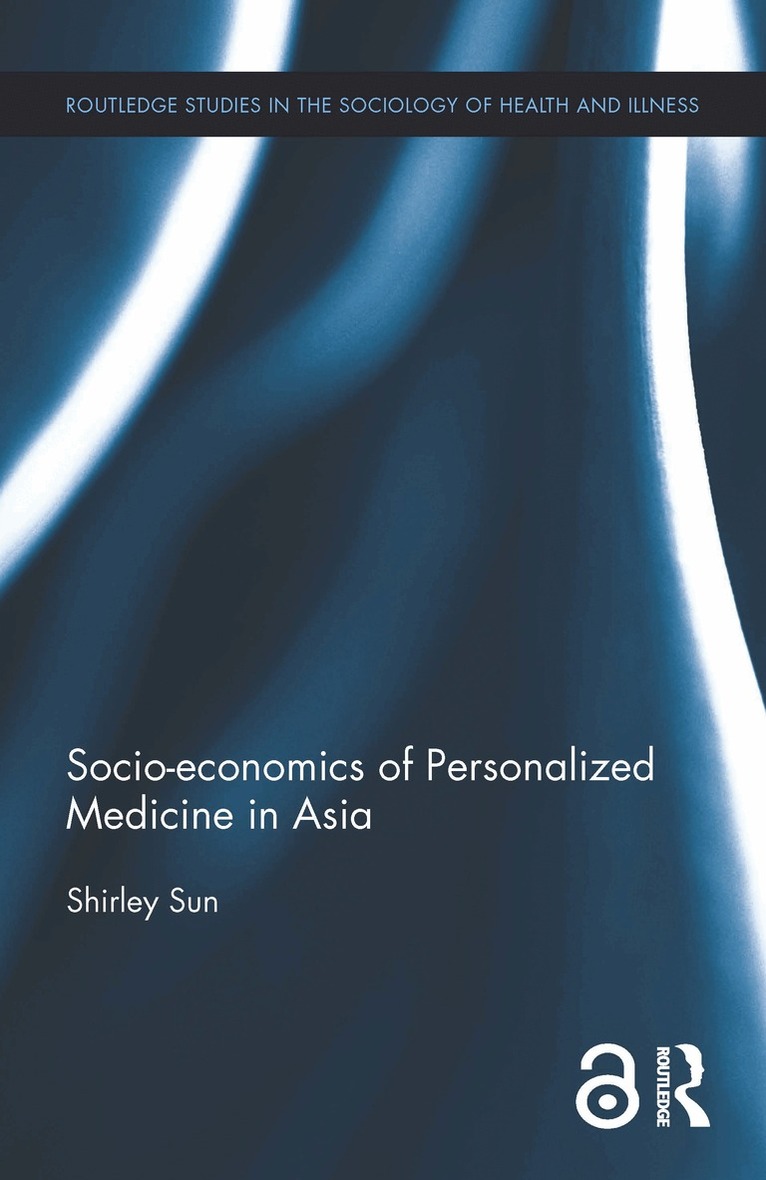
    Socio-economics of Precision Medicine in Asia

    AvShirley Sun

    Häftad, Engelska, 2019

    Del i serien Routledge Studies in the Sociology of Health and Illness

    719 kr

    Beställningsvara. Skickas inom 10-15 vardagar. Fri frakt över 249 kr.

    Fler format och utgåvor

    Inbunden

    2 506 kr

    Beskrivning

    The second decade of the twenty-first century has witnessed a surging interest in personalized medicine with the concomitant promise to enable more precise diagnosis and treatment of disease and illness, based upon an individual’s unique genetic makeup.In this book, my goal is to contribute to a growing body of literature on personalized medicine by tracing and analyzing how this field has blossomed in Asia. In so doing, I aim to illustrate how various social and economic forces shape the co-production of science and social order in global contexts. This book shows that there are inextricable transnational linkages between developing and developed countries and also provides a theoretically guided and empirically grounded understanding of the formation and usage of particular racial and ethnic human taxonomies in local, national and transnational settings.The Open Access version of this book, available at http://www.taylorfrancis.com/doi/view/10.4324/9781315537177 has been made available under a Creative Commons Attribution-Non Commercial-No Derivatives 4.0 license.

    Produktinformation

    • Utgivningsdatum:2019-07-23
    • Mått:156 x 234 x 18 mm
    • Vikt:390 g
    • Format:Häftad
    • Språk:Engelska
    • Serie:Routledge Studies in the Sociology of Health and Illness
    • Antal sidor:210
    • Förlag:Taylor & Francis Ltd
    • ISBN:9780367354428

    Utforska kategorier

    • Nationalekonomi inom Ekonomi och Ledarskap
    • Sociologi inom Samhälle och politik
    • Företagsekonomi inom Ekonomi och Ledarskap

    Mer om författaren

    Shirley Sun is an Associate Professor of Sociology at Nanyang Technological University (NTU), Singapore. Her main research interests are population studies, social inequalities, citizenship and immigration, economic development and social reproduction, and science, technology and society.

    Recensioner i media

    "This is a major contribution to the ongoing debate about the relationship between "personalized medicine" and "racialized medicine". Dr. Sun documents how in practice, the two are far more integrated than previous analysts have recognized or acknowledged. Using an international platform, Sun demonstrates how Asian geneticists (Japanese, Chinese, Singaporean, Korean, et al), in a pushback against US-European domination of human molecular genetics, are often inadvertently re-inscribing ethnic and racial categories generated in the West."—Troy Duster, author of Backdoor to Eugenics, Chancellor's Professor, University of California, Berkeley"A highly timely counter-weight to the dominance of works on this topic from North America and Europe, Shirley Sun's brilliant and sobering analysis of 'probability medicine' in Singapore will make even the most reflective reader think about the global implications of genomic medicine differently." —Barbara Prainsack, Professor at Social Science, Health and Medicine of King’s College London, U.K. "This book addresses a critical but understudied topic: personalized medicine within the context of Asia. Asian countries are key leaders in the move towards personalized medicine, but as the author points out, historically personalized medicine has been viewed through a Western centric focus. The findings also have implications for the large Asian population residing in the US and other countries. The book is engaging to read and insightful in its interpretations. I recommend it to anyone who wants to understand the global context of the emerging trend towards personalized, precision medicine and how it will change the future of health care." —Kathryn Phillips, Professor of Health Economics and Health Services Research at the University of California, San Francisco, and Founder/Director of the UCSF Center for Translational and Policy Research on Personalized Medicine (TRANSPERS)"Overall, the book offers intriguing insights about how cutting-edge developments in medicine and scientific research are embedded in complex social and historical contexts. Its sociological and Asian foci are welcome additions to a literature dominated by scientists in Europe and the United States. It should have wide appeal as the number of clinical trials in Asian countries is increasing… I highly recommend Sun’s book to social scientists, doctors, scientists, politicians, and anyone interested in the history and practice of medicine and drug development." —Sociology of Health and Illness, Volume 39, Issue 8, November 2017"This is a book about an important set of issues that goes beyond the keywords flagged in the title to address the contradictions of biomedical meanings of race and population, as well as concerns over the clinical efficacy of genetic testing. It is among the very first books to look at the intersection of these issues using primarily Asian case studies and expert interviews… There is no question that this book deals with a number of very important issues,for both scholarly and policy communities. It points to a number of new areas where more research is needed and asks questions that will be with us for some time…" — East Asian Science, Technology and Society: An International Journal, Volume 12, Issue 4, 2018"The book uses the growth of personalized, or precision, medicine used in the testing and treatment of cancer in Asia to extend one of the more important strands of science and technology studies literature, embodied in scholarship on genetics, race and ethnicity, and health and medicine. In this way it builds on the work of other scholars such as Troy Duster, Dorothy Roberts, Steven Epstein, Sara Shostak, and Ruha Benjamin. STS scholars concerned with these issues are likely to find this book of interest…" — Contemporary Sociology, Volume 47, Issue 2, March 01, 2018

    Innehållsförteckning

    • 1. Introduction2. Resisting Being "Othered": Regionalism, Nationalism, and the Racialization of Ethnicity in Asia3. Capitalizing on being "Othered": Precision Medicine and Race in the Context of a Globalized Pharmaceutical Industry4. Managing "Otherness": Genomic Medicine and Public Health Policy in Singapore5. Cancer Genomics in Clinics6. Socio-economic Factors and Ethical Dilemmas in Personalized Medicine Provision7. Conclusion: Possibilities and Challenges of Personalized Medicine in Asia