• Fri frakt över 249 kr
  • •
  • Snabba leveranser
  • •
  • Billiga böcker
Kundservice

Du är på sajten för privatpersoner.

Företag, bibliotek eller offentlig verksamhet?

Du handlar på classic.bokus.com, där alla dina funktioner finns intakta.
Till classic.bokus.com
Bokus logotyp. Gå till startsidan.
  • Erbjudanden
  • Nyheter
  • Student
  • Topplistor
  • Barn & ungdom
  • Bokus Play
  • E-böcker
  • Pocketböcker
  • Spel & pussel

10% rabatt på allt med kod NYSTART10 →

Sidfot

Mina sidor

    Hjälp

    • Kundservice
    • Vanliga frågor och svar
    • Frakt och leverans
    • Retur vid ångerrätt
    • Reklamera vara
    • Betalning
    • Köpvillkor
    • Allmänna villkor
    • Information om webbplatsens tillgänglighet

    Om Bokus

    • Om oss
    • Pressrum
    • För studenter
    • För företag
    • För bibliotek och offentlig verksamhet
    • För leverantörer
    • Hållbarhet

    Populärt

    • Aktuella erbjudanden
    • Presentkort
    • Studentlitteratur
    • Nya böcker
    • Topplistor
    • Signerade böcker
    • Engelska böcker

    Inspiration

    • Boktips
    • BookTok
    • Populära bokserier
    • Barnbokskaraktärer
    • Populära författare
    Logotyp för Bokus
    Följ oss på Facebook (extern länk)Följ oss på Instagram (extern länk)Följ oss på YouTube (extern länk)Följ oss på TikTok (extern länk)
    bokus @ CookiesAnpassa cookiesIntegritetspolicyKöpvillkor
    Till Citymail hemsida (extern länk)Till Budbee hemsida (extern länk)Till Postnord hemsida (extern länk)Till Schenker hemsida (extern länk)Till Early Bird hemsida (extern länk)Till Walleys hemsida (extern länk)
    1. Historia och arkeologi
    2. Historia
    3. Europas historia

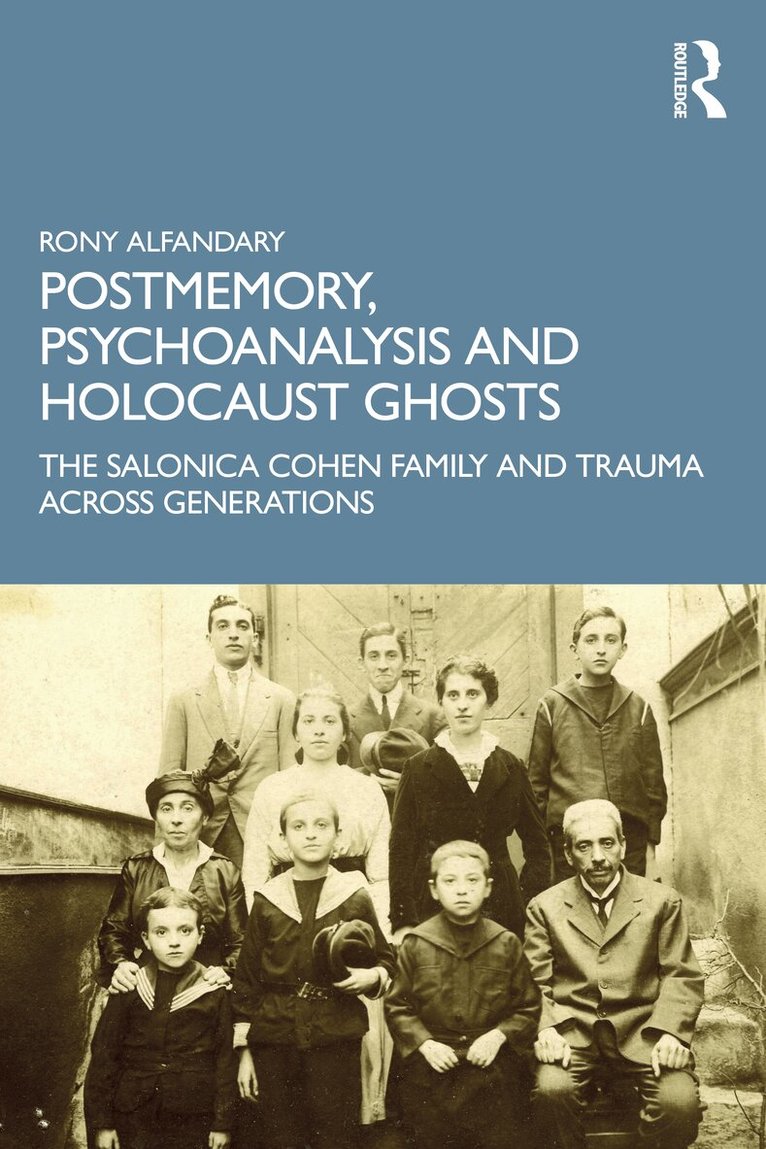
    Postmemory, Psychoanalysis and Holocaust Ghosts

    The Salonica Cohen Family and Trauma Across Generations

    AvRony Alfandary

    Häftad, Engelska, 2021

    542 kr

    Beställningsvara. Skickas inom 10-15 vardagar. Fri frakt över 249 kr.

    Fler format och utgåvor

    Inbunden

    2 495 kr

    E-bok

    639 kr

    E-bok

    639 kr

    Beskrivning

    Through the collection of letters sent by members of a Jewish family between 1923 and 1942, this fascinating book explores phenomenological and psychoanalytical aspects of the Holocaust and its associated trauma, and the impact on future generations of the same family.This book charts a postmemorial study of the Cohen family of Salonica which branched out to Paris and Tel-Aviv during the 1920s and 1930s. The exploration of the contents of four boxes containing hundreds of letters, pictures and other documents portray a microhistory of one family that was once a part of a thriving community. Showing how the shadows of trauma can be passed through the generations, the book uncovers the tragedies that befell the Cohen family, and how the discovery of these materials has affected existing family members.In an intriguing work of postmemory research and analysis, this book appeals to both scholars of the Holocaust and psychoanalysts interested in the unconscious impact of history.

    Produktinformation

    • Utgivningsdatum:2021-07-23
    • Mått:156 x 234 x 219 mm
    • Vikt:700 g
    • Format:Häftad
    • Språk:Engelska
    • Antal sidor:250
    • Förlag:Taylor & Francis Ltd
    • ISBN:9780367491741

    Utforska kategorier

    • Europas historia inom Historia och arkeologi
    • Freudiansk psykologi inom Psykologi och pedagogik
    • Historia: teori och metod inom Historia och arkeologi

    Mer om författaren

    Rony Alfandary, PhD, is a clinical social worker, photographer and lecturer at the University of Haifa and Bar-Ilan University in Israel. He is the Director of the Programme of Psychoanalytic Psychotherapy at Bar-Ilan University. He has published prose and poetry as well as several works of non-fiction including Exile and Return: A Psychoanalytic Study of Lawrence Durrell’s The Alexandria Quartet (Routledge).

    Recensioner i media

    "How does a person respond to the fact that the formative event of their lives occurred long before they were born? Especially when that event was the Holocaust? In his immensely readable microhistory of the Cohen family from Salonica and Paris, Rony Alfandary skillfully weaves a narrative that grapples with these questions, telling the tales of testimony bearers, human memorial candles of the second and future generations of a family of Holocaust survivors. Listening to voices painfully and suddenly silenced long ago, he uses a treasure-trove of documents to describe and analyze the evolution of ‘postmemory’, showing how it has affected the performative and memorial psyche of survivors’ families, continuing on to future generations."Judy Tydor Baumel-Schwartz, Director, Finkler Institute of Holocaust Research, Bar-Ilan University, Israel"Rony Alfandary’s evocation of his family’s impending fate in 1930s Salonica and Paris is profoundly affective. This collection of letters and photographs is powered by his acute sense of his own postmemory and his professional insight into trauma. It stands beside the work of Eva Hoffman and Sophia Richman as testimony to the perennial sense of Jewish life as (in the words of one surviving relation) ‘intelligent, loved but unsafe’. Alfandary juxtaposes the candid humanity of his family’s self-expression with an awareness of difference and ‘the mystery of Otherness".Richard Pine, Durrell Library of Corfu"In this original and interdisciplinary family history, Rony Alfandary, a clinical social worker, writer and photographer, creates a memorial for the members of his family that perished in the Holocaust. This book takes the reader from Salonica to Paris to Tel-Aviv and back again, on a journey that explores the profound role of postmemory in the lives of those born in the aftermath of the Holocaust. Alfandary is both a storyteller and a therapist, guiding the reader beyond mourning, into a space that allows for creativity and perhaps even joy."Laura Hobson Faure, Professor of Modern History and Chair of the History of Modern Jewish Societies at the Université Panthéon-Sorbonne-Paris 1

    Innehållsförteckning

    • Part One. Introduction Part Two. The Letters