Inbunden, Engelska, 2021
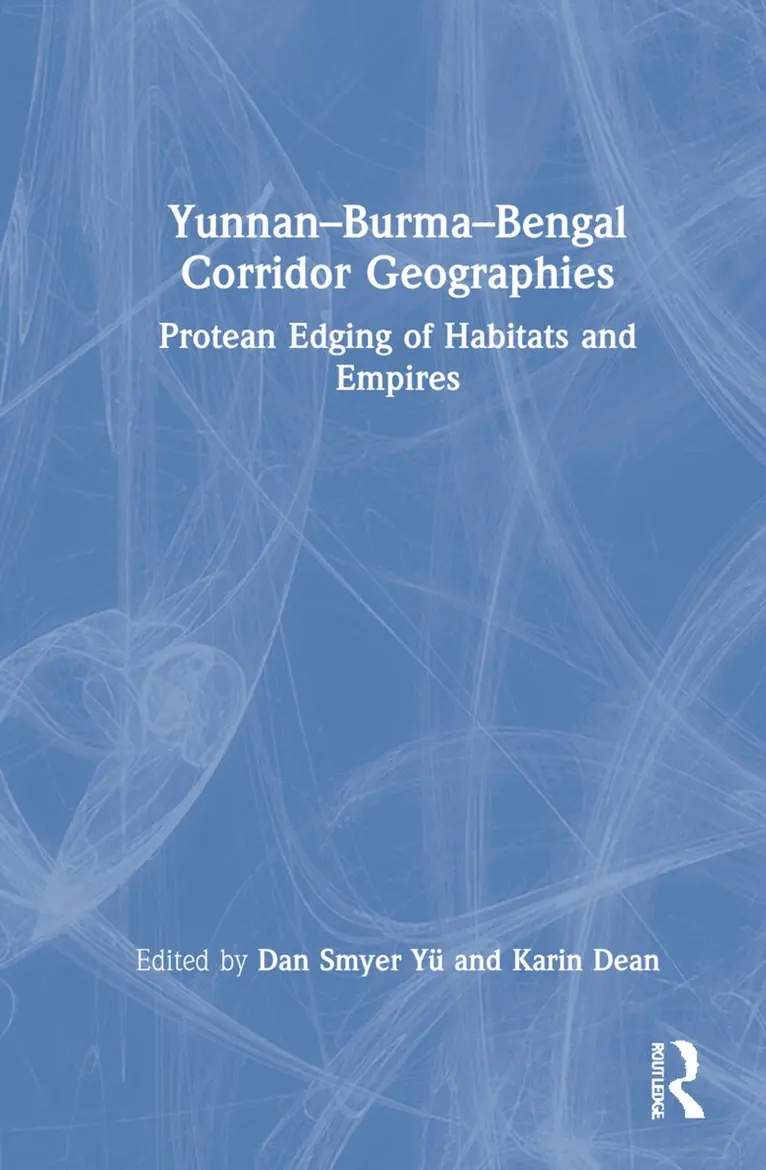
Yunnan–Burma–Bengal Corridor Geographies
Protean Edging of Habitats and Empires
2571 kr
Beställningsvara. Skickas inom 10-15 vardagar. Fri frakt över 249 kr.
Beskrivning
Produktinformation
- Utgivningsdatum: 2021-09-30
- Mått: 156 x 234 x 19 mm
- Vikt: 512 g
- Format: Inbunden
- Språk: Engelska
- Antal sidor: 258
- Förlag: Taylor & Francis Ltd
- ISBN: 9780367528683
Utforska kategorier
Mer om författaren
Dan Smyer Yü is Kuige Professor of Ethnology at the School of Ethnology and Sociology and the National Centre for Borderlands Ethnic Studies in Southwest China at Yunnan University, China and a member of the International Faculty Program at Die Universität zu Köln, Germany. He specializes in religion and ecology, environmental humanities, trans-Himalayan studies, sacred landscapes, and modern Tibetan studies. He currently serves as a member of the Advisory Group of Yale Forum on Religion and Ecology and as an elected board member of the International Society for the Study of Religion, Nature and Culture. He is the author of Mindscaping the Landscape of Tibet: Place, Memorability, Eco-aesthetics (2015), and the co-editor of Environmental Humanities in the New Himalayas: Symbiotic Indigeneity, Commoning, Sustainability (Routledge 2021).Karin Dean is Senior Researcher at the School of Humanities, Tallinn University, Estonia. Trained as a political geographer at the National University of Singapore, her research interests include boundaries, borderlands, practices of b/ordering, power topologies, and, more recently, the spatial effects of large-scale infrastructure development in Yunnan and northeast India. She has worked in conflict resolution and conducted extensive academic fieldwork at most of Myanmar’s borderlands, and published in multiple journals and books, including Political Geography, Eurasian Geography and Economics, Surveillance and Society, Ashgate Research Companion to Border Studies, and the Routledge Handbook on Asian Borderlands.
Recensioner i media
'The unbroken yet dramatic ecologies and histories of the lands from the Brahmaputra to the Mekong, long disintegrated in academic research, is finding a new field today. Yunnan–Burma–Bengal Corridor Geographies is a valuable contribution which brings trans-Himalayan studies and borderland studies into conversation. It is a must for anyone interested in the long-term transitions, human-nonhuman interconnections, and acute borderland politics of the region.'Gunnel Cederlöf, Professor of History, Department of Cultural Sciences and Centre for Concurrences in Colonial and Postcolonial Studies, Linnaeus University, Sweden'This highly original and challenging collection of essays on the "corridor geographies" connecting southwest China, northern southeast Asia, the Bangladesh borderlands, and northeast India, is essential reading for anyone who wishes to consider how human diversity, biodiversity, and ecological history intersect over time and space. The variety of the case studies, each exploring different patterns of transregional connectivity in human and more than human contexts, will pay immense rewards for scholars and students who seek a rich intellectual engagement with the concept of bordered connectivity that "corridor geographies" provides.'Mandy Sadan, Associate Professor of Global Sustainable Development, University of Warwick, UK'This book contributes richly to building bridges between conceptions of areas, countries and even broad Asian subregions, that are not normally thought to have much in common. The beauty of its approach is, in my view, to take example on diverse and often neglected upland societies in this particular corridor, who are themselves transnational and do cross borders as a matter of routine. For most, they were already occupying that space before the very advent of the said borders. In this way, and beyond the flawed gaze of the Nation-State, past and present meet again.'Jean Michaud, Professor of Anthropology, Université Laval, Canada
Betyg & recensioner
0 recensioner
Inga recensioner tillgängliga.