• Fri frakt över 249 kr
  • •
  • Snabba leveranser
  • •
  • Billiga böcker
Kundservice

Du är på sajten för privatpersoner.

Företag, bibliotek eller offentlig verksamhet?

Du handlar på classic.bokus.com, där alla dina funktioner finns intakta.
Till classic.bokus.com
Bokus logotyp. Gå till startsidan.
  • Erbjudanden
  • Nyheter
  • Student
  • Topplistor
  • Barn & ungdom
  • Bokus Play
  • E-böcker
  • Pocketböcker
  • Spel & pussel

10% rabatt på allt med kod: NYSTART10 →

Sidfot

Mina sidor

    Hjälp

    • Kundservice
    • Vanliga frågor och svar
    • Frakt och leverans
    • Retur vid ångerrätt
    • Reklamera vara
    • Betalning
    • Köpvillkor
    • Allmänna villkor
    • Information om webbplatsens tillgänglighet

    Om Bokus

    • Om oss
    • Pressrum
    • För studenter
    • För företag
    • För bibliotek och offentlig verksamhet
    • För leverantörer
    • Hållbarhet

    Populärt

    • Aktuella erbjudanden
    • Presentkort
    • Studentlitteratur
    • Nya böcker
    • Topplistor
    • Signerade böcker
    • Engelska böcker

    Inspiration

    • Boktips
    • BookTok
    • Populära bokserier
    • Barnbokskaraktärer
    • Populära författare
    Logotyp för Bokus
    Följ oss på Facebook (extern länk)Följ oss på Instagram (extern länk)Följ oss på YouTube (extern länk)Följ oss på TikTok (extern länk)
    bokus @ CookiesAnpassa cookiesIntegritetspolicyKöpvillkor
    Till Citymail hemsida (extern länk)Till Budbee hemsida (extern länk)Till Postnord hemsida (extern länk)Till Schenker hemsida (extern länk)Till Early Bird hemsida (extern länk)Till Walleys hemsida (extern länk)
    1. Kultur
    2. Musikböcker

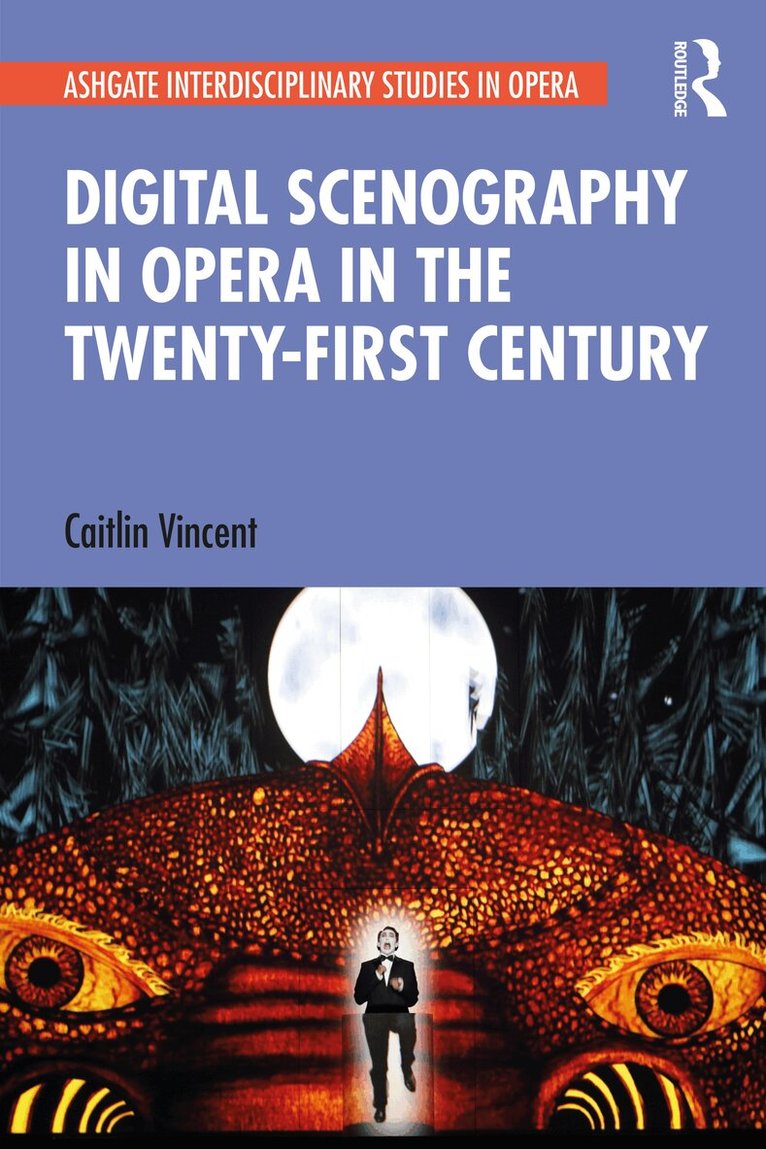
    Digital Scenography in Opera in the Twenty-First Century

    AvCaitlin Vincent

    Inbunden, Engelska, 2021

    Del i serien Ashgate Interdisciplinary Studies in Opera

    2 493 kr

    Beställningsvara. Skickas inom 10-15 vardagar. Fri frakt över 249 kr.

    Fler format och utgåvor

    Häftad

    643 kr

    E-bok

    760 kr

    E-bok

    760 kr

    Beskrivning

    Digital Scenography in Opera in the Twenty-First Century is the first definitive study of the use of digital scenography in Western opera production. The book begins by exploring digital scenography’s dramaturgical possibilities and establishes a critical framework for identifying and comparing the use of digital scenography across different digitally enhanced opera productions. The book then investigates the impacts and potential disruptions of digital scenography on opera’s longstanding production conventions, both on and off the stage. Drawing on interviews with major industry practitioners, including Paul Barritt, Mark Grimmer, Donald Holder, Elaine J. McCarthy, Luke Halls, Wendall K. Harrington, Finn Ross, S. Katy Tucker, and Victoria ‘Vita’ Tzykun, author Caitlin Vincent identifies key correlations between the use of digital scenography in practice and subsequent impacts on creative hierarchies, production design processes, and organisational management. The book features detailed case studies of digitally enhanced productions premiered by Dutch National Opera, Komische Oper Berlin, Opéra de Lyon, The Royal Opera, Covent Garden, San Francisco Opera, Santa Fe Opera, Théâtre Royal de la Monnaie, The Metropolitan Opera, Victorian Opera, and Washington National Opera.

    Produktinformation

    • Utgivningsdatum:2021-09-16
    • Mått:156 x 234 x 16 mm
    • Vikt:453 g
    • Format:Inbunden
    • Språk:Engelska
    • Serie:Ashgate Interdisciplinary Studies in Opera
    • Antal sidor:198
    • Förlag:Taylor & Francis Ltd
    • ISBN:9780367553920

    Utforska kategorier

    • Musikböcker inom Kultur
    • Klassisk musik, konstmusik och orkestermusik inom Kultur
    • Musikvetenskap inom Kultur

    Mer om författaren

    Caitlin Vincent researches the future of work in the arts. Key areas of focus include opera, cultural labour, performance and technology, and equity and diversity. An acclaimed opera librettist, Vincent has been commissioned for Washington National Opera, the Schubert Club of Minnesota, the University of Connecticut, and Carnegie Hall.

    Innehållsförteckning

    • Introduction Chapter One – Digitally-enhanced opera in the twenty-first century and the modes of synthesis Chapter Two – Digitally-enhanced opera in the twenty-first century and the variants of causal interplay Chapter Three – The lineage of digital scenography: Baroque origins to the twentieth century Chapter Four – The lineage of digital scenography: multimedia opera in the twentieth century Chapter Five – The projection designer and evolving creative hierarchies in opera Chapter Six – Digital scenography and evolving production design processes in opera Conclusion BibliographyIntroduction to digital scenography in operaWhat is digital scenography?Why opera?Research methodsThe modes of synthesisExamples of practiceInterviews Chapter outlineReferencesChapter One – A new classification system for digital scenography: the modes of synthesisArticulating the modes of synthesis: non-synthesis, partial-synthesis, and full- synthesisNon-synthesis—San Francisco Opera, The Magic Flute (2012)Partial-synthesis—Théâtre Royal de la Monnaie, The Magic Flute (2005)Full-synthesis—Komische Oper Berlin, The Magic Flute (2012)A comparison of critical responses to the three productionsConclusionReferencesChapter Two – The variants of causal interplayAgency: the screen as ‘performer’Dutch National Opera, The Magic Flute (2012)—partial-synthesisVictorian Opera, Four Saints in Three Acts (2016)—partial-synthesisAugmentation: extension and transformation through digitalisationThe Royal Opera, Covent Garden, Don Giovanni (2014)—partial-synthesisVictorian Opera, The Flying Dutchman (2015)—partial-synthesisFull-synthesis extremes of agency and augmentationOpéra de Lyon, L’Enfant et les Sortilèges (2016)—full-synthesisAutonomy: faux-interactivity versus functional interactivityThe Metropolitan Opera, Das Rheingold (2010)—partial-synthesisImplications for performers and audiencesReferencesChapter Three – The lineage of digital scenography in opera: Baroque origins to the twentieth centuryThe origins of the Baroque opera paradigmThe Baroque paradigm and the interplay between performer, stage setting, and spectatorNew perspectives: the scenic reforms of Ferdinando Galli-Bibiena (1657–1743)The scenographic transition to ‘grand opera’The ‘mystic chasm’: Richard Wagner (1813–1883) and the Bayreuth FestspielhausAdolphe Appia (1862–1928) and dynamic lightLooking towards the twentieth centuryReferencesChapter Four – The lineage of digital scenography in opera: multimedia developments in the twentieth centuryAvant-garde originsEdward Gordon Craig (1872–1966) and Enrico Prampolini (1894–1956): ‘a thousand scenes in one’ and ‘luminous forms’Josef Svoboda (1920–2002) and the dynamic setting of the Laterna MagikaThe Tales of Hoffmann (1962)Günther Schneider-Siemssen (1926–2015) and the holograms of the Salzburg Marionette TheatreThe Tales of Hoffmann (1985)Looking towards the twenty-first centuryReferencesChapter Five – The projection designer and evolving creative hierarchiesIndustry recognition and acknowledgementThe traditional theatrical hierarchy: director as ultimate authorityThe lateral hierarchy: collective directorateHierarchical variation: projection designers as the directorial authorityThe evolving role of the projection designerReferencesChapter Six – Digital scenography and evolving production design processesA benchmark of organisational and funding modelsThe twentieth-century standard for production designWashington National Opera’s Das Rheingold (2016)—non-synthesisThéâtre Royal de la Monnaie’s The Magic Flute (2005)—partial-synthesisDutch National Opera’s The Magic Flute (2012)—partial-synthesisSanta Fe Opera’s The (R)evolution of Steve Jobs (2017)—non-synthesisKomische Oper Berlin’s The Magic Flute (2012)—full-synthesisCommonalities across the five production design processesProduction design processes and the modes of synthesisReferencesConclusion – The future evolution of digital scenographyReferencesAppendix 1Appendix 2Appendix 3