• Fri frakt över 249 kr
  • •
  • Snabba leveranser
  • •
  • Billiga böcker
Kundservice

Du är på sajten för privatpersoner.

Företag, bibliotek eller offentlig verksamhet?

Du handlar på classic.bokus.com, där alla dina funktioner finns intakta.
Till classic.bokus.com
Bokus logotyp. Gå till startsidan.
  • Erbjudanden
  • Nyheter
  • Student
  • Topplistor
  • Barn & ungdom
  • Bokus Play
  • E-böcker
  • Pocketböcker
  • Spel & pussel

10% rabatt på allt med kod: NYSTART10 →

Sidfot

Mina sidor

    Hjälp

    • Kundservice
    • Vanliga frågor och svar
    • Frakt och leverans
    • Retur vid ångerrätt
    • Reklamera vara
    • Betalning
    • Köpvillkor
    • Allmänna villkor
    • Information om webbplatsens tillgänglighet

    Om Bokus

    • Om oss
    • Pressrum
    • För studenter
    • För företag
    • För bibliotek och offentlig verksamhet
    • För leverantörer
    • Hållbarhet

    Populärt

    • Aktuella erbjudanden
    • Presentkort
    • Studentlitteratur
    • Nya böcker
    • Topplistor
    • Signerade böcker
    • Engelska böcker

    Inspiration

    • Boktips
    • BookTok
    • Populära bokserier
    • Barnbokskaraktärer
    • Populära författare
    Logotyp för Bokus
    Följ oss på Facebook (extern länk)Följ oss på Instagram (extern länk)Följ oss på YouTube (extern länk)Följ oss på TikTok (extern länk)
    bokus @ CookiesAnpassa cookiesIntegritetspolicyKöpvillkor
    Till Citymail hemsida (extern länk)Till Budbee hemsida (extern länk)Till Postnord hemsida (extern länk)Till Schenker hemsida (extern länk)Till Early Bird hemsida (extern länk)Till Walleys hemsida (extern länk)
    1. Samhälle och politik
    2. Samhälle och kultur
    3. Kultur och medier
    4. Referensverk och tvärvetenskap

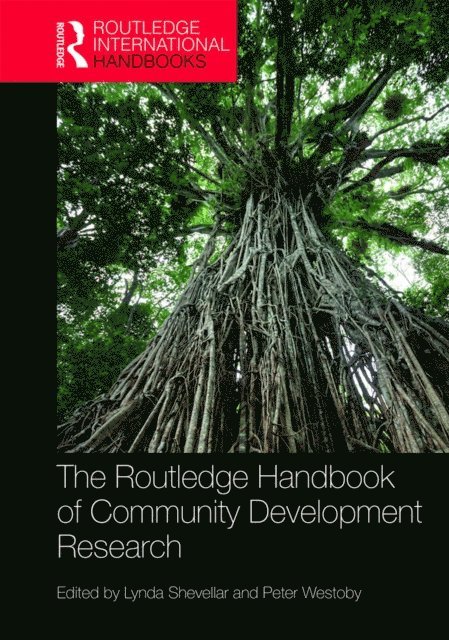
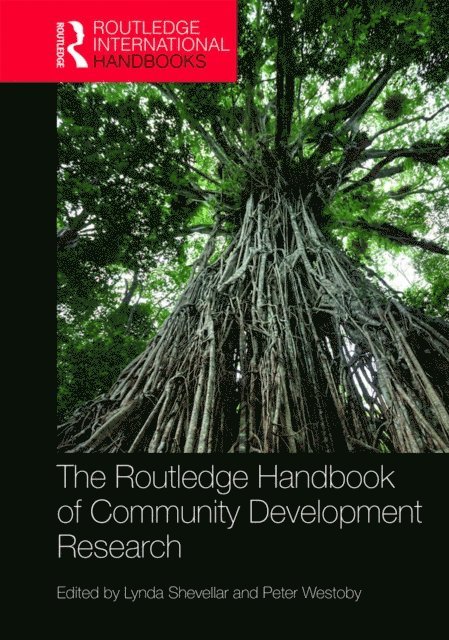
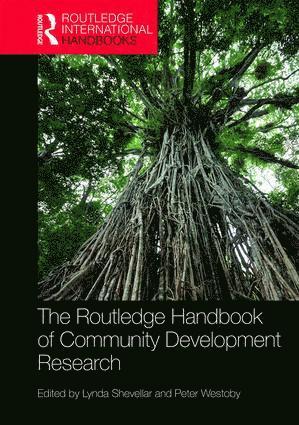
    Routledge Handbook of Community Development Research

    AvLynda Shevellar,Peter Westoby

    Häftad, Engelska, 2020

    Del i serien Routledge International Handbooks

    709 kr

    Beställningsvara. Skickas inom 10-15 vardagar. Fri frakt över 249 kr.

    Beskrivning

    This handbook sets a new research agenda in community development. The contributors redefine existing areas within the context of interdisciplinary research, highlight emerging areas for community development related research, and provide researchers and post-graduate students with ideas and encouragement for future research activity. To do this, the editors have deliberately chosen to frame this book not through a traditional sociological lens of class, race and gender, but through a "Wicked Problems" framework.Drawing upon the work of 37 international authors, in diverse settings such as West Papua, Peru, the USA and Australia; and with methodologies equally as diverse, from case studies and interviews to the use of music and story-telling, this handbook focuses upon five Wicked Problems: forced displacement; family, gender and child related violence; indigenous marginalisation; climate change and food security; and human survival in the context of disaster and recovery work.By drawing together leading scholars from community development, social work and social policy, this handbook provides an up to the minute snapshot of current scholarship as well as signposting several fruitful avenues for future research. This book is both an invaluable resource for both scholars and practitioners and an indispensable teaching tool for use in the classroom and in the field.

    Produktinformation

    • Utgivningsdatum:2020-06-30
    • Mått:174 x 246 x 17 mm
    • Vikt:800 g
    • Format:Häftad
    • Språk:Engelska
    • Serie:Routledge International Handbooks
    • Antal sidor:296
    • Förlag:Taylor & Francis Ltd
    • ISBN:9780367580834

    Utforska kategorier

    • Referensverk och tvärvetenskap inom Samhälle och politik
    • Sociologi inom Samhälle och politik

    Mer om författaren

    Lynda Shevellar is influenced by 25 years of experience and study in community development, the disability sector, education, and psychology. She has worked in government and the community sector and is currently a lecturer in Community Development, within the School of Social Science at The University of Queensland, Australia. Lynda's current research focuses upon supporting people with disabilities and mental health challenges to develop a deeper sense of community belonging.Peter Westoby is an Associate Professor in Social Science and Community Development at Queensland University of Technology, Australia; a Visiting Professor at the Centre for Development Support, University of Free State, South Africa; and a Director with Community Praxis Cooperative. Peter has over 30 years of experience in practice in places such as South Africa, Uganda, Vanuatu, Papua New Guinea, the Philippines and Australia. He teaches and researches on community development theory and practice, dialogue studies and forced migration studies. Peter is passionate about reading, good coffee, hanging out at his local AVID reader bookshop, bushwalking and travelling.

    Recensioner i media

    'A very timely contribution: to be warmly welcomed by all those concerned with community development and community development research.' - Marjorie Mayo, Emeritus Professor of Community Development, Goldsmiths, University of London‘This collection covers rich material, across a wide scope of community development practice. In showing the relevance of community development for some of the ‘wicked problems’ facing the contemporary world (both the Global South and the Global North), the contributors have shown clearly the absolute importance of community development perspectives in charting future directions for humanity and for the broader global environment. The book also brings community development practice and research together – something many practitioners have struggled with – showing how each informs, and is dependent on, the other. The contributors demonstrate approaches to community development that, while grounded in lived experience at community level, nevertheless represent the antithesis of right-wing populism.’ - Professor Jim Ife, Western Sydney University

    Innehållsförteckning

    • List of figures; List of tables; List of contributors; Foreword; Acknowledgements; Introduction; Chapter 1: Wicked problems and community development – an introductory essay (Lynda Shevellar & Peter Westoby); Part I. Forced Displacement.; Chapter 2: Disruptive rights-based community development in protracted urban refugee contexts: the politics of legal recognition (Linda Bartolomei, Kristy Ward & Marcela Garrett); Chapter 3: ‘They’d just flown away’: reflections on shifting gender norms in the context of engagement with asylum seekers and refugees through community music; (Caroline Lenette, Brian Procopis & Paola Caballero); Chapter 4: Underestimating legacy: Lessons learned from mining-caused displacement and resettlement (Rebekah Ramsay & Laura Simpson Reeves); Part II. Family, Gender And Child Related Violence.; Chapter 5: Critical reflections on state-driven support for vulnerable children and orphans in South Africa (Lochner Marais, Carla Sharp, Motsaatbebe Serekoane, Donald Skinner, Jan Cloete, Kholisa Rani, Michelle Pappin & Molefi Lenka); Chapter 6: Community based strategies to combat child trafficking in Indonesia (Harriot Beazley); Chapter 7: Preventing violence against women: The development and evaluation of a CALD community family violence project (Deborah Western & Claire Varley); Part III. Indigenous Marginalisation; Chapter 8: Storying Unarmed Insurgencies: collective narrative methods for researching civil resistance (Jason MacLeod); Chapter 9: Singing on country and singing for country’: music in work with Australian Aboriginal communities (Dave Palmer); Chapter 10: Complicating Dynamics: Adapting the Sustainable Livelihoods Framework to a Remote Indigenous Context in Australia (Mark Moran, Laura Simpson Reeves & Alyson Wright); Chapter 11: Martu and Policy Makers: Energising an Experimentalist Approach (Ann Ingamells & Peter Johnson); Chapter 12: Enhancing Aboriginal Child Welfare Through Multi-Sector Community Collaboration (Judy Gillespie); Part IV. Food And Climate; Chapter 13: Stories of climate change and mobility from around the world: Institutional challenges and implications for community development (Sarah Henly-Shepard, Karen E McNamara and Robin Bronen); Chapter 14: Food Sovereignty and Community Economies: A Spanish case study (Rhyall Gordon); Chapter 15: Community Gardens for Social and Food Justice: The Case of Urban Agriculture in Australian Cities (Alec Thornton, Kristen Lyons & Scott Sharpe); Part V. Survival Development; Chapter 16: The place of schools in building community cohesion and resilience: Lessons from a disaster context (Carol Mutch); Chapter 17. From ‘Dilemmatic Space’ Towards Ecological Practice: Community Development in Disaster Recovery in Queensland, Australia (Peter Westoby & Lynda Shevellar); Chapter 18: Hurricanes, Oil, and Rising Water: The role and work of community development in coastal Louisiana in the intersection of disasters, recovery, and planning for the future (Holly Scheib); Conclusion; Chapter 19: What have we learned? A concluding essay on wicked problems, research and the contributions of community development (Peter Westoby I Lynda Shevellar); Index