• Fri frakt över 249 kr
  • •
  • Snabba leveranser
  • •
  • Billiga böcker
Kundservice

Du är på sajten för privatpersoner.

Företag, bibliotek eller offentlig verksamhet?

Du handlar på classic.bokus.com, där alla dina funktioner finns intakta.
Till classic.bokus.com
Bokus logotyp. Gå till startsidan.
  • Erbjudanden
  • Nyheter
  • Student
  • Topplistor
  • Barn & ungdom
  • Bokus Play
  • E-böcker
  • Pocketböcker
  • Spel & pussel

10% rabatt på allt med kod: NYSTART10 →

Sidfot

Mina sidor

    Hjälp

    • Kundservice
    • Vanliga frågor och svar
    • Frakt och leverans
    • Retur vid ångerrätt
    • Reklamera vara
    • Betalning
    • Köpvillkor
    • Allmänna villkor
    • Information om webbplatsens tillgänglighet

    Om Bokus

    • Om oss
    • Pressrum
    • För studenter
    • För företag
    • För bibliotek och offentlig verksamhet
    • För leverantörer
    • Hållbarhet

    Populärt

    • Aktuella erbjudanden
    • Presentkort
    • Studentlitteratur
    • Nya böcker
    • Topplistor
    • Signerade böcker
    • Engelska böcker

    Inspiration

    • Boktips
    • BookTok
    • Populära bokserier
    • Barnbokskaraktärer
    • Populära författare
    Logotyp för Bokus
    Följ oss på Facebook (extern länk)Följ oss på Instagram (extern länk)Följ oss på YouTube (extern länk)Följ oss på TikTok (extern länk)
    bokus @ CookiesAnpassa cookiesIntegritetspolicyKöpvillkor
    Till Citymail hemsida (extern länk)Till Budbee hemsida (extern länk)Till Postnord hemsida (extern länk)Till Schenker hemsida (extern länk)Till Early Bird hemsida (extern länk)Till Walleys hemsida (extern länk)
    1. Samhälle och politik
    2. Politik och statsskick
    3. Centralt styre och förvaltning

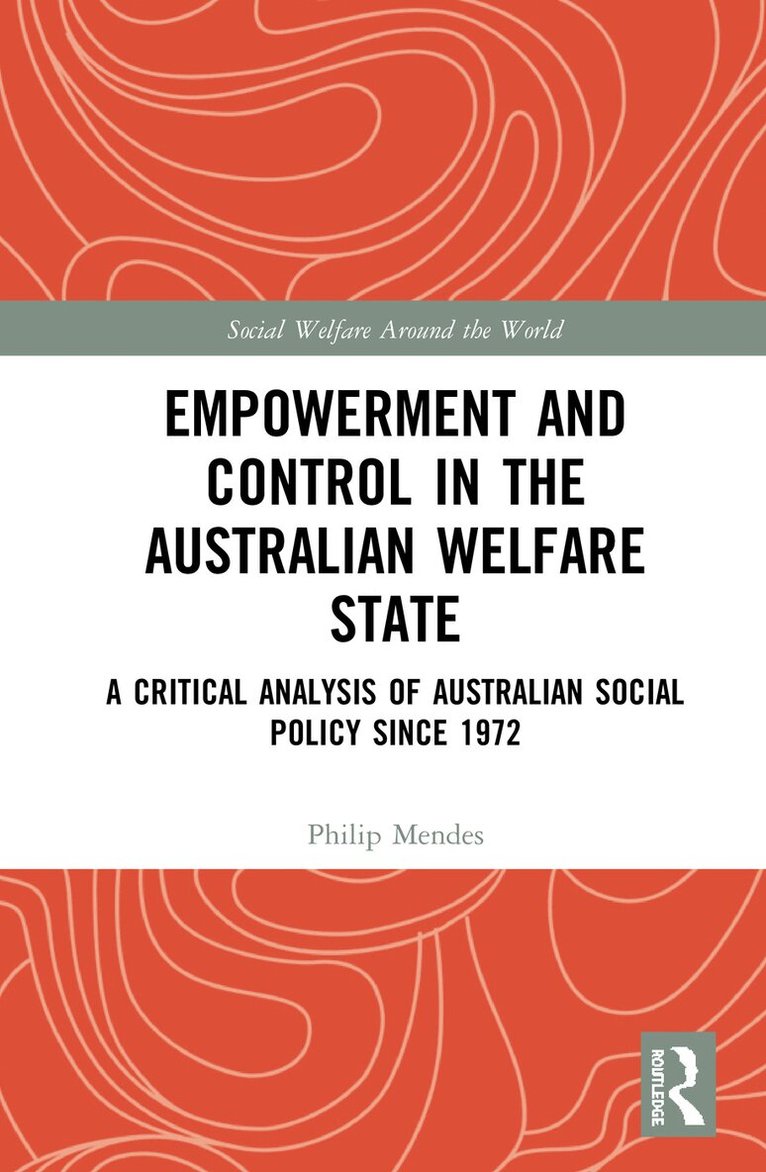
    Empowerment and Control in the Australian Welfare State

    A Critical Analysis of Australian Social Policy Since 1972

    AvPhilip Mendes

    Häftad, Engelska, 2020

    Del i serien Social Welfare Around the World

    624 kr

    Beställningsvara. Skickas inom 10-15 vardagar. Fri frakt över 249 kr.

    Fler format och utgåvor

    Inbunden

    2 421 kr

    E-bok

    760 kr

    E-bok

    762 kr

    Beskrivning

    This book explores the tensions between the competing social rights and social control functions of the modern Australian welfare state. By critically examining the history and rhetoric of the Australian welfare state from 1972 to the present day, and using the author’s long-standing research on the Australian Council of Social Service and other welfare advocacy groups, it analyses the transformation from rights-based to conditional welfare.The Labor Party Government from 1972-75 is identified as the only clear cut example of Australia positively using welfare payments and services as an instrument to promote greater social equity, inclusion and participation. Since the mid-1970s, the Australian welfare state has gradually retreated from the social rights agenda conceived by the Whitlam Government. Australia has followed other Anglo-Saxon countries in adopting increasingly conditional and paternalistic measures that undermine the protection of social citizenship outside the labour market. In contrast, this text makes the case for an alternative participatory and decentralized welfare state model that would prioritize social care by empowering and supporting welfare service users at a local community level.This book will be of interest to academics, students and policy-makers working within social policy, social work and political sociology.

    Produktinformation

    • Utgivningsdatum:2020-06-30
    • Mått:156 x 234 x 14 mm
    • Vikt:453 g
    • Format:Häftad
    • Språk:Engelska
    • Serie:Social Welfare Around the World
    • Antal sidor:254
    • Förlag:Taylor & Francis Ltd
    • ISBN:9780367584689

    Utforska kategorier

    • Centralt styre och förvaltning inom Samhälle och politik
    • Socialt arbete och välfärd inom Samhälle och politik

    Mer om författaren

    Philip Mendes is the Acting Head of the Department of Social Work, Monash University, Australia. He has been a social work and social policy practitioner and educator for over 30 years, with particular experience in the fields of income support, young people transitioning from state out of home care, social workers and policy practice, and illicit drugs. He has numerous publications in local and international journals, and is the author or co-author of 11 books.

    Recensioner i media

    "This is an important book as it articulates a detailed story of the impact of neoliberalism on Australia’s welfare system, as well as documenting its developments since 1972. It would be a useful book for all social work students to read but given its highly sophisticated analysis and attention to detail it is more suited as a valuable resource for educators, practitioners, and post-graduate research students."Ruth Phillips, University of Sydney

    Innehållsförteckning

    • Acknowledgements; List of abbreviations; Introduction; Part 1 The rise of the Australian Welfare State; Chapter 1. The wage earners welfare state and the Rediscovery of Poverty; Chapter 2. The social democratic Whitlam Labor Government 1972-75; Part 2 The anti-welfare backlash locally and internationally; Chapter 3. The decline of Keynesianism, the revival of classical liberalism and the alleged welfare state crisis; Chapter 4. The conservative Liberal-National Party Coalition attempts to roll back the welfare state 1975-1983; Chapter 5. Labor retreats from social democracy and adopts targeted welfare, the Hawke and Keating governments 1983-1996; Chapter 6. The Australian neoliberal campaign to cut welfare: The role of think tanks, the media and corporate lobby groups; Part 3 The new convergence around conditional welfare; Chapter 7. Restoring self-reliance and the work ethic and saving taxpayers funds: The Liberal-National Party Coalition’s approach to social welfare 1983-2018; Chapter 8. Labor accepts welfare conditionality 1996-2018; Part 4 Rejecting the neoliberal consensus: Welfare policy dissent and alternatives; Chapter 9. Case studies of the Australian Council of Social Service (ACOSS) and the Australian Greens; Chapter 10 Towards a participatory welfare model; Conclusion; Index