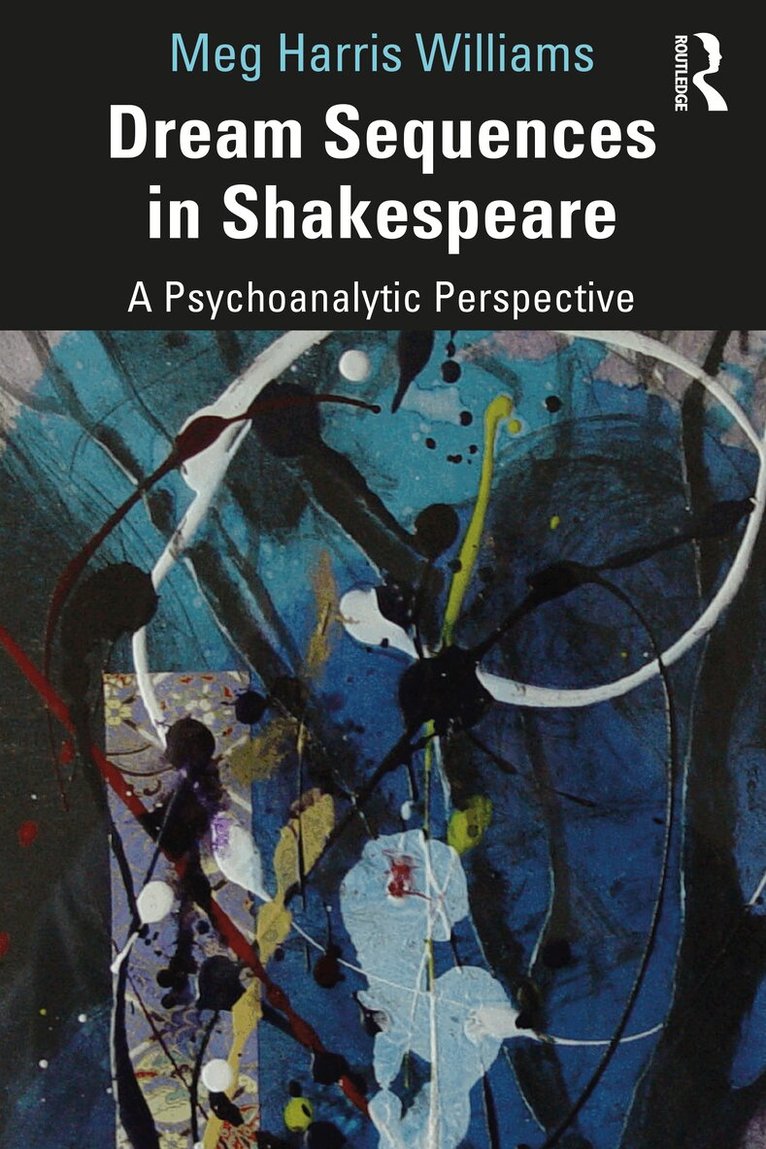
Häftad, Engelska, 2020
Dream Sequences in Shakespeare
A Psychoanalytic Perspective
652 kr
Beställningsvara. Skickas inom 10-15 vardagar. Fri frakt över 249 kr.
Fler format och utgåvor
Beskrivning
Produktinformation
- Utgivningsdatum: 2020-11-30
- Mått: 156 x 234 x 22 mm
- Vikt: 300 g
- Format: Häftad
- Språk: Engelska
- Antal sidor: 174
- Förlag: Taylor & Francis Ltd
- ISBN: 9780367635497
Utforska kategorier
Mer om författaren
Meg Harris Williams is a writer, literary critic, and artist. She has published many books and papers on the relation between literature, aesthetic experience, and psychoanalysis, specialising in a post-Kleinian perspective. She teaches internationally and is a visiting lecturer at the Tavistock Clinic, an honorary member of the Psychoanalytic Center of California, and editor for the Harris Meltzer Trust. Her books include Inspiration in Milton and Keats; The Apprehension of Beauty (with Donald Meltzer); A Strange Way of Killing; Five Tales from Shakespeare (for children); The Vale of Soulmaking; Bion’s Dream; The Aesthetic Development; Hamlet in Analysis – A Trial of Faith; The Becoming Room; and The Art of Personality. Website: www.artlit.info.
Recensioner i media
‘Understanding Shakespeare’s plays as aesthetic objects that transcend the limitations of time and space, Meg Harris Williams follows the dream logic of their aesthetic form. Her readings illuminate the transformative processes of Shakespeare’s imagination, and her psychoanalytic perceptions yield insight after insight into Shakespeare’s theatrical worlds. Her book is a welcome counterpoint to current historical and political readings.’– Murray Schwartz, Professor Emeritus, Institute for Liberal Arts & Interdisciplinary Studies at Emerson College‘In these "second thoughts" on Shakespeare’s "dreamscape," Harris Williams invites us to accompany her in discovering latent elements of the plays through her own "counterdreaming" – Meltzerian form of "reverie" – that facilitates an experience-near exploration of how the characters handle the contrary emotions of love and hate that set in motion forward-moving, or regressive, "anti-thought" developmental sequences, while also prompting us to question our own openness to uncovering what we don’t yet know. In so doing, she elucidates the "reparative possibility" of engaging with internal objects, not just for the protagonists and playwright himself, but in turn the reader – that to more intimately step-in, the reader, artist, much as analysand and analyst, is potentially granted access to the "poetic deep grammar" of emotional life that "enriches our own becoming," thereby affirming the transformative power of art, alongside psychoanalysis. This journey we are taken on is an eye-opening, inspirational one, steeped in the marriage of Harris William’s scholarly knowledge of Shakespeare and her "deep rooted" appreciation of the Bionian-Meltzerian oeuvre, driven by her own desire to listen to the internal muse.’– Vivienne Pasieka, Psychoanalyst, Toronto
Betyg & recensioner
0 recensioner
Inga recensioner tillgängliga.