• Fri frakt över 249 kr
  • •
  • Snabba leveranser
  • •
  • Billiga böcker
Kundservice

Du är på sajten för privatpersoner.

Företag, bibliotek eller offentlig verksamhet?

Du handlar på classic.bokus.com, där alla dina funktioner finns intakta.
Till classic.bokus.com
Bokus logotyp. Gå till startsidan.
  • Erbjudanden
  • Nyheter
  • Student
  • Topplistor
  • Barn & ungdom
  • Bokus Play
  • E-böcker
  • Pocketböcker
  • Spel & pussel

10% rabatt på allt med kod: NYSTART10 →

Sidfot

Mina sidor

    Hjälp

    • Kundservice
    • Vanliga frågor och svar
    • Frakt och leverans
    • Retur vid ångerrätt
    • Reklamera vara
    • Betalning
    • Köpvillkor
    • Allmänna villkor
    • Information om webbplatsens tillgänglighet

    Om Bokus

    • Om oss
    • Pressrum
    • För studenter
    • För företag
    • För bibliotek och offentlig verksamhet
    • För leverantörer
    • Hållbarhet

    Populärt

    • Aktuella erbjudanden
    • Presentkort
    • Studentlitteratur
    • Nya böcker
    • Topplistor
    • Signerade böcker
    • Engelska böcker

    Inspiration

    • Boktips
    • BookTok
    • Populära bokserier
    • Barnbokskaraktärer
    • Populära författare
    Logotyp för Bokus
    Följ oss på Facebook (extern länk)Följ oss på Instagram (extern länk)Följ oss på YouTube (extern länk)Följ oss på TikTok (extern länk)
    bokus @ CookiesAnpassa cookiesIntegritetspolicyKöpvillkor
    Till Citymail hemsida (extern länk)Till Budbee hemsida (extern länk)Till Postnord hemsida (extern länk)Till Schenker hemsida (extern länk)Till Early Bird hemsida (extern länk)Till Walleys hemsida (extern länk)
    1. Psykologi och pedagogik
    2. Pedagogik
    3. Högskola och universitet

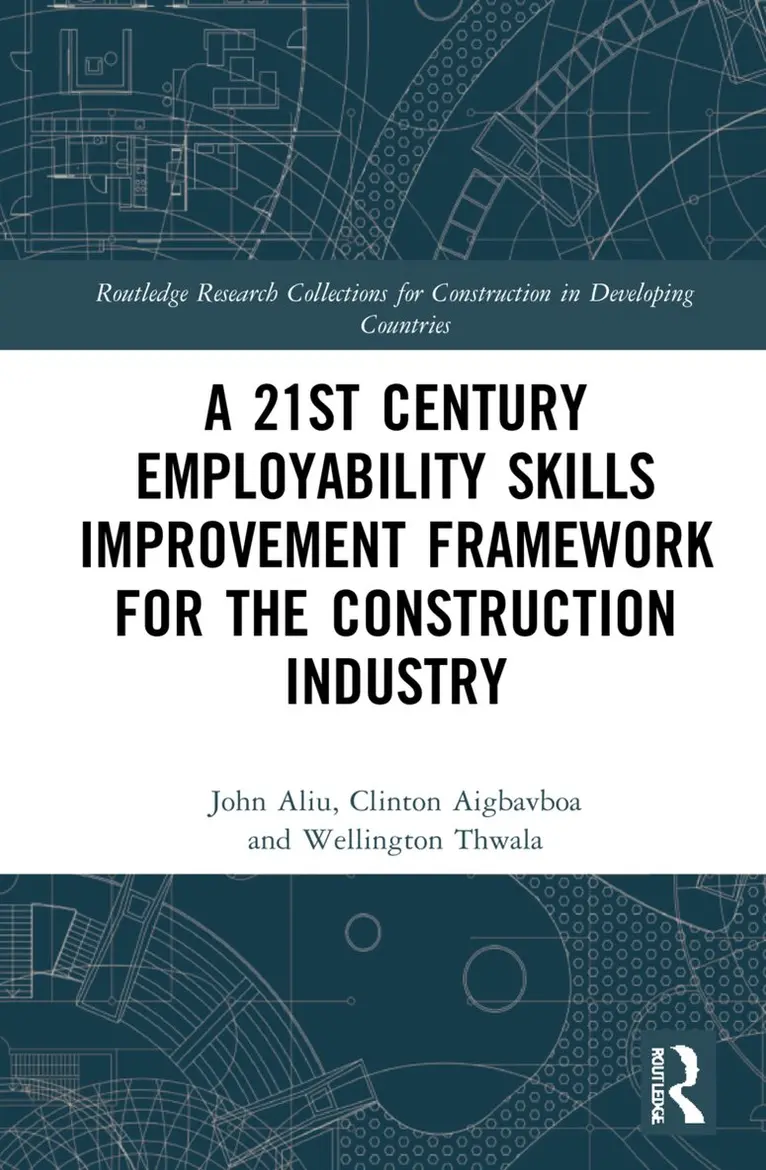
    21st Century Employability Skills Improvement Framework for the Construction Industry

    AvJohn Aliu,Clinton Aigbavboa

    Inbunden, Engelska, 2021

    Del i serien Routledge Research Collections for Construction in Developing Countries

    2 645 kr

    Beställningsvara. Skickas inom 10-15 vardagar. Fri frakt över 249 kr.

    Fler format och utgåvor

    Häftad

    702 kr

    Beskrivning

    This book will provide readers with an understanding of the employability concept and develop an employability skills improvement model to enhance the employability of built environment graduates to foster economic development. The developed model determines the influence of generic skills, discipline specific skills, work-integrated learning, emotional intelligence, university-industry collaboration outcomes and 4IR knowledge in predicting the outcomes of improved graduate employability. The model is developed with a theoretical lens on existing frameworks of employability and skills development. Whilst drawing comparisons with countries such as the UK, USA, Australia and Canada, the authors present the results of a two-stage Delphi survey in South Africa as a case study on the current state of skills development and on the skills of the future. The case study is presented in line with the South Africa’s long-term National Development Plan (NDP) aimed at developing the key capabilities and skills of its citizens by ensuring quality education on a broader scale by 2030. As automation continues to rapidly advance, the pressures on universities to revamp and restructure their curricula have become increasingly necessary. This book recommends that higher education institutions urgently need to intensify their efforts by introducing significant modifications to the science and technology curriculum to enable students to develop and acquire competencies in the rapidly emerging areas of artificial intelligence, data science, robotics, advanced simulation, data communication, system automation, real-time inventory operations, cloud computing, and information technologies. This implies that universities’ curriculum should be infused with 4IR thinking within the conventional primary sciences of biology, chemistry, and physics, with greater emphasis on digital literacy to boost 4IR understanding amongst the graduates. The book is therefore of interest to researchers and policy makers in the built environment that are placed in academia, the construction industry or at consultancy levels, it provides significant recommendations for universities as they intensify their efforts to develop graduates for the future.

    Produktinformation

    • Utgivningsdatum:2021-04-09
    • Mått:156 x 234 x 22 mm
    • Vikt:700 g
    • Format:Inbunden
    • Språk:Engelska
    • Serie:Routledge Research Collections for Construction in Developing Countries
    • Antal sidor:252
    • Förlag:Taylor & Francis Ltd
    • ISBN:9780367684013

    Utforska kategorier

    • Högskola och universitet inom Psykologi och pedagogik
    • Teknik: allmänt inom Naturvetenskap och teknik
    • Byggnadsteknik inom Naturvetenskap och teknik

    Mer om författaren

    John Aliu is a vibrant and industrious civil engineer by profession. He obtained his BEng in Civil Engineering in 2010 from Nnamdi Azikiwe University, Nigeria. Thereafter, he worked as a Civil Engineer between 2013 and 2016. He obtained his Masters Degree in Construction Management in 2017 at the University of Johannesburg, South Africa. Finishing with a Distinction during his Masters earned him a Golden Key International Honour membership. He then obtained his PhD in Civil Engineering also from the University of Johannesburg in 2020. Dr. Aliu is currently a Postdoctoral Fellow at the Faculty of Engineering and the Built Environment at the CIDB Centre of Excellence, University of Johannesburg, South Africa. He shares research interest in construction education, engineering education, skills development, project management and learning in the era of the Fourth Industrial Revolution. He also serves as a regular reviewer for various ASCE, Elsevier, Emerald, Springer and Taylor & Francis built environment journals. He is a member of Project Management South Africa (PMSA) and South African Institution of Civil Engineering (SAICE). Clinton Aigbavboa is a Professor at the Department of Construction Management and Quantity Surveying, University of Johannesburg, South Africa. Before joining academia, he was involved as quantity surveyor on several infrastructural projects, both in Nigeria and South Africa. Prof. Aigbavboa is the immediate past Vice Dean of the Faculty of Engineering and Built Environment, University of Johannesburg, South Africa. He has extensive knowledge in practice, research, training and teaching. He is currently the Director of the Construction Industry Development Board Centre of Excellence and the Sustainable Human Settlement and Construction Research Centre at the University of Johannesburg. He is also an author of seven research books that were published with Springer Nature and CRC Press. He is currently the editor of the Journal of Construction Project Management and Innovation (accredited by the DoHET) and has received national and international recognition in his field of research. He is rated by the South Africa National Research Foundation.Wellington Thwala is a Professor at the Department of Construction Management and Quantity Surveying, University of Johannesburg, South Africa. He is the immediate past Head of the Department of Construction Management and Quantity Surveying, University of Johannesburg, South Africa. Currently, he is the Chair of SARChI in Sustainable Construction Management and Leadership in the Built Environment, FEBE, University of Johannesburg, South Africa. He offers research support and advice on construction related issues to the Construction Industry in South Africa and government. Prof. Thwala, has extensive experience of providing consultancy for project leadership and management of construction projects and teaching project management subjects at the postgraduate level. He has an extensive industry experience with research focus on sustainable construction, leadership and project management. He is the editor-in-chief of International Journal of Construction Project Management and Innovation. He also serves as an editorial board member to various reputable international journals.

    Innehållsförteckning

    • Chapter 1: General IntroductionChapter 2: Theoretical Background Surrounding EmployabilityChapter 3: Gaps in Employability ResearchChapter 4: Learning Theories and Skills DevelopmentChapter 5: International Context of Higher EducationChapter 6: Overview of South African EducationChapter 7: Conceptual Framework Underpinning EmployabilityChapter 8: Validation of the Employability Framework ConstructsChapter 9: Conclusions and Recommendations