• Fri frakt över 249 kr
  • •
  • Snabba leveranser
  • •
  • Billiga böcker
Kundservice

Du är på sajten för privatpersoner.

Företag, bibliotek eller offentlig verksamhet?

Du handlar på classic.bokus.com, där alla dina funktioner finns intakta.
Till classic.bokus.com
Bokus logotyp. Gå till startsidan.
  • Erbjudanden
  • Nyheter
  • Student
  • Topplistor
  • Barn & ungdom
  • Bokus Play
  • E-böcker
  • Pocketböcker
  • Spel & pussel

10% rabatt på allt med kod NYSTART10 →

Sidfot

Mina sidor

    Hjälp

    • Kundservice
    • Vanliga frågor och svar
    • Frakt och leverans
    • Retur vid ångerrätt
    • Reklamera vara
    • Betalning
    • Köpvillkor
    • Allmänna villkor
    • Information om webbplatsens tillgänglighet

    Om Bokus

    • Om oss
    • Pressrum
    • För studenter
    • För företag
    • För bibliotek och offentlig verksamhet
    • För leverantörer
    • Hållbarhet

    Populärt

    • Aktuella erbjudanden
    • Presentkort
    • Studentlitteratur
    • Nya böcker
    • Topplistor
    • Signerade böcker
    • Engelska böcker

    Inspiration

    • Boktips
    • BookTok
    • Populära bokserier
    • Barnbokskaraktärer
    • Populära författare
    Logotyp för Bokus
    Följ oss på Facebook (extern länk)Följ oss på Instagram (extern länk)Följ oss på YouTube (extern länk)Följ oss på TikTok (extern länk)
    bokus @ CookiesAnpassa cookiesIntegritetspolicyKöpvillkor
    Till Citymail hemsida (extern länk)Till Budbee hemsida (extern länk)Till Postnord hemsida (extern länk)Till Schenker hemsida (extern länk)Till Early Bird hemsida (extern länk)Till Walleys hemsida (extern länk)
    1. Historia och arkeologi
    2. Historia
    3. Historia: särskilda händelser och ämnen
    4. Kolonialism och imperialism

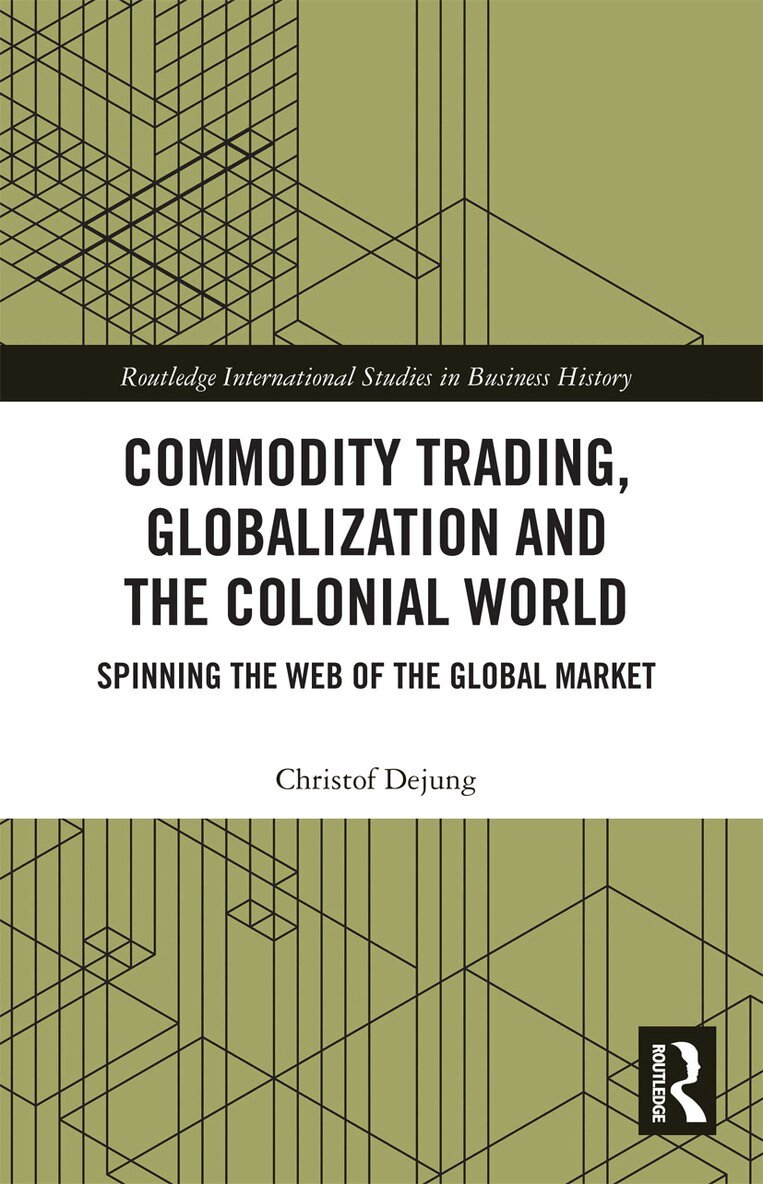
    Commodity Trading, Globalization and the Colonial World

    Spinning the Web of the Global Market

    AvChristof Dejung

    Häftad, Engelska, 2020

    Del i serien Routledge International Studies in Business History

    687 kr

    Beställningsvara. Skickas inom 10-15 vardagar. Fri frakt över 249 kr.

    Fler format och utgåvor

    Inbunden

    2 495 kr

    E-bok

    812 kr

    E-bok

    812 kr

    Beskrivning

    Commodity Trading, Globalization and the Colonial World: Spinning the Web of the Global Market provides a new perspective on economic globalization in the nineteenth and twentieth centuries. Instead of understanding the emergence of global markets as a mere result of supply and demand or as the effect of imperial politics, this book focuses on a global trading firm as an exemplary case of the actors responsible for conducting economic transactions in a multicultural business world. The study focuses on the Swiss merchant house Volkart Bros., which was one of the most important trading houses in British India after the late nineteenth century and became one of the biggest cotton and coffee traders in the world after decolonization.The book examines the following questions: How could European merchants establish business contacts with members of the mercantile elite from India, China or Latin America? What role did a shared mercantile culture play for establishing relations of trust? How did global business change with the construction of telegraph lines and railways and the development of economic institutions such as merchant banks and commodity exchanges? And what was the connection between the business interests of transnationally operating capitalists and the territorial aspirations of national and imperial governments?Based on a five-year-long research endeavor and the examination of 24 public and private archives in seven countries and on three continents, Commodity Trading, Globalization and the Colonial World: Spinning the Web of the Global Market goes well beyond a mere company history as it highlights the relationship between multinationally operating firms and colonial governments, and the role of business culture in establishing notions of trust, both within the firm and between economic actors in different parts of the world. It thus provides a cutting-edge history of globalization from a micro-perspective. Following an actor-theoretical perspective, the book maintains that the global market that came into being in the nineteenth century can be perceived as the consequence of the interaction of various actors. Merchants, peasants, colonial bureaucrats and industrialists were all involved in spinning the individual threads of this commercial web. By connecting established approaches from business history with recent scholarship in the fields of global and colonial history, Commodity Trading, Globalization and the Colonial World: Spinning the Web of the Global Market offers a new perspective on the emergence of global enterprise and provides an important addition to the history of imperialism and economic globalization.

    Produktinformation

    • Utgivningsdatum:2020-12-18
    • Mått:152 x 229 x 20 mm
    • Vikt:720 g
    • Format:Häftad
    • Språk:Engelska
    • Serie:Routledge International Studies in Business History
    • Antal sidor:378
    • Förlag:Taylor & Francis Ltd
    • ISBN:9780367735289
    • Översättare:Paul Cohen

    Utforska kategorier

    • Kolonialism och imperialism inom Historia och arkeologi
    • Entreprenörskap inom Ekonomi och Ledarskap
    • Internationell ekonomi inom Ekonomi och Ledarskap

    Mer om författaren

    Christof Dejung is a professor in modern history at the University of Bern, Switzerland.

    Innehållsförteckning

    • Introduction Part 1: European Expansions1. From Winterthur to Bombay: The Establishment of the Firm 2. From the Indian Coast to the Hinterland — The Birth of a Large-Scale Enterprise 3. Banks, Commodity Exchanges and Agencies: The Organization of Sales in Europe 4. "We are a Swiss firm, thank God!": World War I and the Meaning of National Origins Part 2: Looking behind the Scenes5. The Owner Family 6. Keeping Everyone in the Fold: The Employees and the Corporate Family 7. Working in Colonial India Part 3: The De-Europeanization of Global Markets8. An Era of Crises: Europe After 1918 9. Growing Self-confidence: India After 1918 10. Expansion East and West: Extending the Business to China, Japan and the United States 11. Machinery for Asia Part 4: State Interventions and Multinational Trading Companies12. The Consequences of Decolonization 13. Entering the Coffee Trade 14. The Cotton Trade after World War II Conclusion