• Fri frakt över 249 kr
  • •
  • Snabba leveranser
  • •
  • Billiga böcker
Kundservice

Du är på sajten för privatpersoner.

Företag, bibliotek eller offentlig verksamhet?

Du handlar på classic.bokus.com, där alla dina funktioner finns intakta.
Till classic.bokus.com
Bokus logotyp. Gå till startsidan.
  • Erbjudanden
  • Student
  • Topplistor
  • Barn & ungdom
  • Bokus Play
  • E-böcker
  • Ljudböcker
  • Pocketböcker
  • Spel och pussel

Pocketfynda! Hundratals böcker för 49 kr/st →

Sidfot

Mina sidor

    Hjälp

    • Kundservice
    • Vanliga frågor och svar
    • Frakt och leverans
    • Retur vid ångerrätt
    • Reklamera vara
    • Betalning
    • Köpvillkor
    • Allmänna villkor
    • Information om webbplatsens tillgänglighet

    Om Bokus

    • Om oss
    • Pressrum
    • För studenter
    • För företag
    • För bibliotek och offentlig verksamhet
    • För leverantörer
    • Hållbarhet

    Populärt

    • Aktuella erbjudanden
    • Presentkort
    • Studentlitteratur
    • Nya böcker
    • Topplistor
    • Signerade böcker
    • Engelska böcker

    Inspiration

    • Boktips
    • BookTok
    • Barnbokskaraktärer
    • Populära författare
    Logotyp för Bokus
    Följ oss på Facebook (extern länk)Följ oss på Instagram (extern länk)Följ oss på YouTube (extern länk)Följ oss på TikTok (extern länk)
    bokus @ CookiesAnpassa cookiesIntegritetspolicyKöpvillkor
    Till Citymail hemsida (extern länk)Till Budbee hemsida (extern länk)Till Postnord hemsida (extern länk)Till Schenker hemsida (extern länk)Till Early Bird hemsida (extern länk)Till Walleys hemsida (extern länk)
    1. Naturvetenskap och teknik
    2. Teknik och industri
    3. Tillverkningsteknik

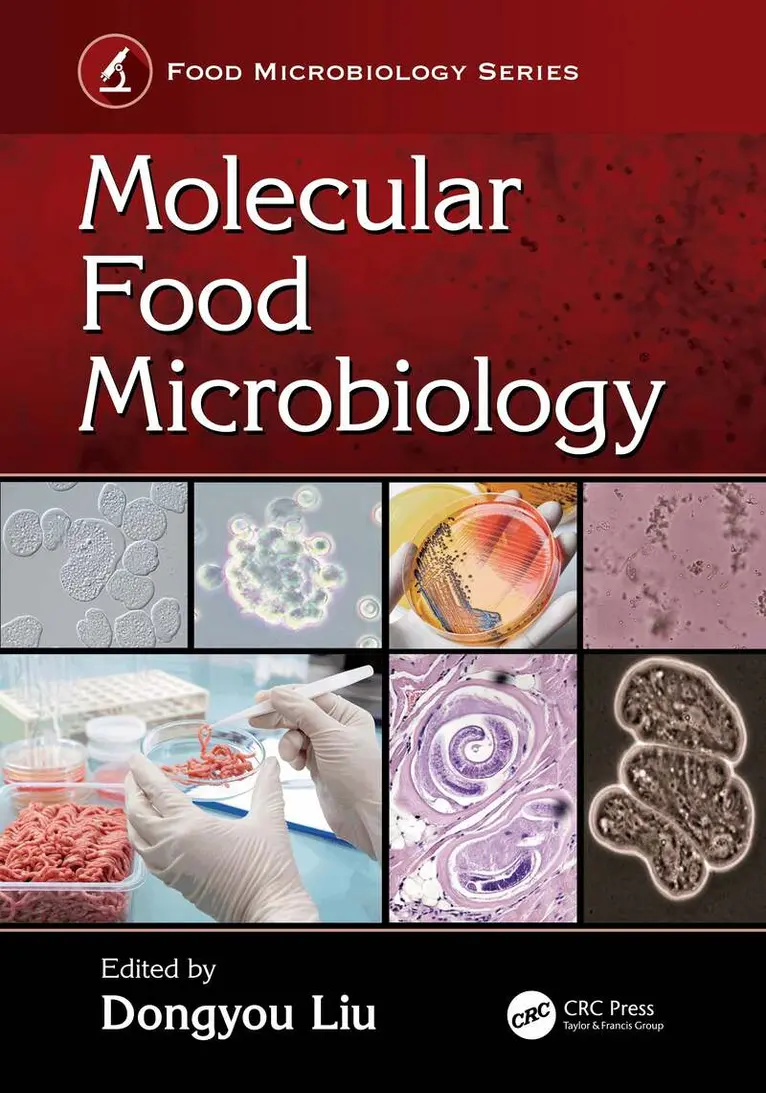
    Molecular Food Microbiology

    AvDongyou Liu

    Häftad, Engelska, 2024

    Del i serien Food Microbiology

    1 069 kr

    Beställningsvara. Skickas inom 10-15 vardagar. Fri frakt över 249 kr.

    Beskrivning

    The elucidation of DNA double helix in 1953 and the publication of DNA cloning protocol in 1973 have put wings under the sail of molecular biology, which has since quietly revolutionized many fields of biological science, including food microbiology. Exploiting the power and versatility of molecular technologies, molecular food microbiology extends and greatly improves on phenotypically based food microbiology, leading to the development of better diagnostics for foodborne infections and intoxications, and contributing to the design of more effective therapeutics and prophylaxes against foodborne diseases.Forming part of the Food Microbiology series, Molecular Food Microbiology provides a state of art coverage on molecular techniques applicable to food microbiology. While the introductory chapter contains an overview on the principles of current DNA, RNA and protein techniques and discusses their utility in helping solve practical problems that food microbiology is facing now and in the future, the remaining chapters present detailed moleuclar analyses of selective foodborne viruses, bacteria, fungi and parasites.Key Features: Contains a state of art overview on moleuclar techniques applicable to food microbiology research and development Presents in-depth molecular analysis of selective foodborne viruses, bacteria, fungi and parasites Highlights the utility of molecular tecniques for accurate diagnosis and effective control of foodborne diseases Includes expert contributions from international scientists involved in molecular food microbiology research Represents a highly informative textbook for students majoring in food, medical, and veterinary microbiology Offers a contemporary reference for scholars and educators wishing to keep abreast with the latest developments in molecular food microbiology With contributions from international scientists involved in molecular food microbiology research, this book constitutes an informative textbook for undergraduates and postgraduates majoring in food, medical, and veterinary microbiology; represents an indispensable guide for food, medical, and veterinary scientists engaged in molecular food microbiology research and development; and offers a contemporary update for scholars and educators trying to keep in touch with the latest developments in molecular food microbiology.

    Produktinformation

    • Utgivningsdatum:2024-10-04
    • Mått:178 x 254 x 28 mm
    • Vikt:960 g
    • Format:Häftad
    • Språk:Engelska
    • Serie:Food Microbiology
    • Antal sidor:464
    • Förlag:Taylor & Francis Ltd
    • ISBN:9780367740672

    Utforska kategorier

    • Tillverkningsteknik inom Naturvetenskap och teknik

    Mer om författaren

    Dongyou Liu, Ph.D., studied veterinary science at Hunan Agricultural University, China and conducted postgraduate research on the generation and application of monoclonal antibodies for improved immunodiagnosis of human hydatidosis at School of Veterinary Science, University of Melbourne, Australia. In the past three decades, he has worked at several research and clinical laboratories in Australia and the United States of America, with focuses on molecular characterization of microbial pathogens and detection of human genetic disorders and tumors/cancers. He is the first author of >50 original research and review articles in peer-reviewed international journals, the contributor of 275 book chapters, and the editor of "Handbook of Listeria monocytogenes" (2008), "Handbook of Nucleic Acid Purification" (2009), "Molecular Detection of Foodborne Pathogens" (2009), "Molecular Detection of Human Viral Pathogens" (2010), "Molecular Detection of Human Bacterial Pathogens" (2011), "Molecular Detection of Human Fungal Pathogens" (2011), "Molecular Detection of Human Parasitic Pathogens" (2012), "Manual of Security Sensitive Microbes and Toxins" (2014), "Molecular Detection of Animal Viral Pathogens" (2016), "Laboratory Models for Foodborne Infections" (2017), "Handbook of Foodborne Diseases" (2018), and "Handbook of Tumor Syndromes" (2020), all of which are published by CRC Press. He is also a co-editor for "Molecular Medical Microbiology 2nd edition" (2014), which is released by Elsevier. Further, he is the author of recent CRC books: "Pocket Guides to Biomedical Sciences: Tumors and Cancers – Central and Peripheral Nervous Systems" (2017), "Pocket Guides to Biomedical Sciences: Tumors and Cancers – Head, Neck, Heart, Lung and Gut" (2017), "Pocket Guides to Biomedical Sciences: Tumors and Cancers – Skin, Soft Tissue, Bone and Urogenitals" (2017), and "Pocket Guides to Biomedical Sciences: Tumors and Cancers – Endocrine glands, Blood, Marrow and Lymph" (2017).

    Innehållsförteckning

    • SERIES PREFACEPREFACECONTRIBUTORSEDITORChapter 1 Molecular food microbiology: an overview Section I Molecular analysis and manipulation of foodborne virusesChapter 2 Molecular mechanisms of norovirus adhesion to agri-food surfaces and fresh foodsChapter3 Molecular mechanisms of prion invasion and analytical methods for detectionChapter 4 Molecular pathogenesis of Nipah virus infectionChapter 5 Molecular identification of human bocavirusChapter 6 Molecular epidemiology of human polyomavirusesChapter 7 Genetics of emerging human coronavirusesChapter 8 Molecular mechanisms of host immune responses to rotavirusChapter 9 Development of vaccines for avian influenza virus Chapter 10 Genetic manipulation of human adenovirus Section II Molecular analysis and manipulation of foodborne bacteriaChapter 11 Molecular mechanisms of Listeria stress responses Chapter 12 Molecular pathogenesis of Aeromonas infectionChapter 13 Molecular identification of Campylobacter spp. Chapter 14 Molecular epidemiology of Salmonella Chapter 15 Genomic and transcriptomic analyses of Vibrio infectionChapter 16 Genetic manipulation of Escherichia coli Section III Molecular analysis and manipulation of foodborne fungiChapter 17 Molecular pathogenesis of Encephalitozoon infectionChapter 18 Molecular detection and quantification of aflatoxin-producing moldsChapter 19 Molecular identification and subtyping of toxigenic and pathogenic Penicillium and TalaromycesChapter 20 Population genetics of Enterocytozoon bienneusiChapter 21 Molecular mechanisms of antifungal resistance in Candida Chapter 22 Genetic manipulation and genome editing of Saccharomyces cerevisiaeSection IV Molecular analysis and manipulation of foodborne parasitesChapter 23 Acanthamoeba adhesionChapter 24 Molecular mechanisms of Toxoplasma gondii invasion Chapter 25 Molecular pathogenesis of Sarcocystis infectionChapter 26 Molecular pathogenesis of Trichinella spiralis infection Chapter 27 Molecular identification of Cyclospora cayetanensisChapter 28 Anisakis: from molecular identification to omic studiesChapter 29 Molecular epidemiology of Dientamoeba fragilisChapter 30 Molecular epidemiology of Echinococcus spp.Chapter 31 Proteomic analysis of Giardia infectionChapter 32 Metabolomic analysis of Fasciola infectionChapter 33 Molecular mechanisms of host immune responses to Entamoeba Chapter 34 Molecular control of Taenia solium cysticercosis Chapter 35 Genetic manipulation of Cryptosporidium