• Fri frakt över 249 kr
  • •
  • Snabba leveranser
  • •
  • Billiga böcker
Kundservice

Du är på sajten för privatpersoner.

Företag, bibliotek eller offentlig verksamhet?

Du handlar på classic.bokus.com, där alla dina funktioner finns intakta.
Till classic.bokus.com
Bokus logotyp. Gå till startsidan.
  • Erbjudanden
  • Nyheter
  • Student
  • Topplistor
  • Barn & ungdom
  • Bokus Play
  • E-böcker
  • Pocketböcker
  • Spel & pussel

10% rabatt på allt med kod NYSTART10 →

Sidfot

Mina sidor

    Hjälp

    • Kundservice
    • Vanliga frågor och svar
    • Frakt och leverans
    • Retur vid ångerrätt
    • Reklamera vara
    • Betalning
    • Köpvillkor
    • Allmänna villkor
    • Information om webbplatsens tillgänglighet

    Om Bokus

    • Om oss
    • Pressrum
    • För studenter
    • För företag
    • För bibliotek och offentlig verksamhet
    • För leverantörer
    • Hållbarhet

    Populärt

    • Aktuella erbjudanden
    • Presentkort
    • Studentlitteratur
    • Nya böcker
    • Topplistor
    • Signerade böcker
    • Engelska böcker

    Inspiration

    • Boktips
    • BookTok
    • Populära bokserier
    • Barnbokskaraktärer
    • Populära författare
    Logotyp för Bokus
    Följ oss på Facebook (extern länk)Följ oss på Instagram (extern länk)Följ oss på YouTube (extern länk)Följ oss på TikTok (extern länk)
    bokus @ CookiesAnpassa cookiesIntegritetspolicyKöpvillkor
    Till Citymail hemsida (extern länk)Till Budbee hemsida (extern länk)Till Postnord hemsida (extern länk)Till Schenker hemsida (extern länk)Till Early Bird hemsida (extern länk)Till Walleys hemsida (extern länk)
    1. Ekonomi och Ledarskap
    2. Företagsekonomi
    3. Organisationsteori

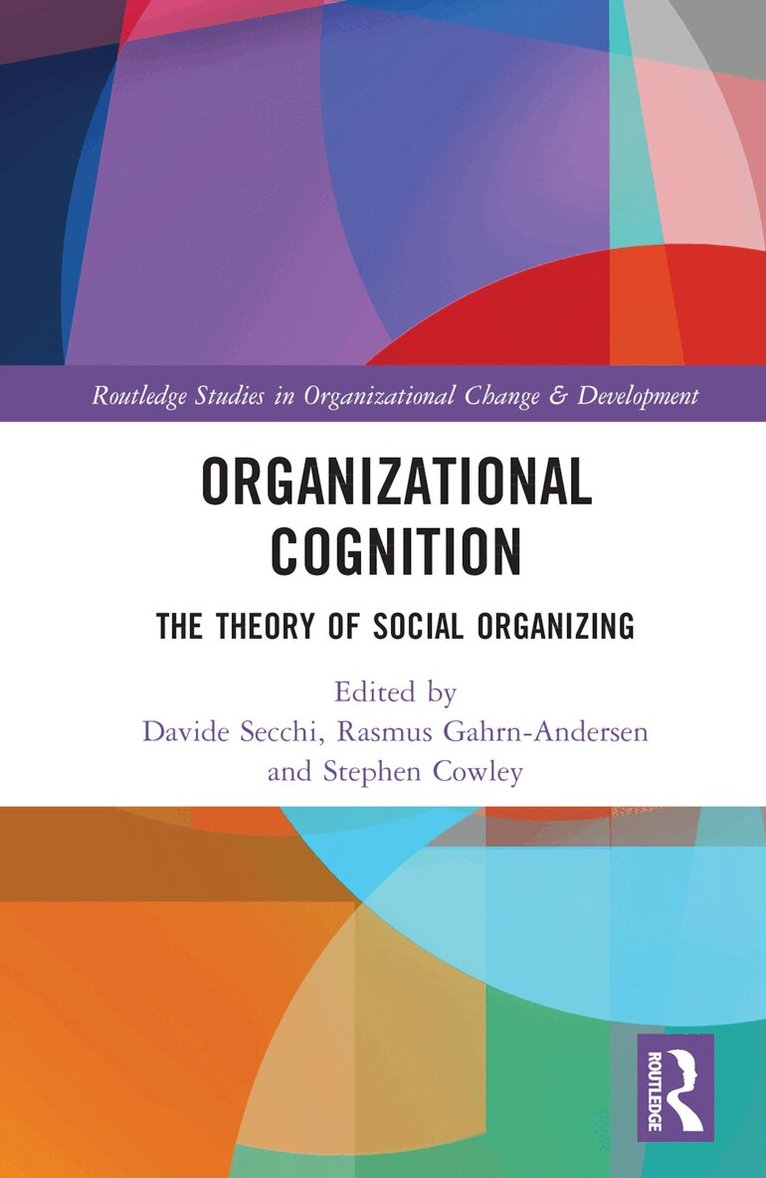
    Organizational Cognition

    The Theory of Social Organizing

    AvDavide Secchi,Rasmus Gahrn-Andersen

    Inbunden, Engelska, 2022

    Del i serien Routledge Studies in Organizational Change & Development

    2 573 kr

    Beställningsvara. Skickas inom 10-15 vardagar. Fri frakt över 249 kr.

    Beskrivning

    Cognition is usually associated with brain activity. Undoubtedly, some brain activity is necessary for it to function. However, the last thirty years have revolutionized the way we intend and think about cognition. These developments allow us to think of cognition as distributed in the sense that it needs tools, artifacts, objects, and other external entities to allow the brain to operate properly. Organizational Cognition: The Theory of Social Organizing takes this perspective and applies it to the organization by introducing a model that defines the elements that allow cognition to work. This model shows that cognition needs the combined and simultaneous presence of micro aspects—i.e. the biological individual—and macro super-structural elements—e.g. organizational climate, culture, norms, values, rules. These two become practice of cognition as they materialize in a meso domain—this is any action that allows individuals to perform their daily duties. Due to the micro-meso-macro interactions, this has been called the 3M Model. Most of what happens in the meso domain relates to exchanges between two or more people, i.e. it is a social activity. This is usually mentioned in the perspectives above, but it is rarely explored.By bringing meso activities to the center of cognition, the book develops and presents the Theory of Social Organizing. Not only this is useful to organizational scholars, but it also opens a new path for cognition research.

    Produktinformation

    • Utgivningsdatum:2022-09-30
    • Mått:152 x 229 x 22 mm
    • Vikt:453 g
    • Format:Inbunden
    • Språk:Engelska
    • Serie:Routledge Studies in Organizational Change & Development
    • Antal sidor:314
    • Förlag:Taylor & Francis Ltd
    • ISBN:9780367769512

    Utforska kategorier

    • Organisationsteori inom Ekonomi och Ledarskap
    • Psykologiska teorier och skolor inom Psykologi och pedagogik

    Mer om författaren

    Davide Secchi is Associate Professor of Organizational Cognition in the Department of Language and Communication and Director of the Research Centre for Computational & Organisational Cognition at the University of Southern Denmark, Slagelse, Denmark.Rasmus Gahrn-Andersen is Associate Professor of Organizational Communication at the University of Southern Denmark, Denmark.Stephen J. Cowley is Professor of Organizational Cognition at the University of Southern Denmark, Denmark.

    Recensioner i media

    "The book offers a timely and important discussion of the 3M approach to organisational cognition and psychology" - Jens Koed Madsen, Oxford University

    Innehållsförteckning

    • 1. Setting the scene Part 1: Theoretical framework 2. Changing practices: Using the 3M model to engineer change 3. Perception as conceptual orderliness in enlanguaged practices 4. Computational revival: Why and how computation is still relevant to the study of recognition Part 2: Practice and applications 5. Reflections on social organizing 6. Theorizing transformative educational technology as a meso-related venture 7. Organization-cognition fit: Supplementing or complementing team’s capabilities? 8. Thinking, faster and slower: Towards a dynamic view of organizational cognition 9. A dynamic view of organizing: An integrative approach 10. The primacy of “Disorganization” in social organizing 11. Sociotechnical dilemmas in healthcare: A cognitive ethnography 12. Cognitive cross-over: Implications for a Theory of Social Organizing 13. Enacting Ontological Design: a Vocabulary of Change from Organisms to organizations Part 3: Reflections and perspectives 14. Towards a science of the artificially organized