• Fri frakt över 249 kr
  • •
  • Snabba leveranser
  • •
  • Billiga böcker
Kundservice

Du är på sajten för privatpersoner.

Företag, bibliotek eller offentlig verksamhet?

Du handlar på classic.bokus.com, där alla dina funktioner finns intakta.
Till classic.bokus.com
Bokus logotyp. Gå till startsidan.
  • Erbjudanden
  • Nyheter
  • Student
  • Topplistor
  • Barn & ungdom
  • Bokus Play
  • E-böcker
  • Pocketböcker
  • Spel & pussel

Må bättre, för mindre! Upp till 50% rabatt på hälsoböcker

Sidfot

Mina sidor

    Hjälp

    • Kundservice
    • Vanliga frågor och svar
    • Frakt och leverans
    • Retur vid ångerrätt
    • Reklamera vara
    • Betalning
    • Köpvillkor
    • Allmänna villkor
    • Information om webbplatsens tillgänglighet

    Om Bokus

    • Om oss
    • Pressrum
    • För studenter
    • För företag
    • För bibliotek och offentlig verksamhet
    • För leverantörer
    • Hållbarhet

    Populärt

    • Aktuella erbjudanden
    • Presentkort
    • Studentlitteratur
    • Nya böcker
    • Topplistor
    • Signerade böcker
    • Engelska böcker

    Inspiration

    • Boktips
    • BookTok
    • Populära bokserier
    • Barnbokskaraktärer
    • Populära författare
    Logotyp för Bokus
    Följ oss på Facebook (extern länk)Följ oss på Instagram (extern länk)Följ oss på YouTube (extern länk)Följ oss på TikTok (extern länk)
    bokus @ CookiesAnpassa cookiesIntegritetspolicyKöpvillkor
    Till Citymail hemsida (extern länk)Till Budbee hemsida (extern länk)Till Postnord hemsida (extern länk)Till Schenker hemsida (extern länk)Till Early Bird hemsida (extern länk)Till Walleys hemsida (extern länk)
    1. Naturvetenskap och teknik
    2. Geovetenskap
    3. Miljövetenskap och miljöpolitik

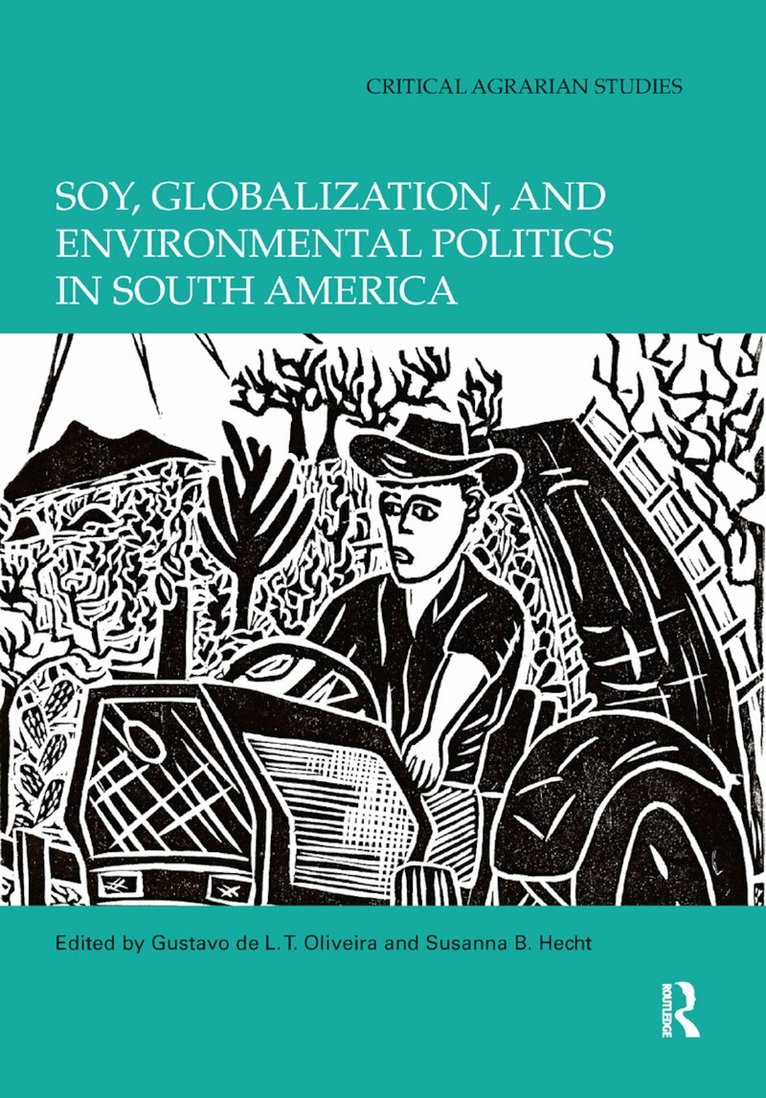
    Soy, Globalization, and Environmental Politics in South America

    AvGustavo de L. T. Oliveira,Susanna B. Hecht

    Häftad, Engelska, 2019

    Del i serien Critical Agrarian Studies

    667 kr

    Beställningsvara. Skickas inom 10-15 vardagar. Fri frakt över 249 kr.

    Beskrivning

    Soy in South America constitutes one of the most spectacular booms of agro-industrial commodity production in the world. It is the pinnacle of modernist agro-industrial practices, serving as a key nexus in food–feed–fuel production that underpins the agribusiness–conservationist discourse of "land sparing" through intensification. Yet soy production is implicated in multiple problems beyond deforestation, ranging from pesticide drift and contamination to social exclusion and conflicts in frontier zones, to concentration of wealth and income among the largest landowners and corporations. This book explores in depth the complex dynamics of soy production from its diverse social settings to its transnational connections, examining the politics of commodity and knowledge production, the role of the state, and the reach of corporate power in everyday life across soy landscapes in South America. Ultimately, the collection encourages us to search and struggle for agroecological alternatives through which we may overcome the pitfalls of this massive transnational capitalist agro-industry. This book was originally published as a special issue of The Journal of Peasant Studies.

    Produktinformation

    • Utgivningsdatum:2019-12-13
    • Mått:174 x 246 x undefined mm
    • Vikt:453 g
    • Format:Häftad
    • Språk:Engelska
    • Serie:Critical Agrarian Studies
    • Antal sidor:368
    • Förlag:Taylor & Francis Ltd
    • ISBN:9780367891299

    Utforska kategorier

    • Miljövetenskap och miljöpolitik inom Naturvetenskap och teknik
    • Lantbruk, fiske och skogsbruk inom Ekonomi och Ledarskap
    • Agronomi och lantbruk inom Naturvetenskap och teknik

    Mer om författaren

    Gustavo de L. T. Oliveira is a PhD candidate in the Department of Geography at University of California, Berkeley, USA. His dissertation analyses the political ecology of Chinese investments in Brazilian agribusiness and logistics infrastructure. He is a member of the BRICS Initiative for Critical Agrarian Studies.Susanna B. Hecht is Professor in the Luskin School of Public Affairs and the Institute of the Environment at University of California, Los Angeles (UCLA), USA, and Professor of International History at the Graduate School of International Development Studies, Geneva, Switzerland. She is the author or editor of more than 16 books and numerous articles on the political ecology of tropical forests. Her book on Amazonian environmental history The Scramble for the Amazon and the Lost Paradise of Euclides da Cunha won the Melville Prize from the American Historical Association, and the Carl Sauer Award in Geography.

    Innehållsförteckning

    • Introduction: Sacred groves, sacrifice zones and soy production: globalization, intensification and neo-nature in South America 1. Strategies and hybrid dynamics of soy transnational companies in the Southern Cone 2. Disappearing nature? Agribusiness, biotechnology and distance in Argentine soybean production 3. Which territorial embeddedness? Territorial relationships of recently internationalized firms of the soybean chain 4. The geopolitics of Brazilian soybeans 5. China’s soybean crisis: the logic of modernization and its discontents 6. Different farming styles behind the homogenous soy production in southern Brazil 7. Soybean agri-food systems dynamics and the diversity of farming styles on the agricultural frontier in Mato Grosso, Brazil 8. Farming is easy, becoming Brazilian is hard: North American soy farmers’ social values of production, work and land in Soylandia 9. Green for gold: social and ecological tradeoffs influencing the sustainability of the Brazilian soy industry 10. On the margins of soy farms: traditional populations and selective environmental policies in the Brazilian Cerrado 11. Genetically modified soybeans, agrochemical exposure, and everyday forms of peasant collaboration in Argentina 12. ‘More soy on fewer farms’ in Paraguay: challenging neoliberal agriculture’s claims to sustainability 13. The moving frontiers of genetically modified soy production: shifts in land control in the Argentinian Chaco 14. Bolivia’s soy complex: the development of ‘productive exclusion’