• Fri frakt över 249 kr
  • •
  • Snabba leveranser
  • •
  • Billiga böcker
Kundservice

Du är på sajten för privatpersoner.

Företag, bibliotek eller offentlig verksamhet?

Du handlar på classic.bokus.com, där alla dina funktioner finns intakta.
Till classic.bokus.com
Bokus logotyp. Gå till startsidan.
  • Erbjudanden
  • Nyheter
  • Student
  • Topplistor
  • Barn & ungdom
  • Bokus Play
  • E-böcker
  • Pocketböcker
  • Spel & pussel

10% rabatt på allt med kod: NYSTART10 →

Sidfot

Mina sidor

    Hjälp

    • Kundservice
    • Vanliga frågor och svar
    • Frakt och leverans
    • Retur vid ångerrätt
    • Reklamera vara
    • Betalning
    • Köpvillkor
    • Allmänna villkor
    • Information om webbplatsens tillgänglighet

    Om Bokus

    • Om oss
    • Pressrum
    • För studenter
    • För företag
    • För bibliotek och offentlig verksamhet
    • För leverantörer
    • Hållbarhet

    Populärt

    • Aktuella erbjudanden
    • Presentkort
    • Studentlitteratur
    • Nya böcker
    • Topplistor
    • Signerade böcker
    • Engelska böcker

    Inspiration

    • Boktips
    • BookTok
    • Populära bokserier
    • Barnbokskaraktärer
    • Populära författare
    Logotyp för Bokus
    Följ oss på Facebook (extern länk)Följ oss på Instagram (extern länk)Följ oss på YouTube (extern länk)Följ oss på TikTok (extern länk)
    bokus @ CookiesAnpassa cookiesIntegritetspolicyKöpvillkor
    Till Citymail hemsida (extern länk)Till Budbee hemsida (extern länk)Till Postnord hemsida (extern länk)Till Schenker hemsida (extern länk)Till Early Bird hemsida (extern länk)Till Walleys hemsida (extern länk)
    1. Juridik
    2. Rättsvetenskap
    3. Lag och samhälle

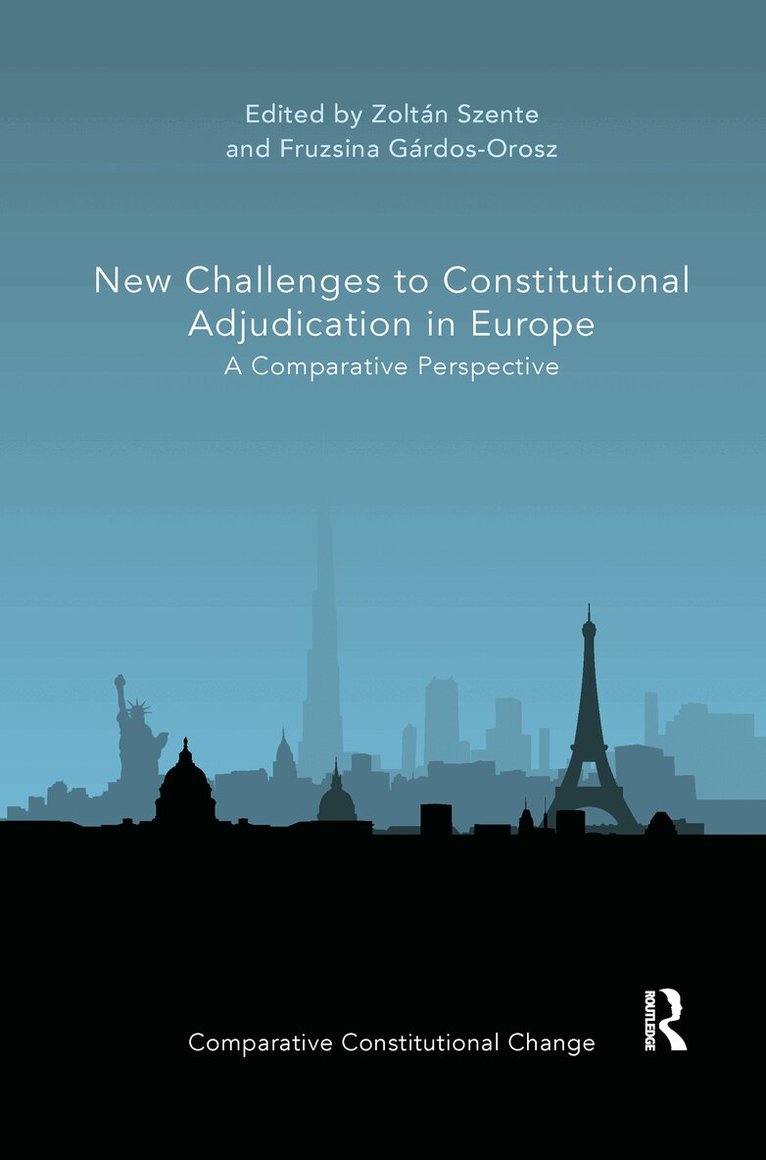
    New Challenges to Constitutional Adjudication in Europe

    A Comparative Perspective

    AvZoltán Szente,Fruzsina Gárdos-Orosz

    Häftad, Engelska, 2019

    Del i serien Comparative Constitutional Change

    613 kr

    Beställningsvara. Skickas inom 10-15 vardagar. Fri frakt över 249 kr.

    Beskrivning

    In the past few years, constitutional courts have been presented with new challenges. The world financial crisis, the new wave of terrorism, mass migration and other country-specific problems have had wide-ranging effects on the old and embedded constitutional standards and judicial constructions. This book examines how, if at all, these unprecedented social, economic and political problems have affected constitutional review in Europe. As the courts’ response must conform with EU law and in some cases international law, analysis extends to the related jurisprudence of the European Court of Justice and the European Court of Human Rights. The collection adopts a common analytical structure to examine how the relevant challenges have been addressed in ten country specific case studies. Alongside these, constitutional experts frame the research within the theoretical understanding of the constitutional difficulties of the day in Europe. Finally, a comparative chapter examines the effects of multilevel constitutionalism and identifies general European trends.This book will be essential reading for academics and researchers working in the areas of constitutional law, comparative law and jurisprudence.

    Produktinformation

    • Utgivningsdatum:2019-11-11
    • Mått:156 x 234 x 29 mm
    • Vikt:650 g
    • Format:Häftad
    • Språk:Engelska
    • Serie:Comparative Constitutional Change
    • Antal sidor:324
    • Förlag:Taylor & Francis Ltd
    • ISBN:9780367893606

    Utforska kategorier

    • Lag och samhälle inom Juridik
    • Folkrätt inom Juridik
    • Författningsrätt och förvaltningsrätt inom Juridik

    Mer om författaren

    Professor Zoltán Szente, Research Chair, Institute for Legal Studies, Hungarian Academy of Sciences; Professor of Constitutional Law, National University of Public Service, Budapest, Hungary.Fruzsina Gárdos-Orosz, Senior Research Fellow, Director of the Institute for Legal Studies, Hungarian Academy of Sciences; Associate Professor, National University of Public Service, Budapest, Hungary.

    Recensioner i media

    'This book deals with the constitutional adjudication of ten European peak courts and their compliance with European norms from the perspective of the financial crisis, terrorism and migration. The shelf-life of the findings will be long, because these challenges, and the non-compliance with European values seem to stay with us.'Gábor Halmai, Professor and Chair of Comparative Constitutional Law at the European Univeristy Institute, Florence'This book presents a remarkable overview in new developments in constitutional adjudication, a field in permanent evolution and constant pressure from diverging issues, including fundamental rights at a time of growing security concern, legislative reforms under conditions of financial crisis and the extension of supranational law. Covering many relevant controversies, this book invites further research and debate.'Otto Pfersmann, EHESS (Institute for Advanced Studies in Social Sciences), France'This timely collection provides specialists and non-specialists alike with a very useful account of how constitutional adjudication across Europe has developed and mutated in different ways to address the many cross-cutting challenges facing Europe at present. With its mixture of framing chapters, country case-studies, and thematic analysis of issues such as 'judicial dialogue' and the role of Europe's international 'constitutional' courts - the European Court of Justice (ECJ) and the European Court of Human Rights (ECtHR) - this book is a must-read for anyone seeking to understand the complexities of the judicial role in addressing serious governance challenges and crises.'Tom Gerald Daly, Fellow of Melbourne Law School and Associate Director of the Edinburgh Centre for Constitutional Law

    Innehållsförteckning

    • I. Conceptualizing pressure and change in constitutional adjudicationChapter 1: Introduction - Contemporary challenges of constitutional adjudication in Europe - Zoltán Szente and Fruzsina Gárdos-OroszChapter 2: The Resistance of Constitutional Standards to the New Economic and Social Challenges and the Legitimacy of Constitutional Review in a Contemporary European Context - Michel VerpeauxII. Coping with challenges by national courtsChapter 3: Croatian constitutional adjudication in times of stress - Djordje GardasevicChapter 4: Remarks on the case-law of the French Constitutional Council in relation to new challenges - Fabrice HourquebieChapter 5: Beware of disruptions – The Bundesverfassungsgericht as Supporter of Change and Anchor of Stability - Veith MehdeChapter 6: From submission to reaction: The Greek Courts’ stance on the financial crisis - Apostolos VlachogiannisChapter 7: Judicial deference or political loyalty? The Hungarian Constitutional Court’s role in tackling crisis situations - Zoltán Szente and Fruzsina Gárdos-OroszChapter 8: Global markets, terrorism and immigration: Italy between a troubled economy and a Constitutional crisis - Ines CiolliChapter 9: Constitutional judiciary in crisis. The case of Poland - Mirosław GranatChapter 10: Constitutional law and crisis: the Portuguese Constitutional Court under pressure? - Mariana CanotilhoChapter 11: Constitutional Courts under Pressure – New Challenges to Constitutional Adjudication. The Case of Spain - Francisco Balaguer CallejónChapter 12: National Security and the Limits of Judicial Protection - Patrick BirkinshawChapter 13: The UK Supreme Court and Parliament: Judicial and Political Dialogues - John EldowneyIII. Responding to challenges on European levelChapter 14: New challenges for constitutional adjudication in Europe: What role could the ‘dialogue of courts’ play? - Tania GroppiChapter 15: The negotiating function of the European Court of Human Rights: Reconciling diverging interests born from new European challenges - Beatrice DelzanglesChapter 16: The crisis, judicial power and EU law: could it have been managed differently by the EU Court of Justice? - Márton VarjuIV. Constitutional courts under pressure – A European comparisonChapter 17: Constitutional courts under pressure – An assessment - Zoltán Szente and Fruzsina Gárdos-Orosz