• Fri frakt över 249 kr
  • •
  • Snabba leveranser
  • •
  • Billiga böcker
Kundservice

Du är på sajten för privatpersoner.

Företag, bibliotek eller offentlig verksamhet?

Du handlar på classic.bokus.com, där alla dina funktioner finns intakta.
Till classic.bokus.com
Bokus logotyp. Gå till startsidan.
  • Erbjudanden
  • Nyheter
  • Student
  • Topplistor
  • Barn & ungdom
  • Bokus Play
  • E-böcker
  • Pocketböcker
  • Spel & pussel

Må bättre, för mindre! Upp till 50% rabatt på hälsoböcker

Sidfot

Mina sidor

    Hjälp

    • Kundservice
    • Vanliga frågor och svar
    • Frakt och leverans
    • Retur vid ångerrätt
    • Reklamera vara
    • Betalning
    • Köpvillkor
    • Allmänna villkor
    • Information om webbplatsens tillgänglighet

    Om Bokus

    • Om oss
    • Pressrum
    • För studenter
    • För företag
    • För bibliotek och offentlig verksamhet
    • För leverantörer
    • Hållbarhet

    Populärt

    • Aktuella erbjudanden
    • Presentkort
    • Studentlitteratur
    • Nya böcker
    • Topplistor
    • Signerade böcker
    • Engelska böcker

    Inspiration

    • Boktips
    • BookTok
    • Populära bokserier
    • Barnbokskaraktärer
    • Populära författare
    Logotyp för Bokus
    Följ oss på Facebook (extern länk)Följ oss på Instagram (extern länk)Följ oss på YouTube (extern länk)Följ oss på TikTok (extern länk)
    bokus @ CookiesAnpassa cookiesIntegritetspolicyKöpvillkor
    Till Citymail hemsida (extern länk)Till Budbee hemsida (extern länk)Till Postnord hemsida (extern länk)Till Schenker hemsida (extern länk)Till Early Bird hemsida (extern länk)Till Walleys hemsida (extern länk)
    1. Historia och arkeologi
    2. Arkeologi

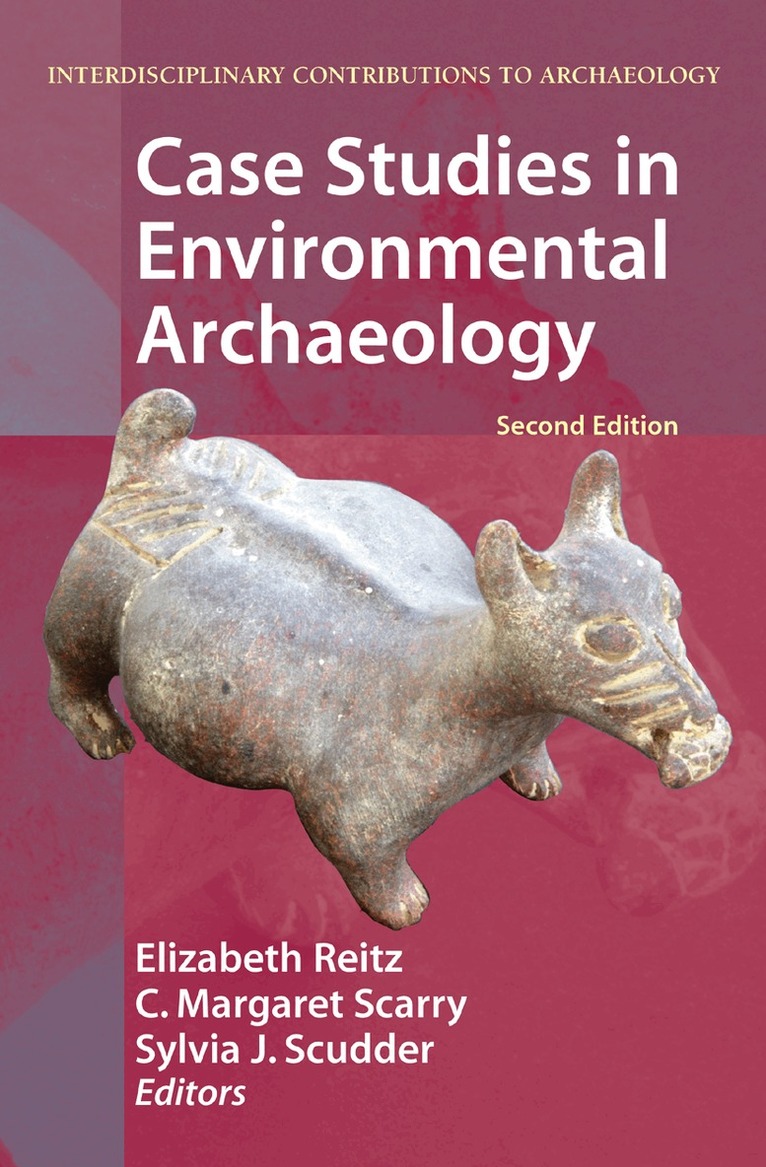
    Case Studies in Environmental Archaeology

    AvElizabeth Reitz,C. Margaret Scarry

    Häftad, Engelska, 2007

    Del i serien Interdisciplinary Contributions to Archaeology

    622 kr

    Beställningsvara. Skickas inom 10-15 vardagar. Fri frakt över 249 kr.

    Beskrivning

    A few years ago, one of us was approached by a student who asked if we really knew anything about human behavior from environmental archaeology. This student was taking an environmental archaeology course in which taphonomy and the biases of the techniques and methods used by environmental archae- ogists figured prominently. The goal was to train students to be informed users of environmental data. But the student, quite rightly, wanted to know if beyond taphonomy, recovery biases, and analytical biases, there was anything envir- mental archaeologists could say about the human condition. Her question was the stimulus for the first edition of this volume and continued to guide us as we edited this second edition. Our purpose is to show students and scholars, through a series of case studies, that there are things environmental archaeologists do know about the human-environmental relationship; many of which defy conventional archaeological expectations. To do so, however, we must break with the t- ditional organization of environmental archaeology along disciplinary lines. Environmental archaeology is intrinsically interdisciplinary. The demands of each discipline often mean, however, that specialists become further speci- ized in a very limited technical focus. While almost every environmental technique and method is represented in this edition, they are used as tools, not as ends in themselves.

    Produktinformation

    • Utgivningsdatum:2007-12-06
    • Mått:155 x 235 x 27 mm
    • Vikt:828 g
    • Format:Häftad
    • Språk:Engelska
    • Serie:Interdisciplinary Contributions to Archaeology
    • Antal sidor:463
    • Upplaga:2
    • Förlag:Springer-Verlag New York Inc.
    • ISBN:9780387713960

    Utforska kategorier

    • Arkeologi inom Historia och arkeologi

    Innehållsförteckning

    • Preface.- Acknowledgments.- List of Figures.- List of Tables.- 1 Introduction to Environmental Archaeology.- 1.1 Introduction.- 1.2 What is Environmental .- Archaeology?.- Humanity, History, or Science?.- The Scientific Method and Why it .- Matters.- Method or Theory?.- Artifact or Ecofact?.- Summary.- 1.3 History and Theory in Environmental Archaeology.- History.- Theory.- 1.4 Ecological Concepts.- 1.5 The Disciplines of Environmental Archaeology.- 1.6 The Goals of Environmental Archaeology.- Environmental History: Climate, Landscapes, and Biogeography.- Human/environmental Relationships.- The Evolution of Human Social Institutions.- Improvements in Methodology.- 1.7 Goals of this Book.- 2 Factors Affecting the Composition of an Assemblage (New Chapter).- 2.1 Introduction.- 2.2 Taphonomy.- 2.3 Archaeological Transformational Processes.- 2.4 Cultural Transformations.- Types of Sites.- Cultural Transformations.- Summary.- 2.5 Systemic Context Transformations.- Abiotic Transformations.-Soil Chemistry.- Climate.- Mechanical Damage (alluvial, coastal, fluvial, aeolian).- Aerobic Environments.- Biotic Transformations.- Summary.- 2.6 Ethnoarchaeology and Experimental Archaeology.- 2.7 Summary.- 3 Research Designs and Field Methods (New Chapter).- 3.1 Introduction.- The Role of the Environmental Archaeologist in Field Work.- 3.2 Research Designs.- 3.3 The Importance of Context.- What is a site?.- On-site and off-site testing.- Features and Zones.- Column Samples.- Continguous/Block Excavations.- Random, Stratified Units.- 3.4 Recovery Techniques.- In situ Recovery.- Point Samples.- Screening.- Flotation.- 3.5 Field Sampling.- 3.6 Special Finds.- Burials.- Coprolites and Dung Residue.- Hearths.- 3.7 Record-keeping.- 3.8 Anticipating Radiocarbon Dating and Other Studies.- 3.9 The Ethics of Archaeology.- Cultural Patrimony.- Curating Samples.- 3.10 Summary.- 4 Classification and Nomenclature (New Chapter).- 4.1 Introduction.- 4.2 Folk Taxonomy.- 4.3 Linnaean Taxonomy.- 4.4 The Importance of Comparative Collections.- 4.5 Summary.- 5 Sediments and Soils (Update).- 5.1 Introduction.- 5.2 Taxonomy and Morphology of Soils and Sediments.- 5.3 Field Considerations.- 5.4 Laboratory Procedures for Sediments.- 5.5 Laboratory Procedures for Soils.- 5.6 Applications and Case Studies.- Petrofabric Analysis.- Grain Surface Textures.- Micromorphology.- Environments of Deposition.- Sediment Accumulation and Distribution: Rates and Problems.- Barrow Construction and Soil Interpretation.- Soils as Landscape Remnants.- Phosphate and Manganese in Archaeological Soils.- 5.7 Summary.- 6 Seeds, Fruits, Nuts, and Tubers (Update).- 6.1 Introduction.- 6.2 Taxonomy and Morphology.- 6.3 Field Considerations.- 6.4 Laboratory Procedures.- 6.5 Evidence for Domestication.- 6.6 Applications and Case Studies.- Carbonized Material at Ur.- Seeds and Fruit from Burials.- Coprolites as Evidence of Diet.- The Problem of Mummy Wheat.- The Origins of British Brewing.- The Interpretation of Crops.- Impressions.- 6.7 Summary.- 7 Wood and Charcoal (Update).- 7.1 Introduction.- 7.2 Taxonomy and Morphology.- 7.3 Field Considerations.- 7.4 Laboratory Procedures.- 7.5 Dendrochronology and Radiocarbon Dating.- 7.6 Applications and Case Studies.- Charcoal as Paleoenvironmental Evidence.- Charcoal and Plaster Impressions from Myrtos.- Wood Remains from York.- Trackways in the Somerset Levels.- The Organization of Roman Military Timber Supply.- 7.7 Summary.- 8 Pollen (Update).- 8.1 Introduction.- 8.2 Taxonomy and Morphology.- 8.3 Field Considerations.- 8.4 Laboratory Procedures.- 8.5 Pollen in Special Contexts.- Mineral Soils.- Coprolites.- Stomach Contents.- 8.6 Applications and Case Studies.- Fodder.- Landscape Change.- Climate Change.- Caves and Coprolites.- The Elm Decline.- 8.7 Summary.- 9 Phytoliths, Starch Grains, and Spores (Reorganized from other Chapters).- 9.1 Introduction.- 9.2 Taxonomy and Morphology.- 9.3 Fiel