• Fri frakt över 249 kr
  • •
  • Snabba leveranser
  • •
  • Billiga böcker
Kundservice

Du är på sajten för privatpersoner.

Företag, bibliotek eller offentlig verksamhet?

Du handlar på classic.bokus.com, där alla dina funktioner finns intakta.
Till classic.bokus.com
Bokus logotyp. Gå till startsidan.
  • Erbjudanden
  • Student
  • Topplistor
  • Barn & ungdom
  • Bokus Play
  • E-böcker
  • Ljudböcker
  • Pocketböcker
  • Spel och pussel

5% studentrabatt – använd koden KURSBOK27 →

Sidfot

Mina sidor

    Hjälp

    • Kundservice
    • Vanliga frågor och svar
    • Frakt och leverans
    • Retur vid ångerrätt
    • Reklamera vara
    • Betalning
    • Köpvillkor
    • Allmänna villkor
    • Information om webbplatsens tillgänglighet

    Om Bokus

    • Om oss
    • Pressrum
    • För studenter
    • För företag
    • För bibliotek och offentlig verksamhet
    • För leverantörer
    • Hållbarhet

    Populärt

    • Aktuella erbjudanden
    • Presentkort
    • Studentlitteratur
    • Nya böcker
    • Topplistor
    • Signerade böcker
    • Engelska böcker

    Inspiration

    • Boktips
    • BookTok
    • Barnbokskaraktärer
    • Populära författare
    Logotyp för Bokus
    Följ oss på Facebook (extern länk)Följ oss på Instagram (extern länk)Följ oss på YouTube (extern länk)Följ oss på TikTok (extern länk)
    bokus @ CookiesAnpassa cookiesIntegritetspolicyKöpvillkor
    Till Citymail hemsida (extern länk)Till Budbee hemsida (extern länk)Till Postnord hemsida (extern länk)Till Schenker hemsida (extern länk)Till Early Bird hemsida (extern länk)Till Walleys hemsida (extern länk)
    1. Naturvetenskap och teknik
    2. Matematik och naturvetenskap
    3. Matematik
    4. Tillämpad matematik

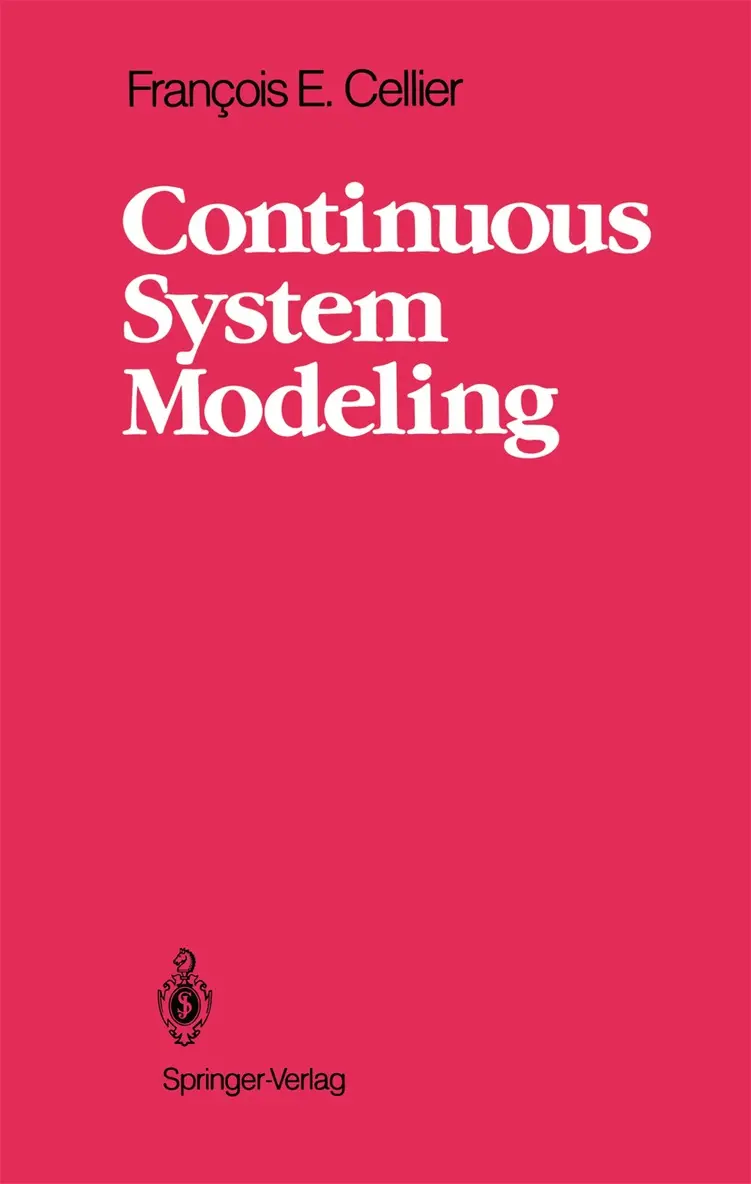
    Continuous System Modeling

    AvFrançois E. Cellier,Jurgen Greifeneder

    Inbunden, Engelska, 1991

    1 078 kr

    Beställningsvara. Skickas inom 10-15 vardagar. Fri frakt över 249 kr.

    Fler format och utgåvor

    Häftad

    1 081 kr

    Beskrivning

    Modeling and Simulation have become endeavors central to all disciplines of science and engineering. They are used in the analysis of physical systems where they help us gain a better understanding of the functioning of our physical world. They are also important to the design of new engineering systems where they enable us to predict the behavior of a system before it is ever actually built. Modeling and simulation are the only techniques available that allow us to analyze arbitrarily non-linear systems accurately and under varying experimental conditions. Continuous System Modeling introduces the student to an important subclass of these techniques. They deal with the analysis of systems described through a set of ordinary or partial differential equations or through a set of difference equations. This volume introduces concepts of modeling physical systems through a set of differential and/or difference equations. The purpose is twofold: it enhances the scientific understanding of our physical world by codifying (organizing) knowledge about this world, and it supports engineering design by allowing us to assess the consequences of a particular design alternative before it is actually built. This text has a flavor of the mathematical discipline of dynamical systems, and is strongly oriented towards Newtonian physical science.

    Produktinformation

    • Utgivningsdatum:1991-05-23
    • Mått:156 x 234 x 48 mm
    • Vikt:1 335 g
    • Format:Inbunden
    • Språk:Engelska
    • Antal sidor:756
    • Upplaga:1991
    • Förlag:Springer-Verlag New York Inc.
    • ISBN:9780387975023

    Utforska kategorier

    • Tillämpad matematik inom Naturvetenskap och teknik
    • Maskinteknik och material inom Naturvetenskap och teknik

    Innehållsförteckning

    • 1 Introduction, Scope, and Definitions.- 2 Basic Principles of Continuous System Modeling.- 3 Principles of Passive Electrical Circuit Modeling.- 4 Principles of Planar Mechanical System Modeling.- 5 Hierarchical Modular Modeling of Continuous Systems.- 6 Principles of Active Electrical Circuit Modeling.- 7 Bond Graph Modeling.- 8 Modeling in Nonequilibrium Thermodynamics.- 9 Modeling Chemical Reaction Kinetics.- 10 Population Dynamics Modeling.- 11 System Dynamics.- 12 Naïve Physics.- 13 Inductive Reasoning.- 14 Artificial Neural Networks and Genetic Algorithms.- 15 Automated Model Synthesis.