• Fri frakt över 249 kr
  • •
  • Snabba leveranser
  • •
  • Billiga böcker
Kundservice

Du är på sajten för privatpersoner.

Företag, bibliotek eller offentlig verksamhet?

Du handlar på classic.bokus.com, där alla dina funktioner finns intakta.
Till classic.bokus.com
Bokus logotyp. Gå till startsidan.
  • Erbjudanden
  • Student
  • Topplistor
  • Barn & ungdom
  • Bokus Play
  • E-böcker
  • Ljudböcker
  • Pocketböcker
  • Spel & pussel

10% rabatt på allt med kod NYSTART10 →

Sidfot

Mina sidor

    Hjälp

    • Kundservice
    • Vanliga frågor och svar
    • Frakt och leverans
    • Retur vid ångerrätt
    • Reklamera vara
    • Betalning
    • Köpvillkor
    • Allmänna villkor
    • Information om webbplatsens tillgänglighet

    Om Bokus

    • Om oss
    • Pressrum
    • För studenter
    • För företag
    • För bibliotek och offentlig verksamhet
    • För leverantörer
    • Hållbarhet

    Populärt

    • Aktuella erbjudanden
    • Presentkort
    • Studentlitteratur
    • Nya böcker
    • Topplistor
    • Signerade böcker
    • Engelska böcker

    Inspiration

    • Boktips
    • BookTok
    • Populära bokserier
    • Barnbokskaraktärer
    • Populära författare
    Logotyp för Bokus
    Följ oss på Facebook (extern länk)Följ oss på Instagram (extern länk)Följ oss på YouTube (extern länk)Följ oss på TikTok (extern länk)
    bokus @ CookiesAnpassa cookiesIntegritetspolicyKöpvillkor
    Till Citymail hemsida (extern länk)Till Budbee hemsida (extern länk)Till Postnord hemsida (extern länk)Till Schenker hemsida (extern länk)Till Early Bird hemsida (extern länk)Till Walleys hemsida (extern länk)
    1. Samhälle och politik
    2. Samhälle och kultur
    3. Kultur och medier
    4. Referensverk och tvärvetenskap

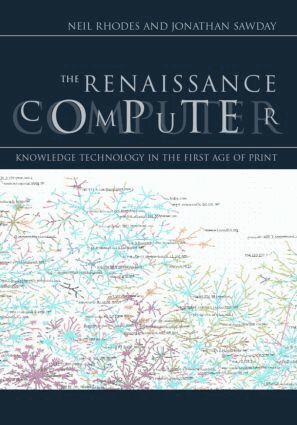
    Renaissance Computer

    Knowledge Technology in the First Age of Print

    AvJonathan Sawday,Neil Rhodes

    Häftad, Engelska, 2000

    819 kr

    Beställningsvara. Skickas inom 5-8 vardagar. Fri frakt över 249 kr.

    Beskrivning

    In the fifteenth century the printing press was the 'new technology'. The first ever information revolution began with the advent of the printed book, enabling Renaissance scholars to formulate new ways of organising and disseminating knowledge.As early as 1500 there were already 20 million books in circulation in Europe. How did this rapid explosion of ideas impact upon the evolution of new disciplines?The Renaissance Computer looks at the fascinating development of new methods of information storage and retrieval which took place at the very beginning of print culture. And it asks some crucial questions about the intellectual conditions of our own digital age. A dazzling array of leading experts in Renaissance culture explore topics of urgent significance today, including:* the contribution of knowledge technologies to state formulation and national identity*the effect of multimedia, orality and memory on education*the importance of the visual display of information and how search engines reflect and direct ways of thinking.

    Produktinformation

    • Utgivningsdatum:2000-08-24
    • Mått:174 x 246 x 19 mm
    • Vikt:420 g
    • Format:Häftad
    • Språk:Engelska
    • Antal sidor:224
    • Förlag:Taylor & Francis Ltd
    • ISBN:9780415220644

    Utforska kategorier

    • Referensverk och tvärvetenskap inom Samhälle och politik
    • Kulturvetenskap inom Samhälle och politik
    • Historia: särskilda händelser och ämnen inom Historia och arkeologi

    Mer om författaren

    Neil Rhodes is Reader in English Literature at the university of St Andrews. His previous publications include The Power of Eloquence and English Renaissance Literature (1992), John Donne: Selected Prose (1987), and Elizabethan Grotesque (1980). Jonathan Sawday is Senior Lecturer in English Literature at Strathclyde University. He is author of The Body Emblazoned (1995), and co-editor of Literature and the English Civil War.

    Recensioner i media

    'The latest in a series . . . this pioneering study . . . about how the emerging technology of printing revolutionised the concept of knowledge in Europe . . . is actually a rather fascinating bibliographical analysis.' - Steven Poole, The Guardian

    Innehållsförteckning

    • Introduction 1. The Silence of the Archive and the Noise of Cyberspace 2. Towards the Renaissance Computer 3. Ramus, Pedagogy and Technology 4. Textual Icons: Reading Early Modern Illustrations 5. The Early Modern Search Engine: Indices, Titlepages, Marginalia and Contents 6. National and International Knowledge: the Limits of the Histories of Nations 7. Arachne's Web: Intertextual Mythography and the Renaissance Actaeon 8. The Daughters of Memory: Thomas Heywood's Gunaikeion and the Female Computer 9. Pierre de La Primaudaye's French Academy: Growing Encyclopedic 10. Structure in the Wilderness Forms: Ideas and Things in Thomas Browne's Cabinets of Curiosity 11. Articulate Networks: the Self, the Book and the World