• Fri frakt över 249 kr
  • •
  • Snabba leveranser
  • •
  • Billiga böcker
Kundservice

Du är på sajten för privatpersoner.

Företag, bibliotek eller offentlig verksamhet?

Du handlar på classic.bokus.com, där alla dina funktioner finns intakta.
Till classic.bokus.com
Bokus logotyp. Gå till startsidan.
  • Erbjudanden
  • Nyheter
  • Student
  • Topplistor
  • Barn & ungdom
  • Bokus Play
  • E-böcker
  • Pocketböcker
  • Spel & pussel

10% rabatt på allt med kod NYSTART10 →

Sidfot

Mina sidor

    Hjälp

    • Kundservice
    • Vanliga frågor och svar
    • Frakt och leverans
    • Retur vid ångerrätt
    • Reklamera vara
    • Betalning
    • Köpvillkor
    • Allmänna villkor
    • Information om webbplatsens tillgänglighet

    Om Bokus

    • Om oss
    • Pressrum
    • För studenter
    • För företag
    • För bibliotek och offentlig verksamhet
    • För leverantörer
    • Hållbarhet

    Populärt

    • Aktuella erbjudanden
    • Presentkort
    • Studentlitteratur
    • Nya böcker
    • Topplistor
    • Signerade böcker
    • Engelska böcker

    Inspiration

    • Boktips
    • BookTok
    • Populära bokserier
    • Barnbokskaraktärer
    • Populära författare
    Logotyp för Bokus
    Följ oss på Facebook (extern länk)Följ oss på Instagram (extern länk)Följ oss på YouTube (extern länk)Följ oss på TikTok (extern länk)
    bokus @ CookiesAnpassa cookiesIntegritetspolicyKöpvillkor
    Till Citymail hemsida (extern länk)Till Budbee hemsida (extern länk)Till Postnord hemsida (extern länk)Till Schenker hemsida (extern länk)Till Early Bird hemsida (extern länk)Till Walleys hemsida (extern länk)
    1. Ekonomi och Ledarskap
    2. Nationalekonomi
    3. Mikroekonomi

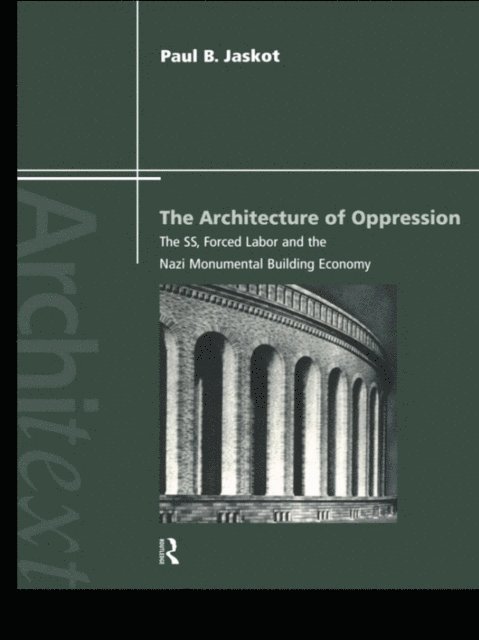
    Architecture of Oppression

    The SS, Forced Labor and the Nazi Monumental Building Economy

    AvPaul B. Jaskot

    Häftad, Engelska, 1999

    Del i serien Architext

    1 208 kr

    Beställningsvara. Skickas inom 10-15 vardagar. Fri frakt över 249 kr.

    Fler format och utgåvor

    Inbunden

    2 495 kr

    E-bok

    1 437 kr

    E-bok

    1 433 kr

    Beskrivning

    This book re-evaluates the architectural history of Nazi Germany and looks at the development of the forced-labour concentration camp system. Through an analysis of such major Nazi building projects as the Nuremberg Party Rally Grounds and the rebuilding of Berlin, Jaskot ties together the development of the German building economy, state architectural goals and the rise of the SS as a political and economic force. As a result, The Architecture of Oppression contributes to our understanding of the conjunction of culture and politics in the Nazi period as well as the agency of architects and SS administrators in enabling this process.

    Produktinformation

    • Utgivningsdatum:1999-11-11
    • Mått:178 x 254 x undefined mm
    • Vikt:410 g
    • Format:Häftad
    • Språk:Engelska
    • Serie:Architext
    • Antal sidor:224
    • Förlag:Taylor & Francis Ltd
    • ISBN:9780415223416

    Utforska kategorier

    • Mikroekonomi inom Ekonomi och Ledarskap
    • Europas historia inom Historia och arkeologi
    • Modern militärhistoria inom Historia och arkeologi

    Mer om författaren

    Paul B. Jaskot is Assistant Professor in the department of Art and Art History at DePaul University in Chicago. His work focuses on the relationship between culture and politics in modern European Art and Architecture.

    Recensioner i media

    'Paul Jaskot's book is a welcome injection of life into what had become a stale debate.' - Building Design, April 20, 2000'It does cast a significant new light on attempts to strip Nazi architecture of its political and moral associations.' - Building Design, April 20, 2000'Jaskot's attention to actions rather than motives, and to quarries rather than aesthetics, gives precision and weight to his argument about the importance placed upon monumental architecture in Nazi Germany,' - Harvard Design Magazine'This book is the result of painstaking research ... Jaskot has put another nail in the coffin of Leon Krier's extraordinary attempt to exonerate the Nazi monuments by removing them from their political context.' - The Architectural Review'The Architecture of Oppression could become a prime reference for the issues of art, architecture, and urban design, and the role of politics in general and the Nazis in particular.' - Town Planning Review'An invaluable understanding of the politics of architecture, one that complements and enhances those investigations to Nazi architecture's expression, ideological function with which we are already familiar.' - Oxford Art Journal'An important contribution shedding light upon the manifold interrelations between politics, architecture and the economy of the camp system.' - Planning Perspectives, 17 February 2002

    Innehållsförteckning

    • List of Illustrations. Acknowledgments. Abbreviations. 1. Introduction: The Architectural Policy of the SS. 2. The Interest of the SS in the Monumental Building Economy. 3. The Party Rally Grounds at Nuremberg: SS Economic Goals and National Socialist Architectural Policy. 4. The Rebuilding of Berlin: The Interdependence of the GBI and the SS. 5. The Political Function of SS Architecture.6.Conclusion. Notes. Bibliography. Index.