• Fri frakt över 249 kr
  • •
  • Snabba leveranser
  • •
  • Billiga böcker
Kundservice

Du är på sajten för privatpersoner.

Företag, bibliotek eller offentlig verksamhet?

Du handlar på classic.bokus.com, där alla dina funktioner finns intakta.
Till classic.bokus.com
Bokus logotyp. Gå till startsidan.
  • Erbjudanden
  • Student
  • Topplistor
  • Barn & ungdom
  • Bokus Play
  • E-böcker
  • Ljudböcker
  • Pocketböcker
  • Spel och pussel

5% studentrabatt – använd koden KURSBOK27 →

Sidfot

Mina sidor

    Hjälp

    • Kundservice
    • Vanliga frågor och svar
    • Frakt och leverans
    • Retur vid ångerrätt
    • Reklamera vara
    • Betalning
    • Köpvillkor
    • Allmänna villkor
    • Information om webbplatsens tillgänglighet

    Om Bokus

    • Om oss
    • Pressrum
    • För studenter
    • För företag
    • För bibliotek och offentlig verksamhet
    • För leverantörer
    • Hållbarhet

    Populärt

    • Aktuella erbjudanden
    • Presentkort
    • Studentlitteratur
    • Nya böcker
    • Topplistor
    • Signerade böcker
    • Engelska böcker

    Inspiration

    • Boktips
    • BookTok
    • Barnbokskaraktärer
    • Populära författare
    Logotyp för Bokus
    Följ oss på Facebook (extern länk)Följ oss på Instagram (extern länk)Följ oss på YouTube (extern länk)Följ oss på TikTok (extern länk)
    bokus @ CookiesAnpassa cookiesIntegritetspolicyKöpvillkor
    Till Citymail hemsida (extern länk)Till Budbee hemsida (extern länk)Till Postnord hemsida (extern länk)Till Schenker hemsida (extern länk)Till Early Bird hemsida (extern länk)Till Walleys hemsida (extern länk)
    1. Samhälle och politik
    2. Politik och statsskick
    3. Internationella relationer

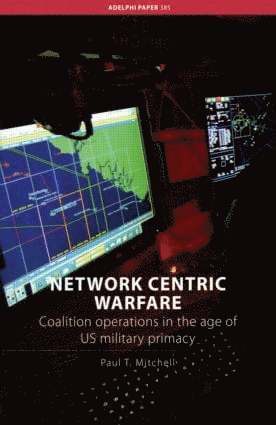
    Network Centric Warfare

    Coalition Operations in the Age of US Military Primacy

    AvPaul T. Mitchell

    Häftad, Engelska, 2007

    Del i serien Adelphi series

    455 kr

    Beställningsvara. Skickas inom 10-15 vardagar. Fri frakt över 249 kr.

    Fler format och utgåvor

    E-bok

    538 kr

    E-bok

    537 kr

    Inbunden

    2 715 kr

    Beskrivning

    Since its emergence in 1998, the concept of Network Centric Warfare (NCW) has become a central driver behind America’s military ‘transformation’ and seems to offer the possibility of true integration between multinational military formations. Even though NCW, or variations on its themes, has been adopted by most armed services, it is a concept in operational and doctrinal development. It is shaping not only how militaries operate, but, just as importantly, what they are operating with, and potentially altering the strategic landscape. This paper examines how the current military dominance of the US over every other state means that only it has the capacity to sustain military activity on a global scale and that other states participating in US-led coalitions must be prepared to work in an ‘interoperable’ fashion. It explores the application of computer networks to military operations in conjunction with the need to secure a network’s information and to assure that it accurately represents situational reality. Drawing on an examination of how networks affected naval operations in the Persian Gulf during 2002 and 2003 as conducted by America’s Australian and Canadian coalition partners, the paper warns that in seeking allies with the requisite technological capabilities, but also those that it can trust with its information resources, the US may be heading towards a very secure digital trap.

    Produktinformation

    • Utgivningsdatum:2007-01-05
    • Mått:156 x 234 x undefined mm
    • Vikt:180 g
    • Format:Häftad
    • Språk:Engelska
    • Serie:Adelphi series
    • Antal sidor:96
    • Förlag:Taylor & Francis Ltd
    • ISBN:9780415427333

    Utforska kategorier

    • Internationella relationer inom Samhälle och politik
    • Cyberkrigföring inom Samhälle och politik
    • Militär strategi inom Samhälle och politik

    Innehållsförteckning

    • Chapter 1 US Military Primacy and the New Operating System; Chapter 2 Freedom and Control: Networks in Military Environments; Chapter 3 International Anarchy and Military Cooperation; Chapter 4 Networks in the Coalition Environment;