• Fri frakt över 249 kr
  • •
  • Snabba leveranser
  • •
  • Billiga böcker
Kundservice

Du är på sajten för privatpersoner.

Företag, bibliotek eller offentlig verksamhet?

Du handlar på classic.bokus.com, där alla dina funktioner finns intakta.
Till classic.bokus.com
Bokus logotyp. Gå till startsidan.
  • Erbjudanden
  • Nyheter
  • Student
  • Topplistor
  • Barn & ungdom
  • Bokus Play
  • E-böcker
  • Pocketböcker
  • Spel & pussel

10% rabatt på allt med kod: NYSTART10 →

Sidfot

Mina sidor

    Hjälp

    • Kundservice
    • Vanliga frågor och svar
    • Frakt och leverans
    • Retur vid ångerrätt
    • Reklamera vara
    • Betalning
    • Köpvillkor
    • Allmänna villkor
    • Information om webbplatsens tillgänglighet

    Om Bokus

    • Om oss
    • Pressrum
    • För studenter
    • För företag
    • För bibliotek och offentlig verksamhet
    • För leverantörer
    • Hållbarhet

    Populärt

    • Aktuella erbjudanden
    • Presentkort
    • Studentlitteratur
    • Nya böcker
    • Topplistor
    • Signerade böcker
    • Engelska böcker

    Inspiration

    • Boktips
    • BookTok
    • Populära bokserier
    • Barnbokskaraktärer
    • Populära författare
    Logotyp för Bokus
    Följ oss på Facebook (extern länk)Följ oss på Instagram (extern länk)Följ oss på YouTube (extern länk)Följ oss på TikTok (extern länk)
    bokus @ CookiesAnpassa cookiesIntegritetspolicyKöpvillkor
    Till Citymail hemsida (extern länk)Till Budbee hemsida (extern länk)Till Postnord hemsida (extern länk)Till Schenker hemsida (extern länk)Till Early Bird hemsida (extern länk)Till Walleys hemsida (extern länk)
    1. Samhälle och politik
    2. Politik och statsskick
    3. Politiska partier

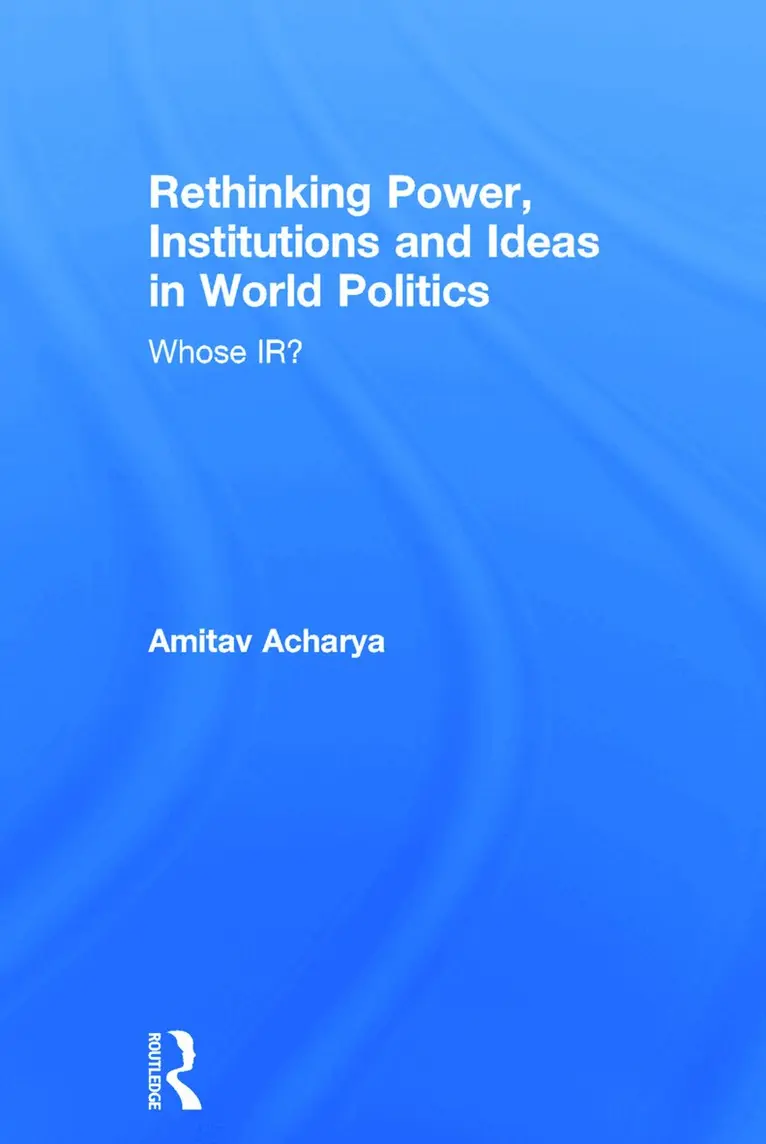
    Rethinking Power, Institutions and Ideas in World Politics

    Whose IR?

    AvAmitav Acharya

    Inbunden, Engelska, 2013

    2 421 kr

    Beställningsvara. Skickas inom 10-15 vardagar. Fri frakt över 249 kr.

    Fler format och utgåvor

    Häftad

    723 kr

    E-bok

    855 kr

    E-bok

    855 kr

    Beskrivning

    The study of international relations, has traditionally been dominated by Western ideas and practices, and marginalized the voice and experiences of the non-Western states and societies. As the world moves to a "post-Western" era, it is imperative that the field of IR acquires a more global meaning and relevance. Drawing together the work of renowned scholar Amitav Acharya and framed by a new introduction and conclusion written for the volume, this book exposes the narrow meaning currently attached to some of the key concepts and ideas in IR, and calls for alternative and broader understandings of them. The need for recasting the discipline has motivated and undergirded Acharya's own scholarship since his entry into the field over three decades ago. This book reflects his own engagement, quarrels and compromise and concludes with suggestions for new pathways to a Global IR- a forward-looking and inclusive enterprise that is reflective of the multiple and global heritage of IR in an changing and interconnected world. It is essential reading for anyone who is concerned about the history, development and future of international relations and international relations theory.

    Produktinformation

    • Utgivningsdatum:2013-12-12
    • Mått:156 x 234 x 19 mm
    • Vikt:521 g
    • Format:Inbunden
    • Språk:Engelska
    • Antal sidor:272
    • Förlag:Taylor & Francis Ltd
    • ISBN:9780415706759

    Utforska kategorier

    • Politiska partier inom Samhälle och politik
    • Statsskick och politiska processer inom Samhälle och politik
    • Politiskt förtryck inom Samhälle och politik

    Mer om författaren

    Amitav Acharya is the UNESCO Chair in Transnational Challenges and Governance and Chair of the ASEAN Studies Center at the School of International Service, American University, Washington, D.C. He was Professor of Global Governance at the University of Bristol, Professor of International Relations at York University, Toronto, the Nelson Mandela Visiting Professor of International Relations at Rhodes University, South Africa, Fellow of the Harvard University Asia Center, Fellow of Harvard's John F. Kennedy School of Government, and Christensen Fellow at St Catherine's College, Oxford.

    Recensioner i media

    "Amitav Acharya is not only the leading non-Western scholar of IR theory in the United States, he is one of the most innovative scholars working in the field. What makes him stand out among the theoretically oriented scholars in the field is the deductive nature of his theorizing that is informed by his own high quality empirical research. He is one of the very few scholars of IR who are equally comfortable doing empirical research as well as theorizing, indeed who consider both these enterprises as two sides of the same coin." Mohammed Ayoob, University Distinguished Professor of International Relations, Michigan State University, USA.At a time when non-Western states are playing an increasingly prominent role in world affairs, Amitav Acharya asks the timely question: to what extent are traditional international relations approaches capable of transcending cultural boundaries and explaining behavior in non-Western systems? He argues that theories home grown in the Global South are often more adept at tapping into these new realities. His own insightful theoretical contributions provide strong evidence to back up this claim, making this book a necessary read. Jack Snyder, Robert and Renée Belfer Professor of International Relations, Columbia University, USA."Acharya convincingly demonstrates that mainstream IR theories have been too Western-centric and he offers a clear path for theoretical development. ... Acharya’s case is powerfully made and deserves to be widely read by those concerned with the discipline." Xander Kirke, Newcastle University

    Innehållsförteckning

    • Introduction, Rethinking Power, Institutions and Ideas in World Politics I. IR Theory and Its Discontents Chapter1. International Relations Theory and Western Dominance, Chapter 2. Dialogue and Discovery: International Relations Theories beyond the West Chapter 3. Comparative Regionalism: A Field Whose Time Has Come? II. Power, Intervention and Global Disorders Chapter 4. The Cold War as "Long Peace" Reexamined Chapter 5. State Sovereignty After 9/11: Disorganized Hypocrisy III. Institutions, Autonomy and Regional Orders Chapter 6. Multilateralism : Beyond Hegemony and Without Victory Chapter Chapter 7. The Contested Regional Architecture of World Politics IV: Ideas, Agency and Normative Cultures Chapter 8 How Ideas Spread, Whose Norms Matter? Chapter 9. Norm Subsidiarity and Regional Orders, Conclusion Towards a Global IR? Pathways and Pitfalls