• Fri frakt över 249 kr
  • •
  • Snabba leveranser
  • •
  • Billiga böcker
Kundservice

Du är på sajten för privatpersoner.

Företag, bibliotek eller offentlig verksamhet?

Du handlar på classic.bokus.com, där alla dina funktioner finns intakta.
Till classic.bokus.com
Bokus logotyp. Gå till startsidan.
  • Erbjudanden
  • Nyheter
  • Student
  • Topplistor
  • Barn & ungdom
  • Bokus Play
  • E-böcker
  • Pocketböcker
  • Spel & pussel

10% rabatt på allt med kod: NYSTART10 →

Sidfot

Mina sidor

    Hjälp

    • Kundservice
    • Vanliga frågor och svar
    • Frakt och leverans
    • Retur vid ångerrätt
    • Reklamera vara
    • Betalning
    • Köpvillkor
    • Allmänna villkor
    • Information om webbplatsens tillgänglighet

    Om Bokus

    • Om oss
    • Pressrum
    • För studenter
    • För företag
    • För bibliotek och offentlig verksamhet
    • För leverantörer
    • Hållbarhet

    Populärt

    • Aktuella erbjudanden
    • Presentkort
    • Studentlitteratur
    • Nya böcker
    • Topplistor
    • Signerade böcker
    • Engelska böcker

    Inspiration

    • Boktips
    • BookTok
    • Populära bokserier
    • Barnbokskaraktärer
    • Populära författare
    Logotyp för Bokus
    Följ oss på Facebook (extern länk)Följ oss på Instagram (extern länk)Följ oss på YouTube (extern länk)Följ oss på TikTok (extern länk)
    bokus @ CookiesAnpassa cookiesIntegritetspolicyKöpvillkor
    Till Citymail hemsida (extern länk)Till Budbee hemsida (extern länk)Till Postnord hemsida (extern länk)Till Schenker hemsida (extern länk)Till Early Bird hemsida (extern länk)Till Walleys hemsida (extern länk)
    1. Samhälle och politik
    2. Samhälle och kultur
    3. Kultur och medier
    4. Medievetenskap

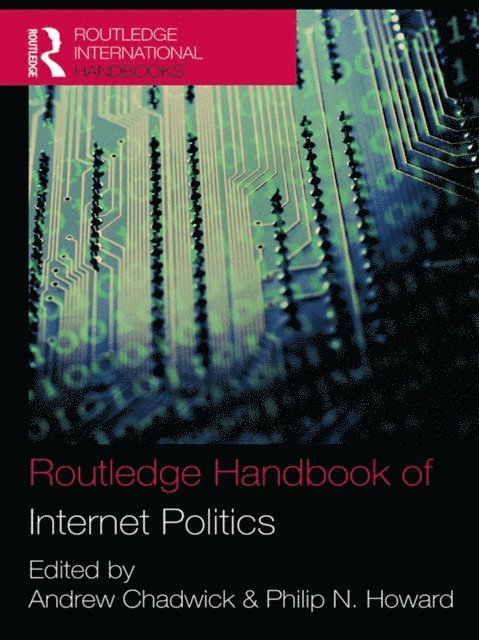
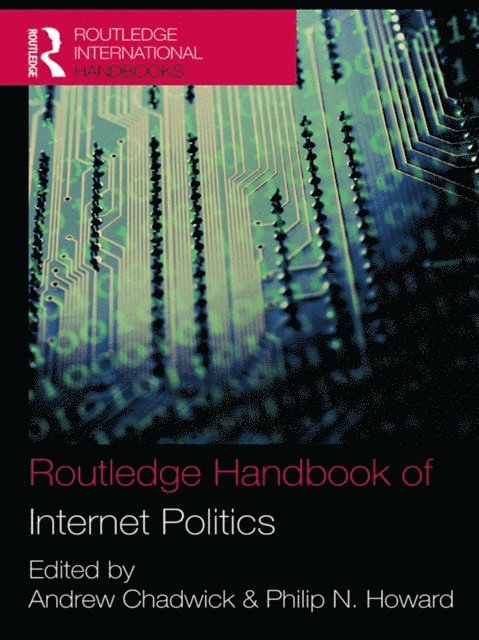
    Routledge Handbook of Internet Politics

    AvAndrew Chadwick,Philip N. Howard

    Häftad, Engelska, 2009

    821 kr

    Beställningsvara. Skickas inom 10-15 vardagar. Fri frakt över 249 kr.

    Beskrivning

    The politics of the internet has entered the social science mainstream. From debates about its impact on parties and election campaigns following momentous presidential contests in the United States, to concerns over international security, privacy and surveillance in the post-9/11, post-7/7 environment; from the rise of blogging as a threat to the traditional model of journalism, to controversies at the international level over how and if the internet should be governed by an entity such as the United Nations; from the new repertoires of collective action open to citizens, to the massive programs of public management reform taking place in the name of e-government, internet politics and policy are continually in the headlines. The Routledge Handbook of Internet Politics is a collection of over thirty chapters dealing with the most significant scholarly debates in this rapidly growing field of study. Organized in four broad sections: Institutions, Behavior, Identities, and Law and Policy, the Handbook summarizes and criticizes contemporary debates while pointing out new departures. A comprehensive set of resources, it provides linkages to established theories of media and politics, political communication, governance, deliberative democracy and social movements, all within an interdisciplinary context. The contributors form a strong international cast of established and junior scholars. This is the first publication of its kind in this field; a helpful companion to students and scholars of politics, international relations, communication studies and sociology.

    Produktinformation

    • Utgivningsdatum:2009-12-17
    • Mått:174 x 246 x 28 mm
    • Vikt:910 g
    • Format:Häftad
    • Språk:Engelska
    • Antal sidor:512
    • Förlag:Taylor & Francis Ltd
    • ISBN:9780415780582

    Utforska kategorier

    • Medievetenskap inom Samhälle och politik

    Mer om författaren

    Andrew Chadwick is Professor of Political Science and Founding Director of the New Political Communication Unit at Royal Holloway, University of London. He is the author of Internet Politics: States, Citizens, and New Communication Technologies (Oxford University Press), which won the American Sociological Association Communication and Information Technologies Section Outstanding Book Award.Philip N. Howard is Associate Professor in the Department of Communication at the University of Washington, and directs the World Information Access Project (www.wiareport.org). He is the author of New Media Campaigns and the Managed Citizen (Cambridge University Press), which won book awards from the American Sociological Association and the International Communication Association.

    Innehållsförteckning

    • 1. Introduction Part 1: Institutions 2. The Internet in US Election Campaigns 3. European Political Organizations and the Internet: Mobilization, Participation and Change 4. Electoral Web Production Practices in Cross-National Perspective: The Relative Influence of National Development, Political Culture, and Web Genre 5. Parties, Election Campaigning and the Internet: Toward a Comparative Institutional Approach 6. Technological Change and the Shifting Nature of Political Organization 7. Making Parliamentary Democracy Visible: Speaking to, With and For the Public in the Age of Interactive Technology 8. Bureaucratic Reform and E-Government in the United States: An Institutional Perspective 9. Public Management Change and E-Government: The Emergence of Digital Era Governance Part 2: Behavior 10. Wired to Fact: The Role of the Internet in Identifying Deception During the 2004 US Presidential Campaign 11. Political Engagement Online: Do the Information Rich Get Richer and the Like-Minded More Similar? 12. Information, the Internet and Direct Democracy 13. Toward Digital Citizenship: Addressing Inequality in the Information Age 14. Online News Creation and Consumption: Implications for Modern Democracies 15. Web 2.0 and the Transformation of News and Journalism Part 3: Identities 16. The Internet and the Changing Global Media Environment 17. The Virtual Sphere 2.0: The Internet, the Public Sphere and Beyond 18. Identity, Technology and Narratives: Transnational Activism and Social Networks 19. Theorizing Gender and the Internet: Past, Present, and Future 20. New Immigrants, the Internet, and Civic Society 21. One Europe, Digitally Divided 22. Working Around the State: Internet Use and Political Identity in the Arab World Part 4: Law and Policy 23. The Geopolitics of Internet Control: Censorship, Sovereignty and Cyberspace 24. Locational Surveillance: Embracing the Patterns of Our Lives 25. Metaphoric Reinforcement of the Virtual Fence: Factors Shaping the Political Economy of Property in Cyberspace 26. Globalizing the Logic of Openness: Open Source Software and the Global Governance of Intellectual Property 27. Exclusionary Rules? The Politics of Protocols 28. The New Politics of the Internet: Multistakeholder Policy Making and the Internet Technocracy 29. Enabling Effective Multistakeholder Participation in Global Internet Governance Through Accessible Cyberinfrastructure 30. Internet Diffusion and the Digital Divide: The Role of Policymaking and Political Institutions 31. Conclusion