- Nyhet
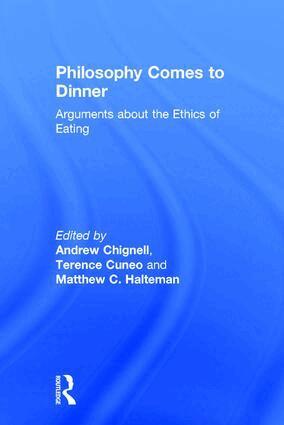
Philosophy Comes to Dinner
Arguments About the Ethics of Eating
AvAndrew Chignell,Terence Cuneo
2 473 kr
Beställningsvara. Skickas inom 10-15 vardagar. Fri frakt över 249 kr.
Du är på sajten för privatpersoner.
AvAndrew Chignell,Terence Cuneo
2 473 kr
Beställningsvara. Skickas inom 10-15 vardagar. Fri frakt över 249 kr.
Andrew Chignell is Associate Professor at Cornell University. His research focuses on Kant and other early modern philosophers. Topically he has worked on epistemology, aesthetics, and philosophy of religion. He is the co-instructor of "The Ethics of Eating" Massive Online Open Course on Edx.org and a contributor to the Oxford Handbook of Food Ethics. Terence Cuneo is the Marsh Professor of Intellectual and Moral Philosophy at the University of Vermont. He is the author of The Normative Web (2007), Speech and Morality (2014), and Ritualized Faith (2016).Matthew C. Halteman is Associate Professor of Philosophy at Calvin College and a fellow in the Oxford Centre for Animal Ethics. He is the author of Compassionate Eating as Care of Creation (2008).
"Whether your food choices are void of ethical meaning to you or you consider yourself an eminently ethical eater, Philosophy Comes to Dinner offers serious food for thought. If you’re hungry to challenge your own ethical notions about food, check this book out."Paul Shapiro, The Humane Society of the United States"The act of eating involves ethical decisions, and yet most of us eat without contemplation—we exclude philosophy from our thought process, and instead make our dietary choices almost exclusively based on price and taste. Philosophy Comes to Dinner: Arguments about the Ethics of Eating aims to change that, and it does so with a diverse collection of essays that attacks the moral question of what to eat from a wide and intriguing range of perspectives. This important book should be read by everyone who eats."Bruce G. Friedrich, Farm Sanctuary"A really brilliant collection. I've never seen such rational jujitsu on such a deadly subject. Bound to become a classic of practical philosophy."Andrew Linzey, director of the Oxford Centre for Animal Ethics and author of Animal Theology"It is difficult to stress how much we need this gem of a book. Concerned consumers have been discussing food reform for decades. An entire social movement has even formed around the issue. But—somewhat astonishingly—we have yet to think systematically about the ethical implications of our proposals. Philosophy Comes to Dinner changes that. In a culinary world marked by simplistic and polarized extremes—organic versus conventional, free trade versus fair trade, local versus global food, vegan versus "conscientious carnivore," and so on— it asks us (very politely, no less) to exchange ideology for reflection and systematically explore why we’re making the food choices we make. You may not walk away with all the answers--that would be very dull-- but you will never look at the contemporary food issues the same way again."James McWilliams, author of The Modern Savage and Just Food"The essays collected in this timely volume tackle a wide range of important ethical questions about our food system in a manner that is both argumentatively rigorous and accessible - both the scholar and the non-specialist will find much to chew on here."Kate Nolfi, University of Vermont, USA"In recent years, I’ve seen an explosion of student and public interest in the politics and ethics of food. It’s great to have philosophers contributing to this discussion, and this book explains why."Marion Nestle, New York University, USA, and author of Food Politics
Du är på sajten för privatpersoner.
AvAndrew Chignell,Terence Cuneo
2 473 kr
Beställningsvara. Skickas inom 10-15 vardagar. Fri frakt över 249 kr.
Andrew Chignell is Associate Professor at Cornell University. His research focuses on Kant and other early modern philosophers. Topically he has worked on epistemology, aesthetics, and philosophy of religion. He is the co-instructor of "The Ethics of Eating" Massive Online Open Course on Edx.org and a contributor to the Oxford Handbook of Food Ethics. Terence Cuneo is the Marsh Professor of Intellectual and Moral Philosophy at the University of Vermont. He is the author of The Normative Web (2007), Speech and Morality (2014), and Ritualized Faith (2016).Matthew C. Halteman is Associate Professor of Philosophy at Calvin College and a fellow in the Oxford Centre for Animal Ethics. He is the author of Compassionate Eating as Care of Creation (2008).
"Whether your food choices are void of ethical meaning to you or you consider yourself an eminently ethical eater, Philosophy Comes to Dinner offers serious food for thought. If you’re hungry to challenge your own ethical notions about food, check this book out."Paul Shapiro, The Humane Society of the United States"The act of eating involves ethical decisions, and yet most of us eat without contemplation—we exclude philosophy from our thought process, and instead make our dietary choices almost exclusively based on price and taste. Philosophy Comes to Dinner: Arguments about the Ethics of Eating aims to change that, and it does so with a diverse collection of essays that attacks the moral question of what to eat from a wide and intriguing range of perspectives. This important book should be read by everyone who eats."Bruce G. Friedrich, Farm Sanctuary"A really brilliant collection. I've never seen such rational jujitsu on such a deadly subject. Bound to become a classic of practical philosophy."Andrew Linzey, director of the Oxford Centre for Animal Ethics and author of Animal Theology"It is difficult to stress how much we need this gem of a book. Concerned consumers have been discussing food reform for decades. An entire social movement has even formed around the issue. But—somewhat astonishingly—we have yet to think systematically about the ethical implications of our proposals. Philosophy Comes to Dinner changes that. In a culinary world marked by simplistic and polarized extremes—organic versus conventional, free trade versus fair trade, local versus global food, vegan versus "conscientious carnivore," and so on— it asks us (very politely, no less) to exchange ideology for reflection and systematically explore why we’re making the food choices we make. You may not walk away with all the answers--that would be very dull-- but you will never look at the contemporary food issues the same way again."James McWilliams, author of The Modern Savage and Just Food"The essays collected in this timely volume tackle a wide range of important ethical questions about our food system in a manner that is both argumentatively rigorous and accessible - both the scholar and the non-specialist will find much to chew on here."Kate Nolfi, University of Vermont, USA"In recent years, I’ve seen an explosion of student and public interest in the politics and ethics of food. It’s great to have philosophers contributing to this discussion, and this book explains why."Marion Nestle, New York University, USA, and author of Food Politics
Du är på sajten för privatpersoner.
AvAndrew Chignell,Terence Cuneo
2 473 kr
Beställningsvara. Skickas inom 10-15 vardagar. Fri frakt över 249 kr.
Andrew Chignell is Associate Professor at Cornell University. His research focuses on Kant and other early modern philosophers. Topically he has worked on epistemology, aesthetics, and philosophy of religion. He is the co-instructor of "The Ethics of Eating" Massive Online Open Course on Edx.org and a contributor to the Oxford Handbook of Food Ethics. Terence Cuneo is the Marsh Professor of Intellectual and Moral Philosophy at the University of Vermont. He is the author of The Normative Web (2007), Speech and Morality (2014), and Ritualized Faith (2016).Matthew C. Halteman is Associate Professor of Philosophy at Calvin College and a fellow in the Oxford Centre for Animal Ethics. He is the author of Compassionate Eating as Care of Creation (2008).
"Whether your food choices are void of ethical meaning to you or you consider yourself an eminently ethical eater, Philosophy Comes to Dinner offers serious food for thought. If you’re hungry to challenge your own ethical notions about food, check this book out."Paul Shapiro, The Humane Society of the United States"The act of eating involves ethical decisions, and yet most of us eat without contemplation—we exclude philosophy from our thought process, and instead make our dietary choices almost exclusively based on price and taste. Philosophy Comes to Dinner: Arguments about the Ethics of Eating aims to change that, and it does so with a diverse collection of essays that attacks the moral question of what to eat from a wide and intriguing range of perspectives. This important book should be read by everyone who eats."Bruce G. Friedrich, Farm Sanctuary"A really brilliant collection. I've never seen such rational jujitsu on such a deadly subject. Bound to become a classic of practical philosophy."Andrew Linzey, director of the Oxford Centre for Animal Ethics and author of Animal Theology"It is difficult to stress how much we need this gem of a book. Concerned consumers have been discussing food reform for decades. An entire social movement has even formed around the issue. But—somewhat astonishingly—we have yet to think systematically about the ethical implications of our proposals. Philosophy Comes to Dinner changes that. In a culinary world marked by simplistic and polarized extremes—organic versus conventional, free trade versus fair trade, local versus global food, vegan versus "conscientious carnivore," and so on— it asks us (very politely, no less) to exchange ideology for reflection and systematically explore why we’re making the food choices we make. You may not walk away with all the answers--that would be very dull-- but you will never look at the contemporary food issues the same way again."James McWilliams, author of The Modern Savage and Just Food"The essays collected in this timely volume tackle a wide range of important ethical questions about our food system in a manner that is both argumentatively rigorous and accessible - both the scholar and the non-specialist will find much to chew on here."Kate Nolfi, University of Vermont, USA"In recent years, I’ve seen an explosion of student and public interest in the politics and ethics of food. It’s great to have philosophers contributing to this discussion, and this book explains why."Marion Nestle, New York University, USA, and author of Food Politics