• Fri frakt över 249 kr
  • •
  • Snabba leveranser
  • •
  • Billiga böcker
Kundservice

Du är på sajten för privatpersoner.

Företag, bibliotek eller offentlig verksamhet?

Du handlar på classic.bokus.com, där alla dina funktioner finns intakta.
Till classic.bokus.com
Bokus logotyp. Gå till startsidan.
  • Erbjudanden
  • Nyheter
  • Student
  • Topplistor
  • Barn & ungdom
  • Bokus Play
  • E-böcker
  • Pocketböcker
  • Spel & pussel

10% rabatt på allt med kod: NYSTART10 →

Sidfot

Mina sidor

    Hjälp

    • Kundservice
    • Vanliga frågor och svar
    • Frakt och leverans
    • Retur vid ångerrätt
    • Reklamera vara
    • Betalning
    • Köpvillkor
    • Allmänna villkor
    • Information om webbplatsens tillgänglighet

    Om Bokus

    • Om oss
    • Pressrum
    • För studenter
    • För företag
    • För bibliotek och offentlig verksamhet
    • För leverantörer
    • Hållbarhet

    Populärt

    • Aktuella erbjudanden
    • Presentkort
    • Studentlitteratur
    • Nya böcker
    • Topplistor
    • Signerade böcker
    • Engelska böcker

    Inspiration

    • Boktips
    • BookTok
    • Populära bokserier
    • Barnbokskaraktärer
    • Populära författare
    Logotyp för Bokus
    Följ oss på Facebook (extern länk)Följ oss på Instagram (extern länk)Följ oss på YouTube (extern länk)Följ oss på TikTok (extern länk)
    bokus @ CookiesAnpassa cookiesIntegritetspolicyKöpvillkor
    Till Citymail hemsida (extern länk)Till Budbee hemsida (extern länk)Till Postnord hemsida (extern länk)Till Schenker hemsida (extern länk)Till Early Bird hemsida (extern länk)Till Walleys hemsida (extern länk)
    1. Juridik
    2. Särskilda rättsområden
    3. Fastighets- och egendomsrätt
    4. Mark- och fastighetsrätt

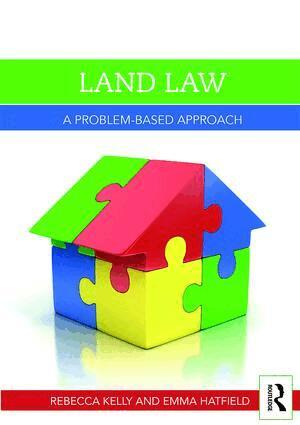
    Land Law

    A Problem-Based Approach

    AvRebecca Kelly,Emma Hatfield

    Häftad, Engelska, 2017

    Del i serien Problem Based Learning

    678 kr

    Beställningsvara. Skickas inom 10-15 vardagar. Fri frakt över 249 kr.

    Fler format och utgåvor

    Inbunden

    2 434 kr

    Beskrivning

    Problem-Based Learning is a way of learning that presents a practical problem scenario in the context of which learning is conducted. Normally students are taught law through the transmission of information about legal principles and not presented with problems until they have accumulated enough information to solve them. In PBL, discussion and analysis of the problem starts the process of learning, rather than acting as an end point. As a curriculum concept, it is becoming increasingly common in law schools as the use of problem scenarios helps to trigger awareness of legal issues and to engage interest by highlighting the real-world ramifications. This new textbook creates a fresh approach to learning land law through the use of scenarios found in real-life which bring what is often perceived to be a dry and difficult subject to life. This helps both to engage the student and make the subject more accessible as well as demonstrating to students how land law actually operates in the real world. Land Law is often seen as an esoteric subject with lots of technicalities and complex vocabulary and students often forget the context in which it operates. With Land Law: A Problem-Based Approach, context is placed at the heart of learning. Students are learning through application rather than via an abstract set of rules and can therefore gain a deeper understanding of how land law works, not just what it is.Unlike other textbooks, Land Law: A Problem-Based Approach integrates a thorough exposition of the law with practice, facilitating a more active learning approach and helping students to engage directly with the key cases and statutes to develop key skills of analysis, problem-solving and application. Written in a clear and concise style but without sacrificing detail or analysis, the book guides the reader towards a deeper understanding of the land law curriculum. Key features include:• An introductory chapter outlining the problem-based learning approach and how to use the book.• Content overviews at the start of each chapter which provide a useful outline of the chapter’s content and the key principles• PBL scenarios at the start of each chapter which provide the real-life context to each topic and help to familiarise readers with the legal language and style they will encounter. Together with the relevant supporting documents, these scenarios are referenced and integrated throughout the chapter• ‘let’s put this into context’ boxes which require students to apply the law that they have learnt back to the problem scenario and offer opportunities to reflect and consolidate on the content covered • Essential Cases and Essential Statutes boxes reinforce the essential role of cases and legislation in the development and application of land law and help students identify key cases and legislation for revision purposes• Understanding Terminology boxes and an online glossary help students to get to grips with the technical terms and vocabulary unique to land law• Tables and diagrams explain difficult concepts and rules, ideal for visual learners• Tips and notes highlight key issues and make links between different aspects of the law without interrupting the flow of the text.• Specimen exam-style questions are ideal for revision and help to provide opportunities to apply learning and practice exam technique

    Produktinformation

    • Utgivningsdatum:2017-06-29
    • Mått:174 x 246 x 30 mm
    • Vikt:1 000 g
    • Format:Häftad
    • Språk:Engelska
    • Serie:Problem Based Learning
    • Antal sidor:572
    • Förlag:Taylor & Francis Ltd
    • ISBN:9780415844901

    Utforska kategorier

    • Mark- och fastighetsrätt inom Juridik

    Mer om författaren

    Emma Hatfield, LL.B(Hons), LL.M. FHEA is a senior law lecturer at the University of Huddersfield and a solicitor (non-practising). She teaches on all aspects of Land and Property Law and has written on areas of Commercial Property, Landlord and Tenant, Planning Law and Electronic Conveyancing. Emma’s particular research interest is electrification of the property system encompassing the transfer of property through non-paper based systems and their implementation. Rebecca Kelly LL.B(Hons), LL.M. FHEA is a senior law lecturer at the University of Huddersfield. She teaches on all aspects of Land Law in addition to Equity and Trusts and has written on several areas of law including Landlord and Tenant, Estoppel and Constructive Trusts. Rebecca’s particular research interest is in relation to pedagogy with particular reference to student learning, teaching techniques and professional skills development.

    Innehållsförteckning

    • CONTENTSGuide to the Problem-Based Learning SeriesGuide to the WebsiteTable of Cases Table of Statutes CHAPTER ONE – AN INTRODUCTION (REBECCA KELLY)Studying Land LawUsing the Problem-Based Learning (PBL) Approach in Land LawFeatures of this bookHow to use this book CHAPTER TWO – PROPERTY RIGHTS IN LAND (REBECCA KELLY)Chapter Aims and Objectives Property RightsClassification of PropertyThe definition of landOwnership of landDiscussion sectionEnd of chapter summaryEssay questionProblem questionCHAPTER THREE – COMMON LAW AND EQUITY (REBECCA KELLY)Chapter aims and objectivesCommon law and equityLegal interests in landThe requirement of a deedEquitable interests in landExceptions to the requirements of S2 LP(MP)A 1989Enforcement of equitable interestsThe 1925 property legislationDiscussion sectionEnd of chapter summaryEssay questionProblem questionCHAPTER FOUR – UNREGISTERED LAND (REBECCA KELLY)Chapter aims and objectivesProblems with the former systemLand chargesOverreachable equitable interestsEquitable interests remaining subject to the doctrine of noticeDiscussion sectionEnd of chapter summaryEssay question Problem questionCHAPTER FIVE – REGISTERED LAND (REBECCA KELLY)Chapter aims and objectivesThe aims of the Land Registration ActsSubstantively registrable titlesStructure of the register of titleFirst registration of title Grades of title Dispositions of a registered title Third party rights in registered land Process for transfer of registered landAltering the registerDiscussion sectionEnd of chapter summaryEssay questionProblem questionCHAPTER SIX – LEASEHOLD (EMMA HATFIELD)Chapter aims and objectivesThe BasicsEssential characteristics of a leaseTypes of leasesCreation of leases Determination of tenanciesDiscussion sectionEnd of chapter summaryEssay questionProblem questionCHAPTER SEVEN – LEASEHOLD COVENANTS (EMMA HATFIELD)Chapter aims and objectivesThe BasicsThe running of covenantsRemedies for breach of covenantDiscussion sectionEnd of chapter summaryEssay questionProblem question CHAPTER EIGHT – LICENCES (REBECCA KELLY)Chapter aims and objectives Meaning and creation of a licenceEnforcement between the original partiesEnforcement between successors in titleDiscussion sectionEnd of chapter summaryEssay questionProblem question CHAPTER NINE – EXPRESS, RESULTING AND CONSTRUCTIVE TRUSTS (REBECCA KELLY)Chapter aims and objectivesExpress trustsResulting and constructive trustsExpress agreement and detrimentDiscussion questionEnd of chapter summaryEssay questionProblem questionCHAPTER TEN – TRUSTS OF LAND (REBECCA KELLY)Chapter aims and objectivesConcurrent interests (co-ownership)Successive interestsThe trust of landPowers of the courtProtection for purchasersDiscussion sectionEnd of chapter summaryEssay questionCHAPTER ELEVEN – CO-OWNERSHIP (EMMA HATFIELD)Chapter aims and objectivesThe basicsThe two forms of co-ownershipLegal and equitable titleCreation of joint tenancies and tenancies in common in equitySeverance of joint tenancyThe trusts of land and appointment of trustees act 1996End of chapter summaryEssay questionProblem question CHAPTER TWELVE – EASEMENTS (EMMA HATFIELD)Chapter aims and objectivesThe basicsThe characteristics and qualities of an easementAcquisition of an easement or profitPrescriptionProtection of easements and profitsExtinguishment of easement / profitDiscussionEnd of chapter summaryEssay questionProblem questionCHAPTER THIRTEEN – MORTGAGES (REBECCA KELLY)Chapter aims and objectivesWhy have mortgages?Meaning and the creation of a legal mortgageEquitable mortgagesRights of a mortgagorRights of the mortgageeDiscussion sectionEnd of chapter summaryEssay questionProblem questionCHAPTER FOURTEEN – FREEHOLD COVENANTS (EMMA HATFIELD)Freehold covenantsChapter aims and objectivesThe original parties and enforceability of the covenantsEnforceability of covenants by successors in titleProtection of covenantsRemediesDischarge of restrictive covenantsDiscussion sectionEnd of chapter summaryEssay questionProblem questionCHAPTER FIFTEEN – ADVERSE POSSESSION (REBECCA KELLY)Chapter aims and objectivesJustifications for adverse possession The requirements for adverse possessionThe effect of adverse possession Human rightsCriminal law and adverse possessionDiscussion sectionEnd of chapter summaryEssay questionCHAPTER SIXTEEN – PROPRIETARY ESTOPPEL (REBECCA KELLY)Chapter aims and objectivesThe meaning of proprietary estoppelEstablishing proprietary estoppelSatisfying the equityThe proprietary status of a claimDiscussion sectionEnd of chapter summaryEssay questionCHAPTER SEVENTEEN – COMMONHOLD (REBECCA KELLY)Chapter aims and objectivesThe meaning of commonholdThe benefits of commonholdThe requirements for commonhold landTermination of commonholdDiscussion sectionEnd of chapter summaryCHAPTER EIGHTEEN – THE CONVEYANCING OF LAND (EMMA HATFIELD)Chapter aims and objectivesInitial mattersFirst stepsInvestigating titleSearchesExchangePre-completionDay of completionLate completion and delayed completionEnd of chapter summaryEssay questionProblem question INDEX