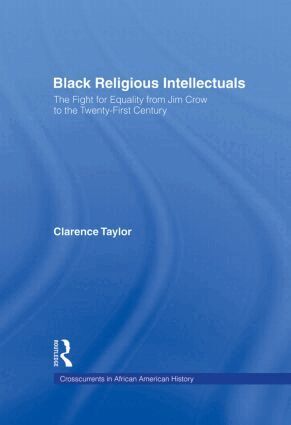
Black Religious Intellectuals
The Fight for Equality from Jim Crow to the 21st Century
2 470 kr
Beställningsvara. Skickas inom 10-15 vardagar. Fri frakt över 249 kr.
Du är på sajten för privatpersoner.
2 470 kr
Beställningsvara. Skickas inom 10-15 vardagar. Fri frakt över 249 kr.
Clarence Taylor is Professor of History and African New World Studies at Florida International University. He is the author of The Black Churches of Brooklyn and Knockingat Our Door: Milton A. Galamison and the Struggle toIntegrate New York City Schools, and co-edited with Jonathan Birnbaum Civil Rights since 1787: A Reader onthe Black Struggle.
"Men and women of god, religious institutions, faith, and spiritual symbolism have been a constant presence within the political struggles of black America. Using the intellectual biographies of a wide range of twentieth century leaders, Clarence Taylor exposes the kinship between African-American religious and secular traditions. With sensitive treatments of gender, race, and class, Taylor identifies religion as a medium of empowerment. Black Religious Intellectuals will excite a new conversation about the heterogenous religious currents in African-American intellectualism." -- Craig Steven Wilder, Professor of History, Dartmouth
Du är på sajten för privatpersoner.
2 470 kr
Beställningsvara. Skickas inom 10-15 vardagar. Fri frakt över 249 kr.
Clarence Taylor is Professor of History and African New World Studies at Florida International University. He is the author of The Black Churches of Brooklyn and Knockingat Our Door: Milton A. Galamison and the Struggle toIntegrate New York City Schools, and co-edited with Jonathan Birnbaum Civil Rights since 1787: A Reader onthe Black Struggle.
"Men and women of god, religious institutions, faith, and spiritual symbolism have been a constant presence within the political struggles of black America. Using the intellectual biographies of a wide range of twentieth century leaders, Clarence Taylor exposes the kinship between African-American religious and secular traditions. With sensitive treatments of gender, race, and class, Taylor identifies religion as a medium of empowerment. Black Religious Intellectuals will excite a new conversation about the heterogenous religious currents in African-American intellectualism." -- Craig Steven Wilder, Professor of History, Dartmouth