• Fri frakt över 249 kr
  • •
  • Snabba leveranser
  • •
  • Billiga böcker
Kundservice

Du är på sajten för privatpersoner.

Företag, bibliotek eller offentlig verksamhet?

Du handlar på classic.bokus.com, där alla dina funktioner finns intakta.
Till classic.bokus.com
Bokus logotyp. Gå till startsidan.
  • Erbjudanden
  • Nyheter
  • Student
  • Topplistor
  • Barn & ungdom
  • Bokus Play
  • E-böcker
  • Pocketböcker
  • Spel & pussel

10% studentrabatt med kod TERM26

Sidfot

Mina sidor

    Hjälp

    • Kundservice
    • Vanliga frågor och svar
    • Frakt och leverans
    • Retur vid ångerrätt
    • Reklamera vara
    • Betalning
    • Köpvillkor
    • Allmänna villkor
    • Information om webbplatsens tillgänglighet

    Om Bokus

    • Om oss
    • Pressrum
    • För studenter
    • För företag
    • För bibliotek och offentlig verksamhet
    • För leverantörer
    • Hållbarhet

    Populärt

    • Aktuella erbjudanden
    • Presentkort
    • Studentlitteratur
    • Nya böcker
    • Topplistor
    • Signerade böcker
    • Engelska böcker

    Inspiration

    • Boktips
    • BookTok
    • Populära bokserier
    • Barnbokskaraktärer
    • Populära författare
    Logotyp för Bokus
    Följ oss på Facebook (extern länk)Följ oss på Instagram (extern länk)Följ oss på YouTube (extern länk)Följ oss på TikTok (extern länk)
    bokus @ CookiesAnpassa cookiesIntegritetspolicyKöpvillkor
    Till Citymail hemsida (extern länk)Till Budbee hemsida (extern länk)Till Postnord hemsida (extern länk)Till Schenker hemsida (extern länk)Till Early Bird hemsida (extern länk)Till Walleys hemsida (extern länk)
    1. Medicin
    2. Andra medicinska specialiteter
    3. Regenerativ medicin

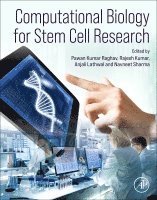
    Computational Biology for Stem Cell Research

    AvPawan Raghav,Rajesh Kumar

    Häftad, Engelska, 2024

    1 991 kr

    Beställningsvara. Skickas inom 10-15 vardagar. Fri frakt över 249 kr.

    Beskrivning

    Computational Biology for Stem Cell Research seamlessly bridges the gap between the worlds of biomedical sciences and in silico computational methods. This book serves as a valuable resource for researchers and students, enabling them to grasp and delve into the intricacies of hematopoietic Stem Cells (HSCs) and mesenchymal Stem Cells (MSCs) through the lens of computational biology. This perspective sheds light on stem cell transplantation, translational research, and unique properties of stem cells like self-renewal and differentiation. In addition to introducing readers to stem cell-focused bioinformatics tools, this resource offers a clear pathway for effortlessly merging in silico methods with traditional in vitro and in vivo approaches.

    Computational Biology for Stem Cell Research combines science and technology to showcase how computational methods transform stem cell research by reducing costs and enhancing investigations. The chapters uncover various approaches, from machine learning to genome analysis, for studying networks, protein interactions, dynamics, and the preprocessing of large datasets. The book aims to give readers a broad view of the advanced computational tools and methods extensively employed in stem cell research. Additionally, the book emphasizes the ongoing studies and tools yet to be developed for furthering stem cell research.


    • Modeling Stem Cell Behavior: Explore stem cell behavior through animal models, bridging laboratory studies to real-world clinical allogeneic HSC transplantation (HSCT) scenarios.
    • Bioinformatics-Driven Translational Research: Navigate a path from bench to bedside with cutting-edge bioinformatics approaches, translating computational insights into tangible advancements in stem cell research and medical applications.
    • Interdisciplinary Resource: Discover a single comprehensive resource catering to biomedical sciences, life sciences, and chemistry fields, offering essential insights into computational tools vital for modern research.

    Produktinformation

    • Utgivningsdatum:2024-01-17
    • Mått:216 x 276 x undefined mm
    • Vikt:1 520 g
    • Format:Häftad
    • Språk:Engelska
    • Antal sidor:566
    • Förlag:Elsevier Science
    • ISBN:9780443132223

    Utforska kategorier

    • Regenerativ medicin inom Medicin
    • Biovetenskap inom Naturvetenskap och teknik

    Mer om författaren

    Dr. Pawan Kumar Raghav completed his MSc in Bioinformatics (2008) from Punjabi University Patiala, India; PG Diploma in Chemoinformatics (2009) from Jamia Hamdard; MPhil in Bioinformatics (2010) from The Global Open University, Nagaland; and PhD at the Institute of Nuclear Medicine and Allied Sciences (INMAS), DRDO, Delhi in Life Sciences from Bharathiar University, Coimbatore. During his Ph.D., he had designed molecules and evaluated their applications through response modification that regulates stem cells proliferation, differentiation, and apoptosis. His recent research activities are in the field of machine learning, deep learning, and molecular biology, as well as in the development of new scoring function parameterizations for use in docking, simulations, and complex network analysis. Currently, he is working as Scientist ‘D’ in Stem Cell Facility, AIIMS on stem cell informatics to establish a bridge between the experimental science and computational biology. Dr. Rajesh Kumar Currently he is a postdoctoral fellow at the Developmental Therapeutics Branch of National Cancer Institutes, NIH, USA. His research interest includes immunotherapeutic for cancer and other infectious diseases; analysis of multi-omics data for biomarker identification; understanding genomic structural alterations in cancers; peptide-based therapeutics, developing algorithms for clinical data analysis and interpretation using machine learning for precision medicine. He has published over 25 publications, including international research articles and book chapters. He is a member of the Asia-Pacific Bioinformatics Network society. He was the recipient of CSIR- travel award for delivering the presentation at Gordon research Conference on Genomic Instability and Cancer at Ventura, California USA in 2020. He was also recipient of Carl Storm International Fellowship award in 2020. Dr. Anjali Lathwal is a researcher in the department of Computational Biology at Indraprastha Institute of Information Technology, Delhi. Her areas of expertise include Applied Machine Learning; Monte-Carlo Simulations; Mathematical Modeling; Computer-aided Vaccine Design; Peptide-based Therapeutics; Cancer Immunotherapy; Biomarkers Discovery; Genomic Annotation & Instability; Survival Modeling; Drug Repurposing; Network Modelling; Database Designing, Management, and Integration. She has published over 10 peer-reviewed publications in renowned international journals, book chapters as a co-author, and done several independent consultancy projects. She is also a member of the Asia-Pacific Bioinformatics Network society and recipient of the Research Excellence Award from the Institute of Scholars. Her research experience shows her substantial contribution to the field of viral therapeutics, biomarker discovery, and computational biology. Dr. Navneet Sharma is an Assistant Professor at the Amity Institute of Pharmacy, Amity University, India. He has an M.Pharm, Ph.D and PGDRA, and his expertise lies in the realm of biomaterials and applied R & D, especially needs-based product development. He has taken pivotal roles as an investigator in three projects supported by DST-India. He has won several awards, including eight national and international awards. The most prestigious among them are SCO and Ministry of External Affairs, Government of India Covid-19 best innovation award 2020, and Department of Science and Technology, Young Scientist Award for the year 2018 and 2022. He has more than 40 publications including four books, five book chapters, 10 patents and 4 technologies successfully transferred to the industry.

    Innehållsförteckning

    • Section I – In silico Tools and Approaches in Stem Cell Biology1. Advancement of In Silico Tools in Stem Cell Research2. Paradigm shift in stem cell research with computational tools, techniques, and databases3. Stem Cell Informatics: Web-Resources Aiding in Stem Cell Research4. Stem Cell-Based Informatics Development and Approaches5. Application of Machine Learning-Based Approaches in Stem Cell Research6. Stem Cell Therapy in the Era of Machine Learning7. Computational and Stem Cell Biology: Challenges and Future Perspectives Section II – Application of Genomic and Proteomic Approaches in Stem Cell Research8. Single Cell Transcriptome Profiling in Unravelling Distinct Molecular Signatures from Cancer Stem Cells 9. The Single-Cell Big Data Analytics: A Game-Changer in Bioscience10. Unravelling the genomics and proteomics aspects of the stemness phenotype in stem cells11. Cutting-Edge Proteogenomics Approaches to Analyze Stem Cells at the Therapeutic Level12. Advances in Regenerative Medicines Based on Mesenchymal Stem Cell Secretome13. Paradigms of Omics in Bioinformatics for Accelerating Current Trends and Future Prospects of Stem Cell Research14. Transcriptomic Profiling-Based Identification Biomarkers of Stem Cells15. Genomic and Transcriptomic Applications in Neural Stem Cell Therapeutics Section III – Stem Cell Network Modeling and Systems Biology16. Integration of Multi-omic Data to Identify Transcriptional Targets During Human Hematopoietic Stem Cell Differentiation17. Computational Approaches to Determine Stem Cell Fate18. Stem Cell Databases and Tools: Challenges and Opportunities for Computational Biology19. Deciphering the Complexities of Stem Cells Through Network Biology Approaches for their Application in Regenerative Medicine20. Bioinformatics Approaches to the Understanding of Notch Signaling in the Biology of Stem Cells21. In Silico Approaches for the Analyses of Developmental Fate of Stem Cells22. Exploring imaging technologies and computational resources in stem cell research for regenerative medicine: A comprehensive review23. Computational Approaches for Hematopoietic Stem Cells: Advancing Regenerative Therapeutics24. Approaches to Construct and Analyze Stem Cells Regulatory Networks Section IV – Computational Approaches for Stem Cell Tissue Engineering25. Tissue Engineering in Chondral Defect26. Recent Advances in Computational Modeling: An Appraisal of Stem Cell and Tissue Engineering Research27. Computational Approaches for Bioengineering of Cornea28. Cheminformatics, Metabolomics and Stem Cell Tissue Engineering: A Transformative Insight29. Targeting Cancer Stem Cells and Harnessing of Computational Tools Offer New Strategies for Cancer Therapy30. Introduction to Machine Learning and its Applications in Stem Cell Research31. Multiscale Computational and Machine Learning Models for Designing Stem Cell-Based Regenerative Medicine Therapies32. Computational Analysis of Epithelial Tissue Regeneration