• Fri frakt över 249 kr
  • •
  • Snabba leveranser
  • •
  • Billiga böcker
Kundservice

Du är på sajten för privatpersoner.

Företag, bibliotek eller offentlig verksamhet?

Du handlar på classic.bokus.com, där alla dina funktioner finns intakta.
Till classic.bokus.com
Bokus logotyp. Gå till startsidan.
  • Erbjudanden
  • Nyheter
  • Student
  • Topplistor
  • Barn & ungdom
  • Bokus Play
  • E-böcker
  • Pocketböcker
  • Spel & pussel

10% studentrabatt med kod TERM26

Sidfot

Mina sidor

    Hjälp

    • Kundservice
    • Vanliga frågor och svar
    • Frakt och leverans
    • Retur vid ångerrätt
    • Reklamera vara
    • Betalning
    • Köpvillkor
    • Allmänna villkor
    • Information om webbplatsens tillgänglighet

    Om Bokus

    • Om oss
    • Pressrum
    • För studenter
    • För företag
    • För bibliotek och offentlig verksamhet
    • För leverantörer
    • Hållbarhet

    Populärt

    • Aktuella erbjudanden
    • Presentkort
    • Studentlitteratur
    • Nya böcker
    • Topplistor
    • Signerade böcker
    • Engelska böcker

    Inspiration

    • Boktips
    • BookTok
    • Populära bokserier
    • Barnbokskaraktärer
    • Populära författare
    Logotyp för Bokus
    Följ oss på Facebook (extern länk)Följ oss på Instagram (extern länk)Följ oss på YouTube (extern länk)Följ oss på TikTok (extern länk)
    bokus @ CookiesAnpassa cookiesIntegritetspolicyKöpvillkor
    Till Citymail hemsida (extern länk)Till Budbee hemsida (extern länk)Till Postnord hemsida (extern länk)Till Schenker hemsida (extern länk)Till Early Bird hemsida (extern länk)Till Walleys hemsida (extern länk)
    1. Naturvetenskap och teknik
    2. Teknik och industri
    3. Teknik: allmänt

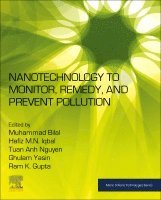
    Nanotechnology to Monitor, Remedy, and Prevent Pollution

    AvMuhammad Bilal,Hafiz M. N. Iqbal

    Häftad, Engelska, 2024

    Del i serien Micro and Nano Technologies

    2 865 kr

    Beställningsvara. Skickas inom 10-15 vardagar. Fri frakt över 249 kr.

    Beskrivning

    For decades an increasingly rapid urbanization pace, modern industrial development, and constantly intensive agricultural practices have caused controlled or uncontrolled release of hazardous contaminants that seriously threaten our environment. All natural spheres (atmosphere, hydrosphere, biosphere, lithosphere, and anthroposphere) seem to have been exposed to harmful practices and emerging research in nanomaterials is now trying to combat their adverse impact on physical ecosystems and organisms, as well as human health. In this context, pollution remediation at the nanoscale has come to the forefront for its potential to unlock sustainable, highly efficient, and cost-effective technologies, capable to restore in situ or ex situ land, water, and air resources.

    Nanotechnology to Monitor, Remedy, and Prevent Pollution covers design, fabrication, and extensive applications of engineered nanostructured materials in various shapes and morphologies (such as nanoparticles, wires, tubes, fibres) that, because of their size, surface-to-volume ratio, and high reactivity, function as catalysts and adsorbents of organic pollutants (aliphatic and aromatic hydrocarbons), gases, chemicals (arsenic, manganese, iron, nitrate, heavy metals), antibiotics, and biological entities (bacteria, viruses, parasites). Their integration with biotechnological processes for monitoring and prevention of pollution is also explored alongside the invisible dangers caused by noise.

    This is a valuable book for academics, researchers, undergraduate and postgraduate students working on environmental engineering for sustainability, environmental sciences, biotechnology, and nanotechnology.?


    • Comprehensively presents applications of state-of-the-art nanotechnologies and nanomaterials for control, prevention, and removal of persistent air, water, and soil pollutants
    • Provides a new benchmark for pros and cons of established processes for nano remediation, revealing the importance of such research beyond national boundaries and policies
    • Classifies noise as a contaminant and discusses how its real impacts on human and animal life can be limited through impedance-matching nanotechnology

    Produktinformation

    • Utgivningsdatum:2024-06-06
    • Mått:191 x 235 x 35 mm
    • Vikt:1 370 g
    • Format:Häftad
    • Språk:Engelska
    • Serie:Micro and Nano Technologies
    • Antal sidor:684
    • Förlag:Elsevier Science
    • ISBN:9780443156601

    Utforska kategorier

    • Teknik: allmänt inom Naturvetenskap och teknik
    • Miljöteknik inom Naturvetenskap och teknik

    Mer om författaren

    Muhammad Bilal is working as an Associate Professor at the Faculty of Civil and Environmental Engineering, Gdansk University of Technology, Poland. Previously, he served as an assistant/associate Professor at Poznan University of Technology, Poland, and the School of Life Science and Food Engineering, Huaiyin Institute of Technology, Huaian, China. He earned his Ph.D. from Shanghai Jiao Tong University, specializing in bioengineering and applied biotechnology. His main research activities are oriented to Environmental biotechnology, nanotechnology, enzyme engineering, immobilization, chemical modifications, and industrial applications of microbial enzymes, liquid, and solid waste management. He has authored over 700 peer-reviewed articles, 150 book chapters, 25 edited books. Dr. Bilal is the associate editor of Frontiers in Chemical Engineering and Frontiers in Environmental Science (Frontiers), and an editorial board member for several journals. He was listed as a highly cited researcher (Clarivate) in 2021 and holds several "highly cited papers" in WOS. Hafiz M.N. Iqbal is a Research Professor in the School of Engineering and Sciences at the Tecnológico de Monterrey, Mexico. His areas of research are biomaterials, bioengineering, biomedical engineering, environmental engineering, bioremediation, bio-catalysis, enzymes, immobilization, chemical engineering, green chemistry, algal biotechnology, and bioenergy. Tuan Anh Nguyen is a Senior Principal Research Scientist at the Institute for Tropical Technology, Vietnam Academy of Science and Technology, Hanoi, Vietnam. He received a BS in physics from Hanoi University in 1992, a BS in economics from Hanoi National Economics University in 1997, and a PhD in chemistry from the Paris Diderot University, France, in 2003. He was a Visiting Scientist at Seoul National University, South Korea, in 2004, and the University of Wollongong, Australia, in 2005. He then worked as a Postdoctoral Research Associate and Research Scientist at Montana State University, United States in 2006-09. In 2012 he was appointed as the Head of the Microanalysis Department at the Institute for Tropical Technology. His research areas of interest include smart sensors, smart networks, smart hospitals, smart cities, complexiverse, and digital twins. He has edited more than 74 books for Elsevier, 12 books for CRC Press, 1 book for Springer, 1 book for RSC, and 2 books for IGI Global. He is the Editor-in-Chief of Kenkyu Journal of Nanotechnology & Nanoscience. Ghulam Yasin is a researcher in the School of Environment and Civil Engineering at Dongguan University of Technology, Guangdong, China. His expertise covers the design and development of hybrid devices and technologies of carbon nanostructures and advanced nanomaterials for for real-world impact in energy-related and other functional applications. Ram Gupta is a Professor in the Department of Chemistry at Pittsburg State University, Kansas, United States. His research focus is in green energy production and storage using nanomaterials, optoelectronics and photovoltaics devices, organic-inorganic heterojunctions for sensors, nanomagnetism, conducting polymers and composites as well as bio-based polymers, bio-compatible nanofibers for tissue regeneration, scaffold and antibacterial applications, and bio-degradable metallic implants.

    Innehållsförteckning

    • Part I Fundamentals1. Advanced nanomaterials: An introduction2. Nanotechnology to monitor, remedy, and prevent pollution: An introduction3. Ecological and toxicological effects of nanotechnologyPart II Nanotechnology against noise pollution4. Nanomaterials with enhanced acoustic properties: An introduction5. Nanotechnology against noise pollution6. Environmental noise pollution and sourcesPart III Nanotechnology against air pollution7. Nanotools for air remediation: An introduction8. Nanosensors for air quality monitoring9. Nanosensors to detect and quantify air pollutants10. Resistive nanosensors for monitoring air pollutionPart IV Nanotechnology against water pollution11. Micropollutants in water and their adverse effects on environment and human life12. Nanoremediation of plastic-based waste materials13. Photonanocatalysts for water purification14. Removal of pharmaceuticals, cosmetics, and toiletries from water by nanomaterials15. Electrochemical oxidation at the nanoscale for xylene destruction in wastewater and model aspect16. Environmental micropollutants and removal techniques17. Value-added products from wastewater18. Nanotechnology for removal of personal care products and related compounds19. Micropollutants in aquatic systemsPart V Nanotechnology against marine pollution20. Biofouling: Status and challenges in the marine environment21. Applications of nanotechnology for remediation and degradation of petroleum pollutants in environment: A special emphasis on membrane technology22. Chemical recycling of plastic waste for sustainable developmentPart VI Nanotechnology against soil pollution23. Nanoremediation of inorganic contaminants in soils: Applications, mechanisms of actions, and environmental implications24. Application of nanotechnology in agriculture25. Nanotechnology in the agricultural sector