• Fri frakt över 249 kr
  • •
  • Snabba leveranser
  • •
  • Billiga böcker
Kundservice

Du är på sajten för privatpersoner.

Företag, bibliotek eller offentlig verksamhet?

Du handlar på classic.bokus.com, där alla dina funktioner finns intakta.
Till classic.bokus.com
Bokus logotyp. Gå till startsidan.
  • Erbjudanden
  • Nyheter
  • Student
  • Topplistor
  • Barn & ungdom
  • Bokus Play
  • E-böcker
  • Pocketböcker
  • Spel & pussel

10% rabatt på allt med kod NYSTART10 →

Sidfot

Mina sidor

    Hjälp

    • Kundservice
    • Vanliga frågor och svar
    • Frakt och leverans
    • Retur vid ångerrätt
    • Reklamera vara
    • Betalning
    • Köpvillkor
    • Allmänna villkor
    • Information om webbplatsens tillgänglighet

    Om Bokus

    • Om oss
    • Pressrum
    • För studenter
    • För företag
    • För bibliotek och offentlig verksamhet
    • För leverantörer
    • Hållbarhet

    Populärt

    • Aktuella erbjudanden
    • Presentkort
    • Studentlitteratur
    • Nya böcker
    • Topplistor
    • Signerade böcker
    • Engelska böcker

    Inspiration

    • Boktips
    • BookTok
    • Populära bokserier
    • Barnbokskaraktärer
    • Populära författare
    Logotyp för Bokus
    Följ oss på Facebook (extern länk)Följ oss på Instagram (extern länk)Följ oss på YouTube (extern länk)Följ oss på TikTok (extern länk)
    bokus @ CookiesAnpassa cookiesIntegritetspolicyKöpvillkor
    Till Citymail hemsida (extern länk)Till Budbee hemsida (extern länk)Till Postnord hemsida (extern länk)Till Schenker hemsida (extern länk)Till Early Bird hemsida (extern länk)Till Walleys hemsida (extern länk)
    1. Data och IT
    2. Informationsteknik: allmänt

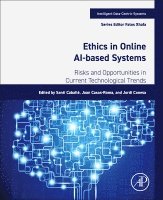
    Ethics in Online AI-Based Systems

    Risks and Opportunities in Current Technological Trends

    AvCaball?,Sant,Santi Caball�

    Häftad, Engelska, 2024

    Del i serien Intelligent Data-Centric Systems

    1 627 kr

    Beställningsvara. Skickas inom 10-15 vardagar. Fri frakt över 249 kr.

    Beskrivning

    Ethics in Online AI-Based Systems: Risks and Opportunities in Current Technological Trends creates a space to explore the ethical relevance that new technologies under development may have. Stimulating reflection and considerations with respect to the design, deployment, and use of technology helps readers guide current and future technological advancements from an ethically informed position to ensure that such advancements contribute towards solving current global and social challenges that we, as a society, have today. This will not only be useful for researchers and professional engineers, but also for educators, policy makers, and ethicists.

    Recent technological advancements have deeply transformed society and the way people interact with each other. Instantaneous communication platforms have allowed connections with other people, forming global communities and creating unprecedented opportunities in many sectors, making access to online resources more ubiquitous by reducing limitations imposed by geographical distance and temporal constrains. These technological developments bear ethically relevant consequences with their deployment, and legislations often lag behind such advancements. Because the appearance and deployment of these technologies happen much faster than legislative procedures, the way these technologies affect social interactions have profound ethical effects before any legislative regulation can be built in order to prevent and mitigate those effects.


    • Investigates how "intelligent" technological advances might be used, how they will affect social interactions, and what ethical consequences they might have for society
    • Identifies and reflects on questions that need to be asked before the design, deployment, and application of upcoming technological advancements, aiming to both prevent and mitigate potential risks, as well as to identify potentially ethically-beneficial opportunities
    • Recognizes the huge potential for ethically-relevant outcomes that technological advancements have, and take proactive steps to anticipate that they be designed from an ethically-informed position
    • Provides reflections that highlight the importance of the relationship between technology, their users and our society, thus encouraging informed design and educational and legislative approaches that take this relationship into account

    Produktinformation

    • Utgivningsdatum:2024-04-10
    • Mått:191 x 235 x 23 mm
    • Vikt:820 g
    • Format:Häftad
    • Språk:Engelska
    • Serie:Intelligent Data-Centric Systems
    • Antal sidor:424
    • Förlag:Elsevier Science
    • ISBN:9780443188510

    Utforska kategorier

    • Informationsteknik: allmänt inom Data och IT
    • Artificiell intelligens inom Data och IT
    • Etiska frågor och debatter inom Samhälle och politik

    Mer om författaren

    Santi Caballé is a full professor at the Universitat Oberta de Catalunya (UOC) based in Barcelona, Spain. He holds a PhD, Master's, and Bachelor’s in computing engineering from the UOC where he teaches on-line courses on software engineering and conducts research activity on the interdisciplinary field of learning engineering by combining e-learning, artificial intelligence, software engineering and distributed computing. He has over 250 peer-reviewed publications, including 15 books, 60 papers in indexed journals, and 150 conference papers. Professor Caballé has led and participated in over 30 national and international research projects and has been involved in the organization of many international research events. He also serves as editor for books and special issues of leading international journals. Joan Casas-Roma is a postdoctoral research fellow at the Universitat Oberta de Catalunya, where he works on AI and ethics in the context of online education. He received his PhD in Knowledge and Information Society from the Universitat Oberta de Catalunya on the areas of formal logic and philosophy of mind. He is also a lecturer at Falmouth University (UK), teaching and leading different modules on design, theory, and computing for digital games. His research interests concern the areas of AI ethics and ethics of technology, as well as different topics in ethics and moral philosophy and philosophy of AI. He has published several papers in international conferences and journals, participated in national research projects in collaboration with other universities, and has participated in the organization and chairing of various conferences. Jordi Conesa is an associate professor of computer science at the Universitat Oberta de Catalunya. He received his PhD in software engineering from the Technical University of Catalonia, after a research stay in Georgia State University of Atlanta (US). His research interest concerns the areas of conceptual modelling, ontologies, semantic web, knowledge-based systems, and e-learning. His long-term goal is to develop methodologies and tools to use ontologies effectively in several application domains, such as conceptual modelling, software engineering, and e-learning. He has authored more than 60 research papers, has participated in several research projects, including EU-FP7, CICYT and AVANZA funded projects, and has contributed in the organization of international conferences and has been program chair and program committee member of several international conferences. Finally, he also serves as external reviewer for many conferences and journals.

    Innehållsförteckning

    • PART I: Ethical Implications of Artificial Intelligence in Applications for Education1. Adverse effects of intelligent support in CSCL - The Ethics of Conversational Agents2. Navigating the Ethical Landscape of Multimodal Learning Analytics: A Guiding Framework3. Ethics in Online AI-Based Assessment Systems4. Ethical aspects regarding automatic emotion recognition used in online learning environments5. Data-Driven Educational Decision-Making Model to Curriculum OptimizationPART II: Ethical Implications of Artificial Intelligence in Autonomous Services and Systems6. The Ethical Issues Raised By The Use Of AI Products For The Disabled: An Analysis By Two Disabled People7. The Implications of Ethical Perspectives in AI and Autonomous Systems8. The ethics of online AI-driven agricultural and food systems9. AI and grief. A prospective study on the ethical and psychological implications of deathbotsPART III: Ethical Implications of Artificial Intelligence Models and Experiences10. On pitfalls (and advantages) of sophisticated Large Language Models11. Perspectives on the Ethics of a VR- based Empathy Experience for Educators12. Assessing and Implementing Trustworthy AI Across Multiple Dimensions13. Artificial Intelligence and Basic Human Needs: The Shadow Aspects of Emerging Technology14. Beyond Artificial Intelligence (AI) Ethics: Exploring Empathetic Ethical Outcomes for AIPART IV: Ethical Implications of Artificial Intelligence in Social and Political Involvement15. Who Decides What Online and Beyond: Freedom of Choice in Predictive Machine-Learning Algorithms16. The hard problem of the androcentric context of AI: Challenges for EU policy agendas17. Curse of the Cyborg Mammoths: The Use of Artificial Intelligence in Manipulating and Mobilizing Human Emotions18. On Deterring Hate Speech, Whilst Maximising Security and Privacy