Santi Caball� - Böcker
Formative Assessment, Learning Data Analytics and Gamification
In ICT Education
1 074 kr
Skickas inom 7-10 vardagar
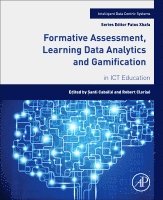
Formative Assessment, Learning Data Analytics and Gamification: An ICT Education discusses the challenges associated with assessing student progress given the explosion of e-learning environments, such as MOOCs and online courses that incorporate activities such as design and modeling. This book shows educators how to effectively garner intelligent data from online educational environments that combine assessment and gamification.
This data, when used effectively, can have a positive impact on learning environments and be used for building learner profiles, community building, and as a tactic to create a collaborative team. Using numerous illustrative examples and theoretical and practical results, leading international experts discuss application of automatic techniques for e-assessment of learning activities, methods to collect, analyze, and correctly visualize learning data in educational environments, applications, benefits and challenges of using gamification techniques in academic contexts, and solutions and strategies for increasing student participation and performance.
Discusses application of automatic techniques for e-assessment of learning activities Presents strategies to provide immediate and useful feedback on students' activities Provides methods to collect, analyze, and correctly visualize learning data in educational environments Explains the applications, benefits, and challenges of using gamification techniques in academic contexts Offers solutions to increase students' participation and performance while lowering drop-out rates and retention levelsIntelligent Data Analysis for e-Learning
Enhancing Security and Trustworthiness in Online Learning Systems
1 138 kr
Skickas inom 7-10 vardagar
Intelligent Data Analysis for e-Learning: Enhancing Security and Trustworthiness in Online Learning Systems addresses information security within e-Learning based on trustworthiness assessment and prediction. Over the past decade, many learning management systems have appeared in the education market. Security in these systems is essential for protecting against unfair and dishonest conduct-most notably cheating-however, e-Learning services are often designed and implemented without considering security requirements.
This book provides functional approaches of trustworthiness analysis, modeling, assessment, and prediction for stronger security and support in online learning, highlighting the security deficiencies found in most online collaborative learning systems. The book explores trustworthiness methodologies based on collective intelligence than can overcome these deficiencies. It examines trustworthiness analysis that utilizes the large amounts of data-learning activities generate. In addition, as processing this data is costly, the book offers a parallel processing paradigm that can support learning activities in real-time.
The book discusses data visualization methods for managing e-Learning, providing the tools needed to analyze the data collected. Using a case-based approach, the book concludes with models and methodologies for evaluating and validating security in e-Learning systems.
Indexing: The books of this series are submitted to EI-Compendex and SCOPUS
Provides guidelines for anomaly detection, security analysis, and trustworthiness of data processing Incorporates state-of-the-art, multidisciplinary research on online collaborative learning, social networks, information security, learning management systems, and trustworthiness prediction Proposes a parallel processing approach that decreases the cost of expensive data processing Offers strategies for ensuring against unfair and dishonest assessments Demonstrates solutions using a real-life e-Learning context1 289 kr
Skickas inom 7-10 vardagar
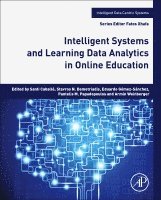
Intelligent Systems and Learning Data Analytics in Online Education provides novel artificial intelligence (AI) and analytics-based methods to improve online teaching and learning. This book addresses key problems such as attrition and lack of engagement in MOOCs and online learning in general.
This book explores the state of the art of artificial intelligence, software tools and innovative learning strategies to provide better understanding and solutions to the various challenges of current e-learning in general and MOOC education. In particular, Intelligent Systems and Learning Data Analytics in Online Education shares stimulating theoretical and practical research from leading international experts. This publication provides useful references for educational institutions, industry, academic researchers, professionals, developers, and practitioners to evaluate and apply.
Presents the application of innovative AI techniques to collaborative learning activities Offers strategies to provide automatic and effective tutoring to students' activities Offers methods to collect, analyze and correctly visualize learning data in educational environmentsEthics in Online AI-Based Systems
Risks and Opportunities in Current Technological Trends
1 593 kr
Skickas inom 7-10 vardagar
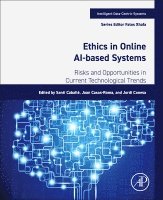
Ethics in Online AI-Based Systems: Risks and Opportunities in Current Technological Trends creates a space to explore the ethical relevance that new technologies under development may have. Stimulating reflection and considerations with respect to the design, deployment, and use of technology helps readers guide current and future technological advancements from an ethically informed position to ensure that such advancements contribute towards solving current global and social challenges that we, as a society, have today. This will not only be useful for researchers and professional engineers, but also for educators, policy makers, and ethicists.Recent technological advancements have deeply transformed society and the way people interact with each other. Instantaneous communication platforms have allowed connections with other people, forming global communities and creating unprecedented opportunities in many sectors, making access to online resources more ubiquitous by reducing limitations imposed by geographical distance and temporal constrains. These technological developments bear ethically relevant consequences with their deployment, and legislations often lag behind such advancements. Because the appearance and deployment of these technologies happen much faster than legislative procedures, the way these technologies affect social interactions have profound ethical effects before any legislative regulation can be built in order to prevent and mitigate those effects.
Investigates how "intelligent" technological advances might be used, how they will affect social interactions, and what ethical consequences they might have for societyIdentifies and reflects on questions that need to be asked before the design, deployment, and application of upcoming technological advancements, aiming to both prevent and mitigate potential risks, as well as to identify potentially ethically-beneficial opportunitiesRecognizes the huge potential for ethically-relevant outcomes that technological advancements have, and take proactive steps to anticipate that they be designed from an ethically-informed positionProvides reflections that highlight the importance of the relationship between technology, their users and our society, thus encouraging informed design and educational and legislative approaches that take this relationship into account