• Fri frakt över 249 kr
  • •
  • Snabba leveranser
  • •
  • Billiga böcker
Kundservice

Du är på sajten för privatpersoner.

Företag, bibliotek eller offentlig verksamhet?

Du handlar på classic.bokus.com, där alla dina funktioner finns intakta.
Till classic.bokus.com
Bokus logotyp. Gå till startsidan.
  • Erbjudanden
  • Nyheter
  • Student
  • Topplistor
  • Barn & ungdom
  • Bokus Play
  • E-böcker
  • Pocketböcker
  • Spel & pussel

10% rabatt på allt med kod: NYSTART10 →

Sidfot

Mina sidor

    Hjälp

    • Kundservice
    • Vanliga frågor och svar
    • Frakt och leverans
    • Retur vid ångerrätt
    • Reklamera vara
    • Betalning
    • Köpvillkor
    • Allmänna villkor
    • Information om webbplatsens tillgänglighet

    Om Bokus

    • Om oss
    • Pressrum
    • För studenter
    • För företag
    • För bibliotek och offentlig verksamhet
    • För leverantörer
    • Hållbarhet

    Populärt

    • Aktuella erbjudanden
    • Presentkort
    • Studentlitteratur
    • Nya böcker
    • Topplistor
    • Signerade böcker
    • Engelska böcker

    Inspiration

    • Boktips
    • BookTok
    • Populära bokserier
    • Barnbokskaraktärer
    • Populära författare
    Logotyp för Bokus
    Följ oss på Facebook (extern länk)Följ oss på Instagram (extern länk)Följ oss på YouTube (extern länk)Följ oss på TikTok (extern länk)
    bokus @ CookiesAnpassa cookiesIntegritetspolicyKöpvillkor
    Till Citymail hemsida (extern länk)Till Budbee hemsida (extern länk)Till Postnord hemsida (extern länk)Till Schenker hemsida (extern länk)Till Early Bird hemsida (extern länk)Till Walleys hemsida (extern länk)
    1. Naturvetenskap och teknik
    2. Matematik och naturvetenskap
    3. Biologi
    4. Biokemi

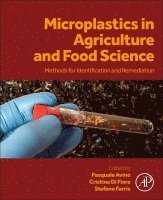
    Microplastics in Agriculture and Food Science

    Methods for Identification and Remediation

    AvPasquale Avino,Cristina Di Fiore

    Häftad, Engelska, 2025

    2 119 kr

    Beställningsvara. Skickas inom 10-15 vardagar. Fri frakt över 249 kr.

    Beskrivning

    Microplastics in Agriculture and Food Science: Methods for Identification and Remediation presents fundamental insights into the sources of microplastics and their impact on important agricultural, food, and environmental resources. Presenting insights into these highly related fields, this book is the first to enable cross- and multidisciplinary understanding and application.

    Microplastics are tiny particles created during plastic production as well as those particles remaining when plastic degrades and breaks down. They are sometimes difficult to identify, and the methods for qualifying and classifying them are not always clear despite the importance of their recognition and remediation. With insights into analytical methods including the challenges, this book addresses microplastics from the farm to the food pyramid, highlighting the issues they raise and the options for removing them.

    Written by a global team of experts, this volume contributes to further understanding and addressing of this increasing global challenge, and is an excellent resource for researchers in agricultural science, environmental science, and food science (particularly food chemistry and food packaging).


    • Presents analytical approaches for determining microplastics in food and agricultural settings and products
    • Classifies the different methodologies and comments on each to guide readers to the best one for each matrix option
    • Explores the widespread presence of microplastics worldwide and highlights their fate currently
    • Demonstrates the effects of microplastics both on human health and life, and on the environment

    Produktinformation

    • Utgivningsdatum:2025-03-26
    • Mått:191 x 235 x undefined mm
    • Vikt:1 340 g
    • Format:Häftad
    • Språk:Engelska
    • Antal sidor:498
    • Förlag:Elsevier Science
    • ISBN:9780443222108

    Utforska kategorier

    • Biokemi inom Naturvetenskap och teknik
    • Farmakologi inom Medicin
    • Agronomi och lantbruk inom Naturvetenskap och teknik

    Mer om författaren

    Prof. Avino studies the development of innovative analytical methodologies for development and application of analytical and sampling methods for the qualitative and quantitative determination of chemical compounds (e.g., contaminants, pollutants, nutrients) in food, agricultural, biological and anthropogenic matrices. These studies are aimed at evaluating inorganic and organic species present at trace and ultra-trace levels in food and environmental (smoke, air, water and soil) matrices, as well as the evaluation of the environmental and human health risks related to the exposure/ingestion of such compounds. In 1998 he received both the “Group Achievement NASA Award” and the “Next Generation Award” ( 22nd International Symposium on Chromatography). He has also received the “Environmental Sapio” Award for his research in the environmental field and in particular in the atmospheric particulate matter problems. Prof. Avino is author and co-author of scientific publications including original papers published in national and international journals and books. Cristina Di Fiore is a Research Fellow at the University of Molise in Environmental and Analytical Chemistry. She obtained her Ph.D. in Science, Technologies and Biotechnologies of Food, working in Environmental and Analytical Chemistry. Precisely, her Ph.D. was based on the extraction and chemical determination of microplastics in several food matrices. She is the author of 26 articles, mainly focused on microplastic’s analyses, as well as on the development of analytical protocols for determination of several environmental pollutants. Stefano Farris is Full Professor at the Department of Food, Environmental and Nutritional Sciences (DeFENS) – University of Milan. His research focuses on the design and development of new high-performance materials using mainly biomacromolecules, by means of different approaches such as soft chemistry and nanotechnology. His research firstly deals with fundamental aspects to provide new suitable practical solutions, especially for the food packaging sector. This is accomplished by strong and fruitful collaborations with several industrial partners.

    Innehållsförteckning

    • Part I: The Contaminants of the 21st Century: An Introduction to Microplastics1. Plastics in the Agricultural Field2. Plastics in the Food Sector3. Principle Plastic Polymers in Agricultural and Food Sectors4. From Plastics to MicroplasticsPart II: Analytical Methodologies for Microplastics Determination: between Limitations and Innovations5. Sampling Methods for Microplastics Determination6. Pre-treatment of Food and Agricultural Matrices for Microplastics Extraction7. Analytical Methodologies for Qualification of Microplastics8. Quantification of Microplastics: A Call for Method Harmonization9. Polymer Solubilization: A Potential Solution for Microplastics Quantification10. Quality Assurance and Quality Control: The Prevention of Airborne ContaminationPart III: Microplastics in agriculture11. Microplastics Contamination in Soil12. Microplastics Contamination in Crops13. Artificial Crop Irrigation and Microplastics14. Microplastics and Agricultural Vehicle Tires15. Fertilizers and Microplastics Contamination of Crops16. Atmospheric Particulates and MicroplasticsPart IV: Microplastics in farm animals17. Feed Production Process and Microplastics Contamination18. Microplastics in Farm Animals: Health Effects19. Microplastics: From Animal to HumanPart V: Microplastics in the food sector20. Food Processing and microplastics21. Food Packaging and Potential Microplastics Release22. Food Pyramid and MicroplasticsPart VI: Human exposure to microplastics23. Are We Eating Microplastics?24. Microplastics in Food Production and Agricultural EnvironmentsPart VII: Contaminants associated with microplastics25. Microplastics and plasticizers26. Microplastics and organic contaminants27. Microplastics and inorganic contaminantsPart IIX: Fate of microplastics and toxicological studies28. Translocation of microplastics in human tissue29. Microplastics and potential damage to human cells30. 3-D models for studing microplastics effects on humansPart IX: Additional Topics and Considerations31. Use of agricultural products as bio-indicators32. Potential solutions in the agriculture and food sector33. Regulatory Gaps in Microplastics Field in food and agriculture sectors