• Fri frakt över 249 kr
  • •
  • Snabba leveranser
  • •
  • Billiga böcker
Kundservice

Du är på sajten för privatpersoner.

Företag, bibliotek eller offentlig verksamhet?

Du handlar på classic.bokus.com, där alla dina funktioner finns intakta.
Till classic.bokus.com
Bokus logotyp. Gå till startsidan.
  • Erbjudanden
  • Nyheter
  • Student
  • Topplistor
  • Barn & ungdom
  • Bokus Play
  • E-böcker
  • Pocketböcker
  • Spel & pussel

10% studentrabatt med kod TERM26

Sidfot

Mina sidor

    Hjälp

    • Kundservice
    • Vanliga frågor och svar
    • Frakt och leverans
    • Retur vid ångerrätt
    • Reklamera vara
    • Betalning
    • Köpvillkor
    • Allmänna villkor
    • Information om webbplatsens tillgänglighet

    Om Bokus

    • Om oss
    • Pressrum
    • För studenter
    • För företag
    • För bibliotek och offentlig verksamhet
    • För leverantörer
    • Hållbarhet

    Populärt

    • Aktuella erbjudanden
    • Presentkort
    • Studentlitteratur
    • Nya böcker
    • Topplistor
    • Signerade böcker
    • Engelska böcker

    Inspiration

    • Boktips
    • BookTok
    • Populära bokserier
    • Barnbokskaraktärer
    • Populära författare
    Logotyp för Bokus
    Följ oss på Facebook (extern länk)Följ oss på Instagram (extern länk)Följ oss på YouTube (extern länk)Följ oss på TikTok (extern länk)
    bokus @ CookiesAnpassa cookiesIntegritetspolicyKöpvillkor
    Till Citymail hemsida (extern länk)Till Budbee hemsida (extern länk)Till Postnord hemsida (extern länk)Till Schenker hemsida (extern länk)Till Early Bird hemsida (extern länk)Till Walleys hemsida (extern länk)
    1. Medicin
    2. Medicin: allmänt
    3. Samhällsmedicin och preventiv medicin
    4. Folkhälsa och hälsopedagogik

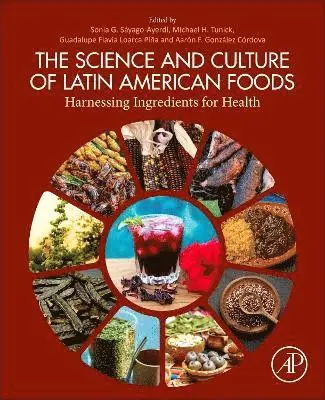
    The Science and Culture of Latin American Foods

    Harnessing Ingredients for Health

    AvSonia G. S�yago-Ayerdi,Michael H. Tunick

    Häftad, Engelska, 2025

    2 099 kr

    Beställningsvara. Skickas inom 10-15 vardagar. Fri frakt över 249 kr.

    Beskrivning

    The Science and Culture of Latin American Foods: Harnessing Ingredients for Health combines science and technology to demonstrate the importance of rescuing and preserving traditional and ancestral knowledge to exploit the functional benefits of the regions’ many roots, plants, seeds, insects, and more. Divided into four sections, Ingredients, Nutraceuticals, Functional Foods, and Cuisine, the book discusses the sustainable development of these ingredients while highlighting origin, production, classification, and medicinal properties. Readers will discover the potential of potent bioactive peptides derived from native foods like cacao, chipil�n leaves, and Huauzontle, a pre-Hispanic ingredient thriving and surviving in Mexican cuisine.

    In addition, they will learn how Asia and Africa influence Latin American cuisine and about the importance these regional culinary dishes have in global gastronomy today.

    • Summarizes the characteristics and multifunctional properties of indigenous Latin American ingredients from Mexico, Colombia, Uruguay, Brazil, and more
    • Discusses the potential health benefits derived from the bioactive compounds of these ingredients
    • Details the practices, expressions, knowledge, and skills to grow, care for, and prepare these ingredients
    • Highlights cultural influences and the impact of Asia and Africa on Latin American cuisine

    Produktinformation

    • Utgivningsdatum:2025-11-27
    • Mått:191 x 235 x 29 mm
    • Vikt:450 g
    • Format:Häftad
    • Språk:Engelska
    • Antal sidor:562
    • Förlag:Elsevier Science
    • ISBN:9780443334054

    Utforska kategorier

    • Folkhälsa och hälsopedagogik inom Medicin
    • Tillverkningsteknik inom Naturvetenskap och teknik

    Mer om författaren

    Sonia G. Sayago-Ayerdi has a PhD in Nutrition from the Complutense University of Madrid. She began her career as a teacher at the Technological Institute of Acapulco, and was trained as a researcher thanks to the support of the General Directorate of the Technological Institutes, now the National Technological Institute of Mexico. After her PhD, she joined the Graduate Program of the Technological Institute of Tepic. She is Coordinator of the Network of Underutilized Native Foods (ALSUB-CYTED, 118RT0543) of the Ibero-American Program of Science and Technology for Development, member of the Mexican Academy of Sciences, member of the steering committee of the Mexican Association in Food Sciences (AMECA) during the periods 2015-17 and 2017-19, and Associated Editor in Food Chemistry of Elsevier. Michael H. Tunick is a retired chemist and research chemist at the United States Department of Agriculture (USDA) with 40 years’ experience where he created new dairy products and expanded marketability of existing products. Dr. Tunick has expertise in thermal analysis using differential scanning calorimetry, microstructural analysis using scanning and transmission electron microscopy, microbiology of bacteria, and rheology of materials using texture profile analysis and small amplitude oscillatory shear analysis. After retiring , he became a full-time professor at Drexel University where he teaches various food science courses including Cheesemaking and mentors students in the M.S. Food Science program. Dr. Tunick has authored or coauthored over 140 publications, has coedited ten books including three on Hispanic food, and has co-chaired over 20 symposia in the Division of Agricultural & Food Chemistry (AGFD) in the American Chemical Society (ACS).Dr. Guadalupe Flavia Loarca Piña, has a BS in Biology Chemistry from Universidad Autonomade Queretaro (UAQ), MS in Experimental Biology from the Universidad de Guanajuato and a PhD in Food Science from Universidad Autonoma de Queretaro, Mexico. She is a professor and researcher with a PRODEP profile and belongs to the National System of Researchers (SNI). She and her team of students, colleagues and visiting scholars have published over 140 peer reviewed articles and 10 book chapters. She participates as a member of the Technical Committee of the National Network for Research, Innovation and Development in Functional and Nutraceutical Foods (AlfaNutra) and member of Institute of Food Technologist (IFT). Dr. Loarca-Pina has increased the understanding and the health benefits of bioactive compounds in the Mexican diet.Aarón F. González Córdova is a research professor at the Laboratory of Chemistry and Biotechnology of Dairy Products and of Quality, Authenticity and Traceability of Food in the Department of Animal-Based Food Technology at CIAD. He leads research projects focused on functional foods, science and technology of milk and its derivatives, and quality, authenticity, and traceability of food. He supports small producers of artisanal cheese in Mexico, promoting artisanal cheese making, both in Mexico and abroad. He is also the coordinator of the Research, Innovation, and Technological Development of Functional Foods and Nutraceuticals Network (Red AlFaNutra) where he promotes healthy and functional nutrition by revaluating traditional foods in ancestral diets and by reducing food waste.

    Innehållsförteckning

    • Introduction1. Mexican food: A UNESCO intangible cultural heritage of humanity2. Colombian Gastronomic Heritage3. Bioactive peptides derived from artisanal cocoa bean fermentationIngredients4. Cocoa: Food for gods5. Uses and potential health benefits of purple corn: a Mesoamerican ancient food for the XXI century6. Chipilin, nutritional and functional properties and their use in Chiapas cuisine.7. Huauzontle: multifunctional properties of a pre-Hispanic ingredient that survives in Mexican cuisine8. Yacon: an ancestral root with a modern approach to food science9. Brosimum alicastrum Sw. seed (Ramon tree): an unconventional ingredient to prepare healthy food10. Carob: the forgotten Mediterranean food11. Tannat grape, the Uruguayan emblematic variety: composition and potential effects on health of wine and its byproducts12. Quinoa: The Functional Food RevolutionNutraceutical Foods13. Nutraceutical and innovative foods using common bean (Phaseolus vulgaris L.) and maize (Zea mays L.) as ingredients14. Hibiscus sabdariffa: an ancestral Asian plant-food and their multicultural influence in Mesoamerica15. More than a simple drink: traditions, uses and bioactive properties of yerba mate (Ilex paraguariensis)16. Fruits from Colombia to the World17. Nutritional and functional potential of Non-Traditional Uruguayan fruits in the process of commercial developmentFunctional Foods18. Unconventional foods from southern Mexico: properties and consumption19. Mole: a symphony of smells and flavors from Mexico to the world20. Mexican edible insects: nutraceutical potential and culinary applications21. Edible insects: Processing technologies for their utilization22. Beans: Ancestral food important for human health23. Asian influence in tropical fruits traditionally consumed in Mexican gastronomy24. Unconventional food plants from Brazil25. Brazilian Tucumã fruits (Astrocaryum spp.): The missing link between science and traditional knowledge26. Mexican Artisanal Cheeses: Preserving typicity and genuity through lactic acid bacteria cooperation.Cuisine27. Cuisine of nuns from post-viceroyalty Mexico: Functional or just "Mexicatessen"?28. The relationship between dweller and mangrove: Taxtihil a ceremonial dish29. Valorization of regional cuisine in the Costa Chica: Cultural background, culinary uses and potential health benefits