• Fri frakt över 249 kr
  • •
  • Snabba leveranser
  • •
  • Billiga böcker
Kundservice

Du är på sajten för privatpersoner.

Företag, bibliotek eller offentlig verksamhet?

Du handlar på classic.bokus.com, där alla dina funktioner finns intakta.
Till classic.bokus.com
Bokus logotyp. Gå till startsidan.
  • Erbjudanden
  • Nyheter
  • Student
  • Topplistor
  • Barn & ungdom
  • Bokus Play
  • E-böcker
  • Pocketböcker
  • Spel & pussel

10% rabatt på allt med kod NYSTART10 →

Sidfot

Mina sidor

    Hjälp

    • Kundservice
    • Vanliga frågor och svar
    • Frakt och leverans
    • Retur vid ångerrätt
    • Reklamera vara
    • Betalning
    • Köpvillkor
    • Allmänna villkor
    • Information om webbplatsens tillgänglighet

    Om Bokus

    • Om oss
    • Pressrum
    • För studenter
    • För företag
    • För bibliotek och offentlig verksamhet
    • För leverantörer
    • Hållbarhet

    Populärt

    • Aktuella erbjudanden
    • Presentkort
    • Studentlitteratur
    • Nya böcker
    • Topplistor
    • Signerade böcker
    • Engelska böcker

    Inspiration

    • Boktips
    • BookTok
    • Populära bokserier
    • Barnbokskaraktärer
    • Populära författare
    Logotyp för Bokus
    Följ oss på Facebook (extern länk)Följ oss på Instagram (extern länk)Följ oss på YouTube (extern länk)Följ oss på TikTok (extern länk)
    bokus @ CookiesAnpassa cookiesIntegritetspolicyKöpvillkor
    Till Citymail hemsida (extern länk)Till Budbee hemsida (extern länk)Till Postnord hemsida (extern länk)Till Schenker hemsida (extern länk)Till Early Bird hemsida (extern länk)Till Walleys hemsida (extern länk)
    1. Naturvetenskap och teknik
    2. Teknik och industri
    3. Transportteknik
    4. Järnvägar

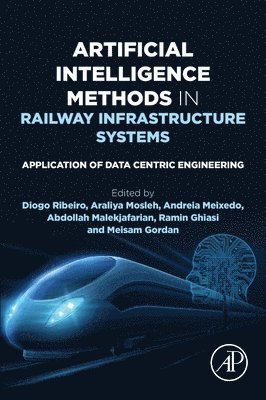
    Artificial Intelligence Methods in Railway Infrastructure Systems

    Application of Data-Centric Engineering

    AvDiogo Ribeiro,Araliya Mosleh

    Häftad, Engelska, 2026

    2 554 kr

    Kommande

    Beskrivning

    Artificial Intelligence Methods in Railway Infrastructure Systems: Application of Data Centric Engineering offers a thorough exploration of the latest advancements transforming railway management. With a strong focus on practical and theoretical approaches, this book introduces innovative AI techniques including machine learning, computer vision, and predictive analytics. These methodologies are presented in the context of railway infrastructure, empowering engineers and researchers to utilize cutting-edge technology for enhanced system reliability. By bridging the gap between theory and real-world applications, the book enables early detection of anomalies, supporting proactive maintenance strategies and improved operational efficiency in railway networks.

    This book acts as a vital reference for those seeking to understand and implement AI-driven solutions in railway systems, encouraging the adoption of anticipatory strategies to shape future trends. Readers will discover how AI innovations can streamline operations, optimize resource allocation, and significantly improve network safety, making it an essential guide for professionals looking to stay ahead in the evolving field of railway infrastructure management.

    • Covers the diverse array of Artificial Intelligence (AI) tools that can address the complex challenges associated with railway infrastructure management
    • Explores AI capabilities in the continuous monitoring of railway infrastructure, providing real-time insights into the condition of tracks, bridges, tunnels, and other critical assets
    • Leverages the potential of AI in the automatization of inspection processes, reducing the need for manual intervention and improving the efficiency and accuracy of assessments
    • Presents AI algorithms for early anomaly detection or deviations from normal operating conditions, alerting infrastructure managers to potential issues before they escalate

    Produktinformation

    • Utgivningsdatum:2026-11-01
    • Mått:152 x 229 x undefined mm
    • Format:Häftad
    • Språk:Engelska
    • Antal sidor:500
    • Förlag:Elsevier Science
    • ISBN:9780443337796

    Utforska kategorier

    • Järnvägar inom Naturvetenskap och teknik
    • Artificiell intelligens inom Data och IT

    Mer om författaren

    Dr Ribeiro is Professor at Instituto Superior de Engenharia do Porto in Portugal. He is a Member of the Institute of R&D in Structures and Construction (CONSTRUCT), coordinator or researcher on more than 20 R&D projects funded by industry, FCT and EU programs in the field of railway infrastructures and digital construction Araliya Mosleh is a senior researcher at the Faculty of Civil Engineering, University of Porto. She obtained her PhD degree in 2016 from the University of Aveiro, Portugal. Since then she has actively engaged in 9 national and international projects in the field of railway infrastructure. She was a visiting researcher at Bundeswehr University (2015), Wollongong University (2017), and Evoleo Company (2019) Andreia Meixedo holds a Master in Structural Engineering (2012) and a PhD in Civil Engineering (2021), all from the University of Porto. Her main research experience is related to damage identification, structural health monitoring, machine learning, railway infrastructures, wayside and onboard condition monitoring; weigh-in-motion; advanced models for analysis of the bridge-track-train dynamic interaction, structural testing and experimentation, model calibration and validation Dr. Abdollah Malekjafarian is currently an Assistant Professor and leader of the “Structural Dynamics and Assessment Laboratory (SDA-Lab)”, in the School of Civil Engineering at University College Dublin (UCD), in Ireland. He received his PhD in Civil Engineering from UCD in 2016. His main areas of research interest are structural dynamics and random vibrations for civil infrastructure including wind turbines and transport Infrastructure. Dr. Malekjafarian is also the Coordinator of the WindLEDeRR project (Lifetime Extension Decommissioning Repowering Repurposing), a comprehensive decision support tool for end-of-life wind turbines in Ireland.Dr Ramin Ghiasi is a Postdoctoral Research Fellow at the School of Civil Engineering, University College Dublin, Ireland. His research interests encompass civil structure and infrastructure health monitoring (including transport infrastructure, offshore wind turbines, and tall buildings), the application of AI and optimization methods in civil engineering, and the creation of IoT-based monitoring systemsDr Meisam Gordan is currently a Postdoctoral Research Fellow at University College Dublin, working on the Di-Rail project, which focuses on automated and rapid fault diagnosis of railway tracks using in-service train measurements. His research interests include: structural health monitoring, data mining, critical infrastructure resilience, Industry 4.0, big data and smart cities

    Innehållsförteckning

    • 1. A review on artificial intelligence-based approaches for railway bridge health monitoring and response prediction2. Development of Flood Risk Map for Railway Tracks Using Digital Surface Model and Machine Learning: A Case Study in Tropical Climate Regions of Thailand3. Innovated approaches for unbalanced loads identification in railway vehicles through machine learning techniques4. Emerging Technologies for Drive-By Methodologies in Railway Bridge Monitoring5. Drive by methodologies for smart condition monitoring of railway tracks6. Comprehensive guide towards the application of predictive maintenance approaches for rolling stock critical systems7. Integrating artificial intelligence into railway digital twin frameworks8. Wayside condition monitoring: from advanced signal analysis to train wheel defect detection9. AI-Driven Predictive Maintenance Strategies Under Climate Change Impacts10. Deep learning for vision-based damage detection in railway bridges11. AI-Driven Innovations for Tunnels Inspection, Monitoring, Maintenance, Operation, and Assessment12. Enhancing Railway Noise and Vibration Control with AI: Prediction and Monitoring Techniques13. Addressing Uncertainty and Interpretability in Railway Maintenance: A Takagi-Sugeno Fuzzy System-Based Interval Approach for Sleeper Support Condition Assessment14. Model-Based Approaches for Drive-by Damage Identification in Railway Bridges15. Modeling railway bridge responses using LSTM networks: a retrofit experimental study16. The Path to Smarter Railways: Future Directions Based on Artificial Intelligence and Machine Learning17. Machine learning techniques for predicting the geometrical railway track quality18. Geotechnical behavior of high-speed railway lines enhanced by artificial intelligence19. Development of a railway subgrade monitoring methodology - concept description to practical implementations using Machine Learning20. AI ethical, juridical and trustworthiness issues