• Fri frakt över 249 kr
  • •
  • Snabba leveranser
  • •
  • Billiga böcker
Kundservice

Du är på sajten för privatpersoner.

Företag, bibliotek eller offentlig verksamhet?

Du handlar på classic.bokus.com, där alla dina funktioner finns intakta.
Till classic.bokus.com
Bokus logotyp. Gå till startsidan.
  • Erbjudanden
  • Nyheter
  • Student
  • Topplistor
  • Barn & ungdom
  • Bokus Play
  • E-böcker
  • Pocketböcker
  • Spel & pussel

10% rabatt på allt med kod NYSTART10 →

Sidfot

Mina sidor

    Hjälp

    • Kundservice
    • Vanliga frågor och svar
    • Frakt och leverans
    • Retur vid ångerrätt
    • Reklamera vara
    • Betalning
    • Köpvillkor
    • Allmänna villkor
    • Information om webbplatsens tillgänglighet

    Om Bokus

    • Om oss
    • Pressrum
    • För studenter
    • För företag
    • För bibliotek och offentlig verksamhet
    • För leverantörer
    • Hållbarhet

    Populärt

    • Aktuella erbjudanden
    • Presentkort
    • Studentlitteratur
    • Nya böcker
    • Topplistor
    • Signerade böcker
    • Engelska böcker

    Inspiration

    • Boktips
    • BookTok
    • Populära bokserier
    • Barnbokskaraktärer
    • Populära författare
    Logotyp för Bokus
    Följ oss på Facebook (extern länk)Följ oss på Instagram (extern länk)Följ oss på YouTube (extern länk)Följ oss på TikTok (extern länk)
    bokus @ CookiesAnpassa cookiesIntegritetspolicyKöpvillkor
    Till Citymail hemsida (extern länk)Till Budbee hemsida (extern länk)Till Postnord hemsida (extern länk)Till Schenker hemsida (extern länk)Till Early Bird hemsida (extern länk)Till Walleys hemsida (extern länk)
    1. Naturvetenskap och teknik
    2. Matematik och naturvetenskap
    3. Biologi
    4. Cellbiologi

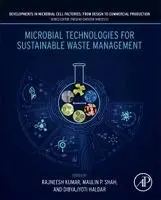
    Microbial Technologies for Sustainable Waste Management

    AvRajneesh Kumar,Maulin P. Shah

    Häftad, Engelska, 2026

    Del i serien DEVELOPMENTS IN MICROBIAL CELL FACTORIES: FROM DESIGN TO COMMERCIAL PRODUCTION

    1 970 kr

    Kommande

    Beskrivning

    Microbial Technologies for Sustainable Waste Management explores advanced waste management through microbial processes. The book investigates the current limitations of traditional waste treatment and the potential for microbial cell factories in bringing innovative solutions to this field. Beginning with an introduction to the role of microbes in waste management, it examines global case studies demonstrating success stories in microbial waste treatment and microbial innovations for biotechnological applications in waste conversion. Concluding chapters focus on microbial pathways for anaerobic digestion, hydrolysis, and fermentation, and microbial technologies for industrial applications such as wastewater treatment and the biofuel industry.

    Additionally, the book considers microbial remediation of hazardous and toxic waste, microbial fuel cells, and strategies for plastic waste degradation. Emerging technologies, such as AI integration, microbial nanotechnology, and engineered microbes are discussed, along with their environmental impacts and potential for scaling up to commercial applications.

    • Explores cutting-edge microbial technologies for effective waste degradation, detoxification, and recycling
    • Highlights recent advances in microbial research for sustainable wastewater treatment, bioremediation, and converting organic waste into valuable resources
    • Bridges the gap between microbial cell factory research and environmental engineering for comprehensive waste management solutions
    • Supports the development of innovative strategies to address the global waste crisis and promote green technologies

    Produktinformation

    • Utgivningsdatum:2026-09-01
    • Mått:191 x 235 x undefined mm
    • Vikt:450 g
    • Format:Häftad
    • Språk:Engelska
    • Serie:DEVELOPMENTS IN MICROBIAL CELL FACTORIES: FROM DESIGN TO COMMERCIAL PRODUCTION
    • Antal sidor:502
    • Förlag:Elsevier Science
    • ISBN:9780443440939

    Utforska kategorier

    • Cellbiologi inom Naturvetenskap och teknik
    • Biologi inom Naturvetenskap och teknik
    • Miljövetenskap och miljöpolitik inom Naturvetenskap och teknik

    Mer om författaren

    Dr. Rajneesh Kumar is a dedicated researcher who focuses on wastewater treatment, where he has made significant contributions, including the utilization of plant waste as biosorbents to remove chromium from water. His Ph.D. research focused on behavior of aerobic sludge in wastewater treatment plants exposed to various undesired pollutants. Previously, Dr. Kumar held positions as a Research Associate III at IIT Indore, where he conducted research on water resource management. Dr. Kumar has authored 13 research articles, including book chapters and conference papers, showcasing his expertise in environmental microbiology and biotechnology. His work has been presented at international conferences, highlighting his commitment to advancing sustainable water management practices and environmental engineering. Dr. Maulin P. Shah is a distinguished environmental scientist, academician, and globally recognized expert in the fields of environmental biotechnology and sustainablewastewater treatment. He has made significant contributions to advancing eco-friendlytechnologies for pollution control, particularly through innovative biological treatment processes. Dr. Shah holds extensive academic and research experience, with a strong focus onindustrial wastewater treatment, bioremediation, and microalgae-based technologies. His work emphasizes the integration of sustainability principles with practical engineering solutions, helping industries reduce their environmental footprint.Remarkably, Dr. Shah has edited over 300+ books covering a wide spectrum of cutting-edge domains, including industrial wastewater microbiology, bioremediation, biodegradation, algal biotechnology, biofuel, bioenergy, circular economy, metagenomics related to wastewater treatment, and enzyme engineering. This exceptional editorial contribution reflects his deep expertise and unparalleled commitment to advancing global knowledge in environmental science.Over the years, he has also authored and contributed to numerous high-impactresearch papers and scholarly books published by reputed international publishers. Hispublications are widely cited and serve as essential references for researchers, academicians, and industry professionals worldwide.He is actively associated as an Editorial Board Member in more than 30 high-reputedinternational journals affiliated with leading organizations and publishers. His extensive editorial involvementhighlights his leadership and recognition in the global scientific community.Dr. Shah is widely recognized for his collaborative research with leading scientistsacross the globe, promoting interdisciplinary solutions to complex environmental challenges.His work effectively bridges the gap between fundamental research and real-world industrialapplications. In addition to his research excellence, he has been invited as a keynote speaker at numerous national and international conferences, where he shares valuable insights on sustainable development, wastewater management, and environmental innovation. He is also deeply committed to mentoring students and young researchers, fostering academic growth and inspiring future leaders in environmental science and engineering.Beyond academia, Dr. Shah contributes to industry-oriented solutions and policy-relevant research aimed at environmental protection, resource recovery, and sustainabledevelopment. Through his relentless dedication and visionary approach, Dr. Maulin P. Shahhas established himself as a leading authority in environmental sustainability, committed tobuilding a cleaner, greener, and more sustainable future. Dr. Dibyajyoti Haldar is an Associate Professor in the Division of Biotechnology at Manipal Institute of Technology, Manipal Academy of Higher Education (MAHE), India. Prior to this he was Assistant Professor at Karunya Institute of Technology and Sciences, Coimbatore, India. Dr. Haldar completed his Post-Doc as an Institute Post-doctoral Fellow at Centre for the Environment of Indian Institute of Technology, Guwahati. He obtained his Ph.D. degree in Biochemical Engineering from National Institute of Technology Agartala, India and M. Tech in Environmental Science and Technology from National Institute of Technology Durgapur, India. of Technology Durgapur (NITDGP), India. His research work includes conversion of lignocellulosic biomass into fermentable sugars, enzymatic hydrolysis and kinetics, biofuels, and formation of value-added products derived from agricultural wastes and processes intensification. Dr. Haldar has published more than 50 research and review articles in various SCI-Indexed reputed international journals of high impact factors. Apart from that, Dr. Haldar is the co-author of 4 books published by Elsevier. Moreover, he has also contributed few book chapters published by international publishers. In 2023, Dr. Haldar was enlisted on the World’s Top 2% Scientist list ranked by Stanford University, USA.

    Innehållsförteckning

    • 1. Introduction to microbial technologies in waste management2. Necessity for sustainable waste management solutions3. Global perspective on waste treatment by microorganisms4. Microbial innovations in waste management5. Engineering sustainable waste treatment systems6. Microbial conversion processes for resource recovery7. Anaerobic digestion: microbial powerhouses for waste to energy8. Hydrolysis and fermentation: microbial pathways for bioconversion9. Emerging microbial technologies in industrial applications10. Microbial remediation of hazardous and toxic wastes11. Microbial fuel cells: harnessing energy from waste12. Microbial consortia for enhanced waste degradation13. Phytoremediation and microbial interactions for waste treatment14. Microbial mining: recovery of valuable resources from waste15. Microbial strategies for plastic waste degradation16. Microbial encapsulation and immobilization in waste management17. Integrating artificial intelligence with microbial technology waste management18. Life cycle assessment and environmental impact of waste management by microorganisms19. Microbial nanotechnology in waste management20. Engineered microbes for waste management21. Scale-up of microbial technologies for sustainable waste management