• Fri frakt över 249 kr
  • •
  • Snabba leveranser
  • •
  • Billiga böcker
Kundservice

Du är på sajten för privatpersoner.

Företag, bibliotek eller offentlig verksamhet?

Du handlar på classic.bokus.com, där alla dina funktioner finns intakta.
Till classic.bokus.com
Bokus logotyp. Gå till startsidan.
  • Erbjudanden
  • Nyheter
  • Student
  • Topplistor
  • Barn & ungdom
  • Bokus Play
  • E-böcker
  • Pocketböcker
  • Spel & pussel

10% rabatt på allt med kod: NYSTART10 →

Sidfot

Mina sidor

    Hjälp

    • Kundservice
    • Vanliga frågor och svar
    • Frakt och leverans
    • Retur vid ångerrätt
    • Reklamera vara
    • Betalning
    • Köpvillkor
    • Allmänna villkor
    • Information om webbplatsens tillgänglighet

    Om Bokus

    • Om oss
    • Pressrum
    • För studenter
    • För företag
    • För bibliotek och offentlig verksamhet
    • För leverantörer
    • Hållbarhet

    Populärt

    • Aktuella erbjudanden
    • Presentkort
    • Studentlitteratur
    • Nya böcker
    • Topplistor
    • Signerade böcker
    • Engelska böcker

    Inspiration

    • Boktips
    • BookTok
    • Populära bokserier
    • Barnbokskaraktärer
    • Populära författare
    Logotyp för Bokus
    Följ oss på Facebook (extern länk)Följ oss på Instagram (extern länk)Följ oss på YouTube (extern länk)Följ oss på TikTok (extern länk)
    bokus @ CookiesAnpassa cookiesIntegritetspolicyKöpvillkor
    Till Citymail hemsida (extern länk)Till Budbee hemsida (extern länk)Till Postnord hemsida (extern länk)Till Schenker hemsida (extern länk)Till Early Bird hemsida (extern länk)Till Walleys hemsida (extern länk)
    1. Medicin
    2. Medicin: allmänt
    3. Samhällsmedicin och preventiv medicin
    4. Folkhälsa och hälsopedagogik

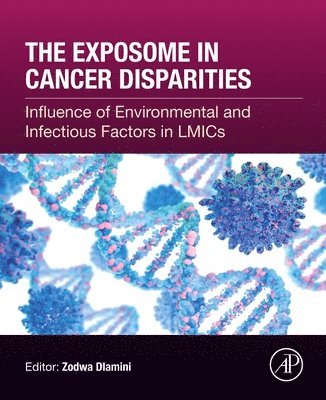
    The Exposome in Cancer Disparities

    Influence of Environmental and Infectious Factors in LMICs

    AvZodwa Dlamini

    Häftad, Engelska, 2026

    1 875 kr

    Beställningsvara. Skickas inom 10-15 vardagar. Fri frakt över 249 kr.

    Beskrivning

    The Exposome in Cancer Disparities: Influence of Environmental and Infectious Factors in LMICs examines how environmental and infectious factors drive cancer inequities in low- and middle-income countries (LMICs). The book introduces the exposome as a comprehensive framework to understand complex risk factors, such as environmental toxins, climate change, and infectious agents like HPV and HIV. The book combines scientific insights, real-world case studies, and practical strategies from international experts, highlighting region-specific contributors to cancer disparities. Structured into thematic sections, it offers a holistic view of the challenges faced by LMICs and provides actionable, evidence-based solutions tailored to resource-limited settings.

    The work emphasizes the importance of multidisciplinary approaches and international collaboration to develop effective prevention and policy strategies. It will benefit researchers, policymakers, and healthcare professionals by deepening understanding of cancer risk factors, fostering global cooperation and guiding targeted interventions to reduce health inequities and improve outcomes worldwide.

    • Introduces the exposome as a transformative framework for understanding the complex interplay of environmental and infectious factors in cancer disparities
    • Integrates scientific insights, case studies, and practical strategies from international experts to provide a holistic and actionable perspective
    • Emphasizes the importance of multidisciplinary approaches and international collaboration to develop effective prevention and policy interventions in resource-limited settings

    Produktinformation

    • Utgivningsdatum:2026-06-05
    • Mått:216 x 276 x 18 mm
    • Vikt:450 g
    • Format:Häftad
    • Språk:Engelska
    • Antal sidor:344
    • Förlag:Elsevier Science
    • ISBN:9780443443220

    Utforska kategorier

    • Folkhälsa och hälsopedagogik inom Medicin
    • Onkologi inom Medicin

    Mer om författaren

    Zodwa Dlamini is a Professor of Molecular Oncology and the founding Director and the Executive Head of the Pan African Cancer Research Institute (PACRI) in South Africa. She is the Director of South African Medical Research Council (SAMRC) Precision Oncology Research Unit (PORU). She is the DSI/NRF SARChI Chair in Precision Oncology and Cancer Prevention (POCP). She is a member of the American Association for Cancer Research (AACR) Advisory Group on Sub-Saharan Africa. She is a member of the AACR Pathology Resources in Africa Advisory Group. Professor Dlamini is a member of the African Organisation for Research and Training in Cancer (AORTIC) Research Committee Scientific Advisory Board. She is an elected member of the Academy of Science of South Africa. Professor Dlamini is an overseas Fellow of the Royal Society of Medicine (London). She is the Associate Editor for Frontiers in Oncology: Cancer Genetics Section

    Innehållsförteckning

    • I: Foundations of exposomics and cancer disparitiesIntroduction: The exposome framework and its relevance to cancer disparitiesEnvironmental exposures and cancer risk: An exposomics perspective in low- and middle-income countriesInfectious agents, HIV, and carcinogenic risks of cancer in low- and middle-income countriesSocioeconomic inequities and the exposome: A double burden in low- and middle-income countriesII: Mechanisms and intersections of the exposomeNeglected tropical diseases, coinfections, and the exposome: The overlapping burden in low- and middle-income countriesClimate change, the exposome, and cancer disparities in low- and middle-income countriesCulture, society, and the exposome: Understanding cancer risk in low- and middle-income countriesGene–environment interactions: The exposome and cancer susceptibilityThe microbiome and the exposome: Implications for cancer riskIII: Exposome-informed strategies for cancer prevention and equityCancer prevention in low- and middle-income countries: Targeting environmental and infectious exposuresStrengthening healthcare systems through exposomicsPolicy reform and environmental justice: Bridging gaps in cancer preventionIV: Innovations and global collaboration in exposomicsEmerging technologies in exposomics: Advancing cancer diagnosis and treatmentArtificial intelligence, big data, and the exposome: Transforming cancer risk assessmentGlobal collaboration in exposomics: A multistakeholder approach to reducing cancer disparitiesThe future of exposomics: Pathways to address cancer disparities in low- and middle-income countries