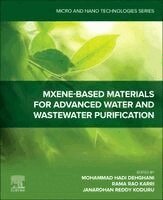
Häftad, Engelska, 2026
Mxene-Based Materials for Advanced Water and Wastewater Purification
Av Mohammad Hadi Dehghani, Rama Rao Karri, Janardhan Reddy Koduru
2973 kr
Kommande
Beskrivning
Mxene-based Materials for Advanced Water and Wastewater Purification provides a comprehensive overview of the preparation methods, characterization, and diverse environmental applications of MXene-based materials. Beginning with foundational concepts, the book discusses the unique properties and fabrication techniques of MXenes and their composites. The following chapters focus on the use of MXene-based adsorbents, photocatalysts, and membranes for removing a wide range of contaminants from water and wastewater, such as heavy metals, radionuclides, dyes, pharmaceuticals, pesticides, and phenolic compounds. MXene’s antibacterial and anti-biofouling properties are also discussed, along with their potential in environmental remediation. The book also covers toxicity and hazard assessments, sensor technologies for pollutant detection, regeneration and reuse of MXene materials, and their integration into hybrid treatment systems. It concludes with a thorough discussion on scale-up applications, environmental fate and lifecycle assessments, and regulatory and policy considerations. This book is a valuable resource for researchers, engineers, and policymakers interested in advanced nanomaterials for sustainable environmental applications.
- Provides a comprehensive overview of the fundamental principles, synthesis methods, physicochemical properties, and diverse applications of MXenes in water and wastewater purification.
- Highlights recent advances in the antibacterial properties of MXenes, emphasizing their antibiofouling performance, membrane-based technologies, and industrial applications.
- Covers developments in MXene-based sensors for pollutant detection and explores methods for the regeneration and reuse of MXene materials.
Produktinformation
- Utgivningsdatum: 2026-12-01
- Mått: 216 x 276 x undefined mm
- Vikt: 450 g
- Format: Häftad
- Språk: Engelska
- Serie: Micro and Nano Technologies
- Antal sidor: 680
- Förlag: Elsevier Science
- ISBN: 9780443457326
Utforska kategorier
Betyg & recensioner
0 recensioner
Inga recensioner tillgängliga.