• Fri frakt över 249 kr
  • •
  • Snabba leveranser
  • •
  • Billiga böcker
Kundservice

Du är på sajten för privatpersoner.

Företag, bibliotek eller offentlig verksamhet?

Du handlar på classic.bokus.com, där alla dina funktioner finns intakta.
Till classic.bokus.com
Bokus logotyp. Gå till startsidan.
  • Erbjudanden
  • Nyheter
  • Student
  • Topplistor
  • Barn & ungdom
  • Bokus Play
  • E-böcker
  • Pocketböcker
  • Spel & pussel

10% rabatt på allt med kod: NYSTART10 →

Sidfot

Mina sidor

    Hjälp

    • Kundservice
    • Vanliga frågor och svar
    • Frakt och leverans
    • Retur vid ångerrätt
    • Reklamera vara
    • Betalning
    • Köpvillkor
    • Allmänna villkor
    • Information om webbplatsens tillgänglighet

    Om Bokus

    • Om oss
    • Pressrum
    • För studenter
    • För företag
    • För bibliotek och offentlig verksamhet
    • För leverantörer
    • Hållbarhet

    Populärt

    • Aktuella erbjudanden
    • Presentkort
    • Studentlitteratur
    • Nya böcker
    • Topplistor
    • Signerade böcker
    • Engelska böcker

    Inspiration

    • Boktips
    • BookTok
    • Populära bokserier
    • Barnbokskaraktärer
    • Populära författare
    Logotyp för Bokus
    Följ oss på Facebook (extern länk)Följ oss på Instagram (extern länk)Följ oss på YouTube (extern länk)Följ oss på TikTok (extern länk)
    bokus @ CookiesAnpassa cookiesIntegritetspolicyKöpvillkor
    Till Citymail hemsida (extern länk)Till Budbee hemsida (extern länk)Till Postnord hemsida (extern länk)Till Schenker hemsida (extern länk)Till Early Bird hemsida (extern länk)Till Walleys hemsida (extern länk)
    1. Samhälle och politik
    2. Samhälle och kultur
    3. Sociala och etiska frågor
    4. Våld och övergrepp

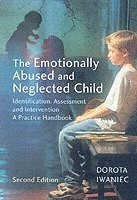
    Emotionally Abused and Neglected Child

    Identification, Assessment and Intervention: A Practice Handbook

    AvDorota Iwaniec

    Häftad, Engelska, 2006

    577 kr

    Beställningsvara. Skickas inom 5-8 vardagar. Fri frakt över 249 kr.

    Fler format och utgåvor

    E-bok

    659 kr

    Beskrivning

    Emotional abuse and neglect are at the core of all types of child maltreatment, and have the most harmful effects on the physical and psychological development and well-being of children. Yet they are considered to be the most difficult to deal with by those who have the responsibility to protect and intervene in effective ways. In this book the author explores the concept of a damaged child, and asks what are the different types of injury, ranging from active to passive, physical to emotional, that stop children from reaching their full potential psychologically and physically? The author questions whether emotional damage to a child can be repaired and answers questions such as: Is some injury irreversible?What therapeutic techniques are available to deal with emotional abuse?Can the abusers as well as the abused be helped to change?Case studies are provided to illustrate the features of emotional abuse, and chapters are devoted to the assessment and prediction of emotional abuse, effects of emotional abuse as the child grows up, intervention and treatment and working with the family as a whole.

    Produktinformation

    • Utgivningsdatum:2006-03-17
    • Mått:171 x 248 x 24 mm
    • Vikt:709 g
    • Format:Häftad
    • Språk:Engelska
    • Antal sidor:424
    • Upplaga:2
    • Förlag:John Wiley & Sons Inc
    • ISBN:9780470011010

    Utforska kategorier

    • Våld och övergrepp inom Samhälle och politik
    • Barnpsykologi och utvecklingspsykologi inom Psykologi och pedagogik

    Mer om författaren

    Dorota Iwaniec is Emeritus Professor of Social Work and former Director of the Institute of Child Care Research at Queen’s University Belfast (she retired in 2005). Professor Iwaniec is well-known for her extensive research and writing in the areas of emotional abuse and neglect and failure to thrive in children. She is the author of nearly a hundred scientific and practice papers and many chapters in edited books. She has written several books on the subject of child care and child protection and some books have been translated into different languages. Her writing is influenced by continuous practice and empirical evidence.

    Innehållsförteckning

    • About the Author. Preface.Acknowledgements.SECTION 1: The Problem.1. Introduction to Emotional Abuse and Neglect.Introduction.History of the Concept.Early Studies.The Concept of Emotional Abuse.Case Studies.Consequences of Emotional Abuse.Purpose and Overview of the Book.Terminology.The Organisation of the Book.Summary.2. Definition, Prevalence, and Characteristics of Emotionally Abused Children and their Carers.Introduction.Definition.Defining Characteristics.Definition and Typology of Emotionally Abusive Behaviour.Emotionally Abusive Parenting.Problem Profile of Emotionally Abused and Neglected Children.Rejected Children.Consequences of Emotionally Harmful Parenting – Messages from Research and Practice.Identification and Incidence.Summary.3. Emotional Abuse and Neglect Within the Family.Introduction.Family Violence.Case Study.Parental Divorce/Separation.Post-Divorce Parental Conflict and the Effect on Children.Contact Dispute Case.Parental Substance Misuse.Summary.4. Emotional Abuse and Neglect Outside the Family.Introduction.School Bullying: Peer Abuse.A Case of Bullying.Emotional Abuse/Neglect by Teachers.The Extent and Nature of Child Emotional Abuse/Neglect by Teachers.Verbal Attacks and Humiliating Behaviours.Rejecting and Isolating.Emotional Abuse and Neglect in Out-of-Home Care.Children and Young People in Custody.Summary.5. Attachment and Bonding in Cases of Emotional Abuse.Introduction.What is Attachment?The Origins of Attachment Theory.Parental Sensitivity and Formation of Attachment.Individual Differences: The Strange Situation.Child-to-Parent Attachment and Emotional Abuse.Parent-to-Infant Attachment (Bonding).Significance of the Parent–Child Attachment.Adult Attachment Styles.Mothers who Promote Secure Attachment Behaviour in their Children.Dismissing and Rejecting Mothers.Consequences of Insecure Attachment.Summary.6. Emotional Abuse and Neglect: Effects on the Growing Child.Introduction.Infancy.Attachment Behaviour.Early Childhood.Middle Childhood.Adolescence.Summary.7. Failure to Thrive and Emotional Stunting in Growth.Introduction.What is Failure to Thrive?Emotional Stunting in Growth.Case Study.Causal Mechanisms.Hyperphagic and Anorexic Short-Stature Children.Growth-Hormone Deficiencies.Manifestation of Disturbed Behaviour.Twenty-Year Follow-Up Study.Other Findings.Summary.8. Children with Disability at Risk of Emotional Abuse and Neglect.Introduction.Incidence and Prevalence Rates.Risk-Factors.Case Study.Practice Issues.Summary.9. Risks and Resilience in Cases of Emotional Abuse.Introduction.Risk and Resilience Factors for Emotional Maltreatment.Case Studies.Case Discussion.Predisposing Factors.Precipitating Factors.Factors Intrinsic to the Child.Environmental Factors.Comments on Risk and Resilience.Early Adversities and Recovery.Summary.SECTION 2: Assessment of Emotional Abuse and Neglect.10. Assessment of Emotional Abuse and Neglect.Introduction.Department of Health Framework of Assessment.Parenting Duties and Problems.Assessment of Basic Care.Parental Characteristics.Ensuring Safety.Emotional Warmth.Parent–Child Interaction.Rating Criteria.Stimulation.Guidance and Boundaries.Stability.Children’s Developmental Needs.Interview with the Child.Observation of Children.Summary.SECTION 3: Treatment and Intervention of Emotional Abuse and Neglect.11. Levels of Intervention and Service Provision in Cases of Emotional Abuse and Neglect.Introduction.Levels of Prevention and Intervention.Universal Prevention/Intervention.Selective Prevention/Intervention.Family Support.Targeted Prevention/Intervention Multidisciplinary Approach.Case Conferences.Multidisciplinary Inter-Agency Co-operation and Service Delivery.Case Study.Civil Court Intervention.Summary.12. Behavioural-Cognitive Approaches in Helping Emotionally Abused and Neglected Children and their Families: Theory, Practice, and Research.Introduction.Behavioural Work.Behavioural Methods and Techniques.Use of Cognitive Methods of Intervention.Essential Components of Cognitive Treatment.Relaxation Training.Problem-Solving.Case Study.Motivational Interviewing.Summary.13. Improving Parent–Child Relationship and Children’s Attachment to Parents: Psychodynamic Approach – Theory and Practice.Introduction.Building Secure Attachment.Improving Children’s Attachment Behaviour to Parents with Mental-Health Problems.Child–Parent Psychotherapy.Watch, Wait, and Wonder.Video-Recording and Feedback.Recalling Early-Childhood Memories.Parent–Child Interaction Therapy.Working with Foster-Parents – Counselling Regarding Attachment.Summary.14. Direct Work with Emotionally Abused and Neglected Children and Young People.Introduction.Play Therapy.Promoting Resilience.Social-Skills Training.Assertiveness Training.The Jug of Loving Water.Case Study.Summary.15. Helping Parents and Families.Introduction.Counselling.Family Therapy.Psychoeducation.Group Work with Emotionally Abusive and Neglectful Parents.Dealing with Marital Problems.Summary.SECTION 4: The Burden of Proof: Legal and Social Work Difficulties in Dealing with Emotional-Abuse and Neglect Cases.16 The Burden of Proof: Legal and Social Work Difficulties in Dealing with Emotional-Abuse and Neglect Cases.Introduction.Legal and Social Work Decisions in Cases of Emotional Abuse.Applications to the Court.Children’s Rights and the Parents’ Rights as Legal Requirements.Gathering Information.Decision-Making.Independent Assessment of Expert Witness.Issues for Social Workers and Lawyers Working Together.Training.Summary.References.Index.