• Fri frakt över 249 kr
  • •
  • Snabba leveranser
  • •
  • Billiga böcker
Kundservice

Du är på sajten för privatpersoner.

Företag, bibliotek eller offentlig verksamhet?

Du handlar på classic.bokus.com, där alla dina funktioner finns intakta.
Till classic.bokus.com
Bokus logotyp. Gå till startsidan.
  • Erbjudanden
  • Nyheter
  • Student
  • Topplistor
  • Barn & ungdom
  • Bokus Play
  • E-böcker
  • Pocketböcker
  • Spel & pussel

10% rabatt på allt med kod NYSTART10 →

Sidfot

Mina sidor

    Hjälp

    • Kundservice
    • Vanliga frågor och svar
    • Frakt och leverans
    • Retur vid ångerrätt
    • Reklamera vara
    • Betalning
    • Köpvillkor
    • Allmänna villkor
    • Information om webbplatsens tillgänglighet

    Om Bokus

    • Om oss
    • Pressrum
    • För studenter
    • För företag
    • För bibliotek och offentlig verksamhet
    • För leverantörer
    • Hållbarhet

    Populärt

    • Aktuella erbjudanden
    • Presentkort
    • Studentlitteratur
    • Nya böcker
    • Topplistor
    • Signerade böcker
    • Engelska böcker

    Inspiration

    • Boktips
    • BookTok
    • Populära bokserier
    • Barnbokskaraktärer
    • Populära författare
    Logotyp för Bokus
    Följ oss på Facebook (extern länk)Följ oss på Instagram (extern länk)Följ oss på YouTube (extern länk)Följ oss på TikTok (extern länk)
    bokus @ CookiesAnpassa cookiesIntegritetspolicyKöpvillkor
    Till Citymail hemsida (extern länk)Till Budbee hemsida (extern länk)Till Postnord hemsida (extern länk)Till Schenker hemsida (extern länk)Till Early Bird hemsida (extern länk)Till Walleys hemsida (extern länk)
    1. Naturvetenskap och teknik
    2. Matematik och naturvetenskap
    3. Matematik
    4. Tillämpad matematik

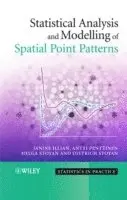
    Statistical Analysis and Modelling of Spatial Point Patterns

    AvJanine Illian,Antti Penttinen

    Inbunden, Engelska, 2008

    Del i serien Statistics in Practice

    1 533 kr

    Beställningsvara. Skickas inom 5-8 vardagar. Fri frakt över 249 kr.

    Beskrivning

    Spatial point processes are mathematical models used to describe and analyse the geometrical structure of patterns formed by objects that are irregularly or randomly distributed in one-, two- or three-dimensional space. Examples include locations of trees in a forest, blood particles on a glass plate, galaxies in the universe, and particle centres in samples of material. Numerous aspects of the nature of a specific spatial point pattern may be described using the appropriate statistical methods. Statistical Analysis and Modelling of Spatial Point Patterns provides a practical guide to the use of these specialised methods. The application-oriented approach helps demonstrate the benefits of this increasingly popular branch of statistics to a broad audience.The book: Provides an introduction to spatial point patterns for researchers across numerous areas of applicationAdopts an extremely accessible style, allowing the non-statistician complete understandingDescribes the process of extracting knowledge from the data, emphasising the marked point processDemonstrates the analysis of complex datasets, using applied examples from areas including biology, forestry, and materials scienceFeatures a supplementary website containing example datasets.Statistical Analysis and Modelling of Spatial Point Patterns is ideally suited for researchers in the many areas of application, including environmental statistics, ecology, physics, materials science, geostatistics, and biology. It is also suitable for students of statistics, mathematics, computer science, biology and geoinformatics.

    Produktinformation

    • Utgivningsdatum:2008-01-18
    • Mått:162 x 232 x 35 mm
    • Vikt:907 g
    • Format:Inbunden
    • Språk:Engelska
    • Serie:Statistics in Practice
    • Antal sidor:560
    • Förlag:John Wiley & Sons Inc
    • ISBN:9780470014912

    Utforska kategorier

    • Tillämpad matematik inom Naturvetenskap och teknik

    Mer om författaren

    Janine Illian, SIMBIOS, University of Abertay, Dundee, Scotland.Antti Pentinen, Professor in the Department of Mathematics and Statistics, University of Jyvaskyla, Finland.Dietrich Stoyan, Professor a the Insitut für Stochastik, University of Freiberg, Germany.

    Recensioner i media

    "It adopts an extremely accessible style, allowing the non-statistician complete understanding, describes the process of extracting knowledge from the data, emphasizing marked point processes, demonstrates the analysis of complex data sets, using applied examples from areas including biology, forestry, and materials science, and features a supplementary website containing example datasets. This text is ideally suited for researchers in many areas of applications, including environmental statistics, ecology, physics, material science, geostatistics, and biology. It is also suitable for students of statistics, mathematics, computer science, biology and geoinformatics." (Zentralblatt Math, 2010) "Statistical Analysis and Modelling of Spatial Point Patterns is an extremely well-written book and is accessible to a wide audience, including both applied statisticians and researchers from other fields with a reasonably sophisticated background in statics." (Journal of the American Statistical Association, September 2010)“The book presents statistical methods that are relevant in practice, focusing on traditional methods, in particular those based on summary statistics, but also more recent models and methods are briefly discussed. ”(Biometrics , September 2009)"The book is a useful addition to Wiley's series Statistics in Practice." (Journal of Tropical Pediatrics, February 2009)"The abstract flavor this brings to the subject means that methods may have very wide applicability over different application domains. This applicability, in turn, is reflected by the large number of interesting examples described in the book. The book provides a comprehensive overview of the area." (International Statistical Review, December 2008)

    Innehållsförteckning

    • Preface xiList of examples xvii1 Introduction 11.1 Point process statistics 21.2 Examples of point process data 51.3 Historical notes 101.4 Sampling and data collection 171.5 Fundamentals of the theory of point processes 231.6 Stationarity and isotropy 351.7 Summary characteristics for point processes 401.8 Secondary structures of point processes 421.9 Simulation of point processes 522 The homogeneous Poisson point process 572.1 Introduction 582.2 The binomial point process 592.3 The homogeneous Poisson point process 662.4 Simulation of a homogeneous Poisson process 702.5 Model characteristics 712.6 Estimating the intensity 792.7 Testing complete spatial randomness 833 Finite point processes 993.1 Introduction 1003.2 Distributions of numbers of points 1043.3 Intensity functions and their estimation 1103.4 Inhomogeneous Poisson process and finite Cox process 1183.5 Summary characteristics for finite point processes 1253.6 Finite Gibbs processes 1374 Stationary point processes 1734.1 Basic definitions and notation 1744.2 Summary characteristics for stationary point processes 1794.3 Second-order characteristics 2144.4 Higher-order and topological characteristics 2444.5 Orientation analysis for stationary point processes 2504.6 Outliers, gaps and residuals 2564.7 Replicated patterns 2604.8 Choosing appropriate observation windows 2644.9 Multivariate analysis of series of point patterns 2704.10 Summary characteristics for the non-stationary case 2795 Stationary marked point processes 2935.1 Basic definitions and notation 2945.2 Summary characteristics 3065.3 Second-order characteristics for marked point processes 3235.4 Orientation analysis for marked point processes 3556 Modelling and simulation of stationary point processes 3636.1 Introduction 3646.2 Operations with point processes 3646.3 Cluster processes 3716.4 Stationary Cox processes 3796.5 Hard-core point processes 3876.6 Stationary Gibbs processes 3986.7 Reconstruction of point patterns 4076.8 Formulas for marked point process models 4176.9 Moment formulas for stationary shot-noise fields 4236.10 Space–time point processes 4256.11 Correlations between point processes and other random structures 4377 Fitting and testing point process models 4457.1 Choice of model 4457.2 Parameter estimation 4487.3 Variance estimation by bootstrap 4537.4 Goodness-of-fit tests 4557.5 Testing mark hypotheses 4607.6 Bayesian methods for point pattern analysis 471Appendix A Fundamentals of statistics 479Appendix B Geometrical characteristics of sets 483Appendix C Fundamentals of geostatistics 489References 493Notation index 515Author index 519Subject index 527