• Fri frakt över 249 kr
  • •
  • Snabba leveranser
  • •
  • Billiga böcker
Kundservice

Du är på sajten för privatpersoner.

Företag, bibliotek eller offentlig verksamhet?

Du handlar på classic.bokus.com, där alla dina funktioner finns intakta.
Till classic.bokus.com
Bokus logotyp. Gå till startsidan.
  • Erbjudanden
  • Nyheter
  • Student
  • Topplistor
  • Barn & ungdom
  • Bokus Play
  • E-böcker
  • Pocketböcker
  • Spel & pussel

10% studentrabatt med kod TERM26

Sidfot

Mina sidor

    Hjälp

    • Kundservice
    • Vanliga frågor och svar
    • Frakt och leverans
    • Retur vid ångerrätt
    • Reklamera vara
    • Betalning
    • Köpvillkor
    • Allmänna villkor
    • Information om webbplatsens tillgänglighet

    Om Bokus

    • Om oss
    • Pressrum
    • För studenter
    • För företag
    • För bibliotek och offentlig verksamhet
    • För leverantörer
    • Hållbarhet

    Populärt

    • Aktuella erbjudanden
    • Presentkort
    • Studentlitteratur
    • Nya böcker
    • Topplistor
    • Signerade böcker
    • Engelska böcker

    Inspiration

    • Boktips
    • BookTok
    • Populära bokserier
    • Barnbokskaraktärer
    • Populära författare
    Logotyp för Bokus
    Följ oss på Facebook (extern länk)Följ oss på Instagram (extern länk)Följ oss på YouTube (extern länk)Följ oss på TikTok (extern länk)
    bokus @ CookiesAnpassa cookiesIntegritetspolicyKöpvillkor
    Till Citymail hemsida (extern länk)Till Budbee hemsida (extern länk)Till Postnord hemsida (extern länk)Till Schenker hemsida (extern länk)Till Early Bird hemsida (extern länk)Till Walleys hemsida (extern länk)
    1. Psykologi och pedagogik
    2. Pedagogik
    3. Utbildningsstrategier och utbildningspolitik
    4. Studievägledning och elevhälsa

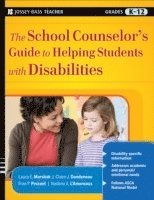
    School Counselor's Guide to Helping Students with Disabilities

    AvLaura E. Marshak,Claire J. Dandeneau

    Häftad, Engelska, 20100-3 år

    245 kr

    Beställningsvara. Skickas inom 5-8 vardagar. Fri frakt över 249 kr.

    Beskrivning

    Down-to-earth advice for helping students with disabilities succeedThe School Counselor's Guide to Helping Students with Disabilities offers school counselors a practical guide for handling the complexities of working with children and youth who have disabilities. The book is organized to correspond with the myriad responsibilities and roles assumed by school counselors in elementary, middle and high school settings. The authors provide both seasoned and new school counselors with the insight and tools they need to successfully promote the academic, personal, social, and career success of students with disabilities. Presents a wealth of relevant disability-related knowledge and useful strategiesIncludes information on the most pertinent legislation pertaining to students with disabilitiesOffers the most effective counseling interventions for helping young children or adolescents experiencing social exclusion because of their disabilitiesBonus section contains a wealth of disability-specific information with implications and practical applications for counselorsThis important book brings together experts in two disciplines, school counseling and special education/disabilities, in order to address the practicalities and possibilities of working with students with disabilities.

    Produktinformation

    • Utgivningsdatum:2010-01-12
    • Mått:217 x 279 x 20 mm
    • Vikt:898 g
    • Ålder:0-3
    • Format:Häftad
    • Språk:Engelska
    • Läsålder:0-3
    • Antal sidor:384
    • Förlag:John Wiley & Sons Inc
    • ISBN:9780470175798

    Utforska kategorier

    • Studievägledning och elevhälsa inom Psykologi och pedagogik
    • Specialundervisning inom Psykologi och pedagogik

    Mer om författaren

    THE AUTHORS Laura E. Marshak, Ph.D., is a practicing psychologist and professor of counseling at Indiana University of Pennsylvania. Claire J. Dandeneau, Ph.D., N.C.C., is a professor of counseling at Indiana University of Pennsylvania. Fran P. Prezant, M.Ed., CCC-SLP, is a senior vice president and director of research and evaluation at Abilities! (National Center for Disability Services) in New York. Nadene A. L'Amoreaux, Ph.D., is an associate professor of counseling at Indiana University of Pennsylvania.

    Innehållsförteckning

    • Acknowledgments xiAbout the Authors xiiiPreface xvPART ONE COUNSELING STUDENTS WITH DISABILITIES: THE BASICS1 Possibilities and Practicalities 3The Role of the School Counselor 6Promoting Genuine Inclusion 8Looking Out for Students 9Addressing the Needs of Stakeholders: Parents, Teachers, and Students 10Fostering Resilience 13Amplified Needs 14The ASCA National Standards Amplification of the Needs of Students with Disabilities 152 The Art of Helping Students with Disabilities 23Everyday Distortions of People with Physical Disabilities 24Spread and Global Evaluations 24Typecasting 25Distorted Perceptions of Students with Nonvisible Disabilities 28Global Evaluation and Invisible Disabilities 30Diagnosis and Perception 31Possibilities: Seeing What Cannot Easily Be Seen 33Possibilities: Predicting the Future 34Seeing the Student in the Environment 35Effective Helping Orientations: Social-Minority Versus Medical Models 37Help That Is Helpful 39Getting Comfortable 42Logistics 44Talking About a Student’s Disability 443 School Counseling Programs: Genuine Inclusion 47The Foundation 48Inclusion 49Sameness Is Not Fairness 50Ableism 50Delivery System 52Management 52Accountability 53From Theory to Practice 53Targeted Advocacy 54Systemic Advocacy 554 Protective Legislation and the School Counselor Role 57How We Got Here: A Glimpse Back in Time 59The Spirit of the Law Versus the Letter of the Law 62Legislation and the School Counselor’s Responsibilities 63Students Who Qualify for Special Education 64Review of the Process That Culminates in the IEP Meeting 71Importance of the IEP 72Defining the Least Restrictive Environment 72Behavior and Discipline: Special IEP Factors 73Functional Behavior Assessment 74Behavior Intervention Plan 75The Transition Plan 75Translating It All into Action 77Section 504 and 504 Plans 78NCLB and IDEA 80Claudia’s Story 805 Partnering with Parents 85A Glimpse of Common Parental Experiences 86Stereotypes About Parents 89Parental Stress 90Neglectful and Abusive Parents 91Partnering with Parents and Caregivers 92What Parents Value in Helping Relationships 93Responding to Parents’ Needs for Support and Empowerment 94Common Barriers to Developing Collaborative Relationships with Parents 98Critical School Transitions and Developmental Stages 98Elementary School 99Middle School or Junior High School 99High School 99Preparing for Transition 99PART TWO MEETING THE NEEDS OF STUDENTS WITH  DISABILITIES: ADDRESSING THE AMPLIFIED ASCA DOMAINS6 Meeting Students’ Academic Needs 111The Purpose of Education and Academic Success 111The Role of High-Stakes Testing 112The Purpose of Inclusion 113Amplified Academic Needs 114Negative Academic Self-Concepts of Students with Disabilities 116Twice-Exceptional Student Issues 118Promoting Positive Academic Self-Concepts with Students with  Disabilities 119Academic Interventions 119Counseling Interventions 121Modeling Self-Advocacy 122Promoting Inclusion 123Mind-Sets that Resist Inclusion and Responses to Challenge Them 125Identifying Useful Accommodations and Technology 130Including Families and Other Natural Supports 134Promoting Academic Resilience 1367 Meeting Elementary Students’ Personal and Social Needs 139Fostering Social Integration in the Classroom 141Creating a Classroom Climate Conducive to Social Integration 142Resiliency and Self-Concept 156Social Integration Beyond the Classroom 157Critical Social School Environments Outside Class 158Facilitating Social Integration: Fostering Social Skill Development 163Social Integration, Resiliency, Social Skills, and the IEP 1648 Meeting Adolescent Students’ Personal and Social Needs 167Identity and Self-Esteem 169Self-Esteem Development 169Forming Identity 171Sexuality Issues 174Personal Self-Determination and Self-Advocacy 176Social Skills: Basic and Specialized 178High-Risk Activities 182Substance Abuse 183Unwanted Pregnancy and Sexual Abuse 183Juvenile Delinquency 184School Dropout 184Dignity of Risk and Resiliency 185Dignity of Risk 185Resiliency 186Integrating Personal and Social Competencies 1879 Meeting Students’ Career-Planning Needs 189Amplified Career Development Needs 190What Is Realistic? 193Expansive Realism in Action 195Other Career Development Issues 196Role Models and Mentoring 197Standardized Career Assessment Instruments 198Self-Determination and Self-Advocacy: Critical Assets in Career Planning 199Transitional Planning 200State and Federal Vocational Rehabilitation Services 201Centers for Independent Living 203On Your Own Without a Net 203Transition to Work After High School Ends 204Students with Disabilities and the ADA 204Supported Employment for Students with Significant Disabilities 205Transition to Postsecondary Education 206Entrance Exams 206Disclosing Disability Status 207Choosing a College or University 208Planning 209The Intangible Benefits of Work for Students with Disabilities 209PART THREE DISABILITY-SPECIFIC  INFORMATION: IMPLICATIONS AND PRACTICAL APPLICATIONSAttention Deficit Hyperactivity Disorder 213Anxiety Disorders 219Asthma and Allergies 224Autism 229Bipolar Disorder and Depression 234Cancer 239Cerebral Palsy 243Cystic Fibrosis 247Deafness and Hearing Disorders 251Degenerative Orthopedic Diseases (Muscular Dystrophy) 256Diabetes  261Fetal Alcohol Syndrome  266Learning Disabilities  271Mental Retardation  276Oppositional Defiant Disorder/Conduct Disorder  280Other Orthopedic Impairments  284Seizures  289Speech and Language Disorders  294Spina Bifida  300Traumatic Brain Injury  303Visual Impairments  308Conclusion 313Notes 317References 331Index 349