• Fri frakt över 249 kr
  • •
  • Snabba leveranser
  • •
  • Billiga böcker
Kundservice

Du är på sajten för privatpersoner.

Företag, bibliotek eller offentlig verksamhet?

Du handlar på classic.bokus.com, där alla dina funktioner finns intakta.
Till classic.bokus.com
Bokus logotyp. Gå till startsidan.
  • Erbjudanden
  • Nyheter
  • Student
  • Topplistor
  • Barn & ungdom
  • Bokus Play
  • E-böcker
  • Pocketböcker
  • Spel & pussel

10% rabatt på allt med kod: NYSTART10 →

Sidfot

Mina sidor

    Hjälp

    • Kundservice
    • Vanliga frågor och svar
    • Frakt och leverans
    • Retur vid ångerrätt
    • Reklamera vara
    • Betalning
    • Köpvillkor
    • Allmänna villkor
    • Information om webbplatsens tillgänglighet

    Om Bokus

    • Om oss
    • Pressrum
    • För studenter
    • För företag
    • För bibliotek och offentlig verksamhet
    • För leverantörer
    • Hållbarhet

    Populärt

    • Aktuella erbjudanden
    • Presentkort
    • Studentlitteratur
    • Nya böcker
    • Topplistor
    • Signerade böcker
    • Engelska böcker

    Inspiration

    • Boktips
    • BookTok
    • Populära bokserier
    • Barnbokskaraktärer
    • Populära författare
    Logotyp för Bokus
    Följ oss på Facebook (extern länk)Följ oss på Instagram (extern länk)Följ oss på YouTube (extern länk)Följ oss på TikTok (extern länk)
    bokus @ CookiesAnpassa cookiesIntegritetspolicyKöpvillkor
    Till Citymail hemsida (extern länk)Till Budbee hemsida (extern länk)Till Postnord hemsida (extern länk)Till Schenker hemsida (extern länk)Till Early Bird hemsida (extern länk)Till Walleys hemsida (extern länk)
    1. Naturvetenskap och teknik
    2. Matematik och naturvetenskap
    3. Matematik
    4. Matematisk statistik

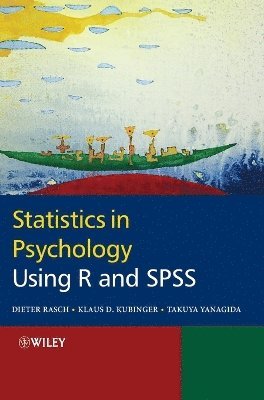
    Statistics in Psychology Using R and SPSS

    AvDieter Rasch,Klaus Kubinger

    Inbunden, Engelska, 2011

    967 kr

    Beställningsvara. Skickas inom 5-8 vardagar. Fri frakt över 249 kr.

    Beskrivning

    Statistics in Psychology covers all statistical methods needed in education and research in psychology. This book looks at research questions when planning data sampling, that is to design the intended study and to calculate the sample sizes in advance. In other words, no analysis applies if the minimum size is not determined in order to fulfil certain precision requirements. The book looks at the process of empirical research into the following seven stages: Formulation of the problemStipulation of the precision requirementsSelecting the statistical model for the planning and analysisThe (optimal) design of the experiment or surveyPerforming the experiment or the surveyStatistical analysis of the observed resultsInterpretation of the results.

    Produktinformation

    • Utgivningsdatum:2011-12-09
    • Mått:173 x 246 x 31 mm
    • Vikt:998 g
    • Format:Inbunden
    • Språk:Engelska
    • Antal sidor:568
    • Förlag:John Wiley & Sons Inc
    • ISBN:9780470971246

    Utforska kategorier

    • Matematisk statistik inom Naturvetenskap och teknik
    • Psykologisk metod inom Psykologi och pedagogik

    Mer om författaren

    Dieter Rasch, Department of Applied Statistics, University of Life Sciences, Vienna Klaus D. Kubinger, Division of Psychological Assessment and Applied Psychometrics, University of ViennaTakuya Yanagida, Division of Psychological Assessment and Applied Psychometrics, University of Vienna

    Innehållsförteckning

    • Introduction. 1 Concept of the Book.2 Measuring in Psychology.2.1 Types of psychological measurements.2.2 Measurement techniques in psychological assessment.2.3 Quality criteria in psychometrics.2.4 Additional psychological measurement techniques.2.5 Statistical models of measurement with psychological roots.3 Psychology: An Empirical Science.3.1 Gain of insight in psychology.3.2 Steps of empirical research.4 Definition: Character, Chance, Experiment, and Survey.4.1 Nominal scale.4.2 Ordinal scale.4.3 Interval scale.4.4 Ratio scale.4.5 Characters and factors.II Descriptive Statistics.5 Numerical and graphical Data Analysis.5.1 Introduction to data analysis.5.2 Frequencies and empirical distributions.5.3 Statistics.5.4 Frequency distribution for several characters.III Inferential Statistics for one Character.6 Probability and  distribution.6.1 Relative frequencies and probabilities.6.2 Random variable and theoretical distributions.6.3 Quantiles of theoretical distribution functions.6.4 Mean and variance of theoretical distributions.6.5 Estimation of unknown parameters.7 Assumptions: Random Sampling and Randomization.7.1 Simple random sampling in surveys.7.2 Principles of random sampling and randomization.8 One Sample from one Population.8.1 Introduction.8.2 The Parameter mof acharacter modeled by a normally distributed random variable.8.3 Planning a study for hypothesis testing with respect to m.8.4 Sequential tests for the unknown parameter m.8.5 Estimation, hypothesis testing, planning the study, and sequential testing concerning other parameters.9 Two Samples from two Populations.9.1 Hypothesis testing, study planning and sequential testing regarding the unknown parameters m1 and m2.9.2 Hypothesis testing, study planning and sequential testing for other parameters.9.3 Equivalence testing.10 Samples from more than two Populations.10.1 The various problem situations.10.2. Selection procedures.10.3 Multiple comparisons of means.10.4 Analysis of variance.IV Descriptive and Inferential Statistics for two Characters.11 Regression and Correlation.11.1 Introduction.11.2 Regression model.11.3 Correlation coefficients and measures of association.11.4 Hypothesis testing and planning the study concerning correlation coefficients.11.5 Correlation analysis in two samples.V Inferential Statistics for more than two Characters.12 One Sample from one Population.12.1 Association between three or more characters.12.2 Hypothesis testing concerning a vector of means m.12.3 Comparisons of means and "homological" methods for matched observations.13 Samples from more than one Population.13.1 General linear model.13.2 Analysis of covariance.13.3. Multivariate analysis of variance.13.4 Discriminant analysis.VI Model Generation and Theory-Generating Procedures.14 Model Generation.14.1 Theoretical basics of model generation.14.2 Methods for determining the quality and excellence of a model.14.2.1 Goodness of fit tests.14.2.2 Coefficients of the goodness of fit.14.2.3 Cross-validation.14.4 Simulation: Non-analytical solutions to statistical problems.15 Theory-Generating Procedures.15.1 Descriptive statistics' methods.15.2 Methods of inferential statistics.